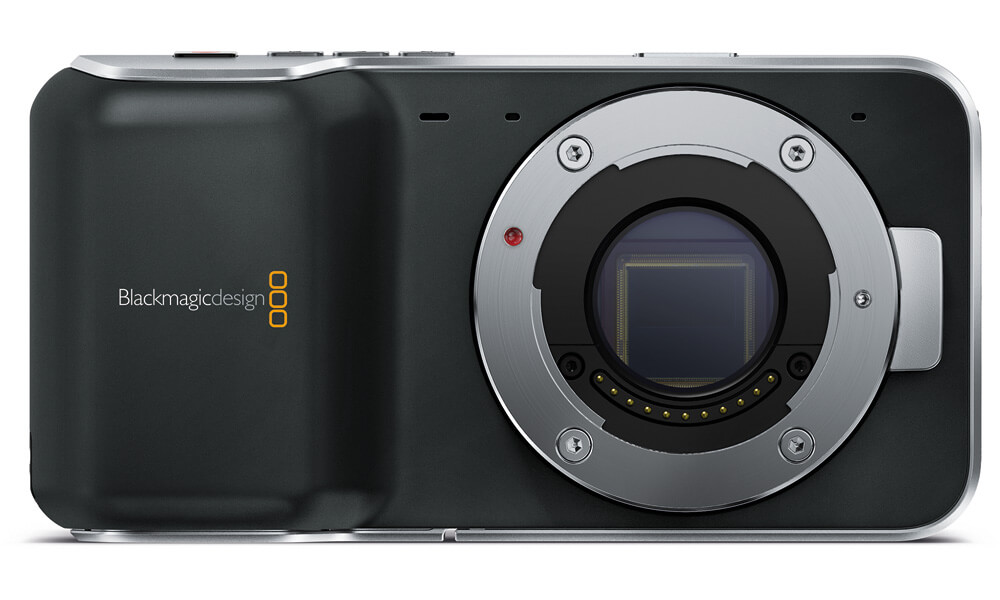
Blackmagic Pocket Cinema Camera is one of the most influential compact digital film cameras Blackmagic Design ever released.
Launched in July 2013, the original Pocket Cinema Camera brought a Super 16mm sensor, Micro Four Thirds lens mount, 1080HD recording, ProRes, CinemaDNG RAW and film-style colour science into a body small enough to fit into a jacket pocket.
At the time, this was a major breakthrough for independent filmmakers. Many affordable cameras could shoot video, but very few offered RAW recording, 10-bit ProRes, log-style gamma and real cinema-style grading flexibility in such a small body.
The camera uses a Super 16mm sensor measuring about 12.48 x 7.02 mm. It records 1920 x 1080 HD in CinemaDNG RAW or Apple ProRes and has a base sensitivity of ISO 800.
It is not a modern 4K camera. It does not offer autofocus performance, in-body stabilisation, high frame rates or built-in ND filters. However, it remains loved because of its organic image, small size, flexible MFT mount and film-like colour response.
Key Camera Specifications
The Blackmagic Pocket Cinema Camera is built around a Super 16 sensor and active Micro Four Thirds mount.
| Feature | Blackmagic Pocket Cinema Camera |
|---|---|
| Camera type | Compact digital film camera |
| Release period | July 2013 |
| Sensor format | Super 16mm |
| Sensor size | 12.48 x 7.02 mm |
| Maximum resolution | 1920 x 1080 |
| Lens mount | Active Micro Four Thirds |
| Base sensitivity | ISO 800 |
| Claimed dynamic range | 13 stops |
| Best measured dynamic range | 11.2 stops at SNR=2 in provided data |
| Rolling shutter | Not tested in provided data |
| Main codecs | CinemaDNG RAW and Apple ProRes |
| Recording media | SD card |
| Body weight | About 355 g |
| Dimensions | About 38 mm x 66 mm x 128 mm |
| Best use | Indie films, documentaries, music videos and compact cinema rigs |
The camera’s appeal comes from its image pipeline rather than headline resolution. It gives filmmakers a small, affordable way to capture a flexible 1080p cinema image.
Super 16 Sensor and Image Character
The original Blackmagic Pocket Cinema Camera uses a Super 16mm sensor.
This sensor is much smaller than Super 35, full frame and Micro Four Thirds sensors. That gives the camera a strong crop factor, but it also gives it a distinctive visual identity.
Super 16 has a long history in documentary, independent film, music video and experimental cinema. The Pocket Cinema Camera brought that look into a digital body.
Why Super 16 Still Matters
Super 16 is not only a technical limitation. It is also a creative look.
The smaller sensor makes lenses feel tighter, increases depth of field and works well with compact glass. It can give footage a textured, intimate and slightly vintage feel.
For filmmakers who want a polished but less clinical image, the original Pocket Cinema Camera still has appeal.
HD Recording Resolution
The Blackmagic Pocket Cinema Camera records 1920 x 1080 HD.
That may sound limited today, especially when 4K, 6K and 12K cameras are common. However, the camera’s strength is not resolution. Its strength is the quality of the 1080p file.
The camera records high-quality 10-bit ProRes and 12-bit CinemaDNG RAW, which gives users more grading flexibility than many consumer 4K cameras from the same era.
| Recording Format | Resolution |
| HD CinemaDNG | 1920 x 1080 |
| HD ProRes | 1920 x 1080 |
For web delivery, documentary work, short films, music videos and archival-style projects, the HD image can still be useful when exposed well.
Dynamic Range Performance
Blackmagic claimed 13 stops of dynamic range for the original Pocket Cinema Camera.
In the provided lab data, the camera measured 11.2 stops at SNR=2 in full sensor 1920 x 1080 ProRes HQ at ISO 800 and BMD Film. The same 11.2-stop result was also listed for RAW DNG at ISO 800.
| Sensor Mode | Resolution | Codec | ISO | Gamma | Measured Dynamic Range |
| Full Sensor | 1920 x 1080 | ProRes HQ | 800 | BMD Film | 11.2 stops at SNR=2 |
| Full Sensor | 1920 x 1080 | RAW DNG | 800 | BMD Film | 11.2 stops at SNR=2 |
These results are lower than the manufacturer claim, but they remain impressive for a small 2013 HD cinema camera.
What Dynamic Range Means for Filmmakers
Dynamic range affects how much highlight and shadow detail a camera can hold.
This matters when filming skies, windows, dark interiors, bright practical lights and backlit subjects. The Pocket Cinema Camera gives more grading room than typical consumer video cameras from its era, but it still needs careful exposure.
The best results come from protecting highlights, exposing skin tones well and avoiding heavy underexposure.
Rolling Shutter
Rolling shutter was not tested in the provided data.
That means there is no confirmed rolling-shutter figure here in the same database format as the dynamic-range measurements. Since the camera uses a rolling-shutter CMOS sensor, users should still be careful with fast pans and sudden handheld movement.
Why Rolling Shutter Matters
Rolling shutter can make fast movement look distorted.
Vertical lines may bend during quick pans, and fast-moving subjects may appear skewed. This is usually less noticeable in interviews, tripod shots, documentary scenes and slow camera moves.
For action-heavy scenes, users should test movement before shooting important footage.
CinemaDNG RAW Recording
CinemaDNG RAW is one of the most important features of the Blackmagic Pocket Cinema Camera.
The camera records 12-bit CinemaDNG RAW in HD. This gives filmmakers much more post-production flexibility than standard compressed video.
In the provided recording data, CinemaDNG data rates are listed at about 500 Mb/s for 29.97p, 450 Mb/s for 25p and 400 Mb/s for 24p or 23.98p.
| Mode | Resolution | Codec | Frame Rate | Approximate Data Rate |
| HD | 1920 x 1080 | CinemaDNG | 29.97p | 500 Mb/s |
| HD | 1920 x 1080 | CinemaDNG | 25p | 450 Mb/s |
| HD | 1920 x 1080 | CinemaDNG | 24p | 400 Mb/s |
| HD | 1920 x 1080 | CinemaDNG | 23.98p | 400 Mb/s |
CinemaDNG files are larger than ProRes files, but they give colourists more flexibility in grading.
Apple ProRes Recording
The Pocket Cinema Camera also records Apple ProRes.
ProRes is easier to edit than CinemaDNG RAW and is more practical for long shooting days. It gives a strong 10-bit 4:2:2 file that works well in professional editing software.
The camera supports ProRes HQ, ProRes 422, ProRes LT and ProRes Proxy.
| ProRes Option | Sampling | Bit Depth | Approximate 29.97p Data Rate |
| ProRes HQ | 4:2:2 | 10-bit | 220 Mb/s |
| ProRes 422 | 4:2:2 | 10-bit | 147 Mb/s |
| ProRes LT | 4:2:2 | 10-bit | 102 Mb/s |
| ProRes Proxy | 4:2:2 | 10-bit | 45 Mb/s |
ProRes HQ is the best everyday choice for many users. It keeps strong image quality while avoiding the heavier workflow of CinemaDNG RAW.
BMD Film Gamma
The camera supports BMD Film gamma.
BMD Film creates a flat, low-contrast image that is designed for colour grading. It may look washed out before correction, but it holds more tonal information for post-production.
This was one of the camera’s biggest advantages over normal consumer cameras in 2013.
Why BMD Film Matters
BMD Film gives editors and colourists more control.
Instead of baking in a high-contrast video look, the camera records a flatter image that can be shaped later. This allows users to create different moods, match shots and build a more cinematic grade.
For best results, users should apply a proper conversion LUT or grade the image manually.
ISO 800 Base Sensitivity
The Pocket Cinema Camera has a base sensitivity of ISO 800.
ISO 800 is common in cinema workflows because it balances highlight protection and shadow detail. It works well in controlled lighting, daylight with ND filters and low-budget interiors with enough light.
The camera is not a modern low-light monster. It performs best when the scene is properly lit.
Best ISO Practice
Use ISO 800 as the main working point.
Avoid heavy underexposure because shadow recovery can become noisy. When shooting in dark environments, add light where possible rather than relying only on gain.
The camera rewards careful lighting and exposure more than quick point-and-shoot operation.
Micro Four Thirds Lens Mount
The original Pocket Cinema Camera uses an active Micro Four Thirds mount.
This is one of its biggest strengths. The MFT mount supports native Micro Four Thirds lenses and can also adapt many other lens systems, including PL, EF, Nikon F, C-mount and vintage lenses.
The short flange distance makes it a highly flexible lens platform.
Why MFT Is Useful
The MFT mount makes the camera adaptable.
Users can build a tiny native-lens setup, a Super 16-style cine-lens kit, a vintage-lens rig or an EF speed-booster setup. This flexibility helped the camera become popular with experimental filmmakers and indie shooters.
Super 16 lens coverage is especially interesting because the sensor size fits many older compact cine lenses.
Lens Coverage and Crop Factor
Because the sensor is Super 16 size, the camera has a strong crop factor compared with full frame.
This means wide-angle shooting can be challenging unless users choose very wide MFT lenses, Super 16 lenses or focal reducers.
However, the smaller sensor also allows many compact lenses to cover the image area.
Lens Choice Tips
For wide shots, use wide native MFT lenses or a focal reducer.
For a vintage Super 16 look, use C-mount or Super 16 cinema lenses after careful testing. Some lenses may vignette, soften at the edges or require special adapters.
Lens testing is important because the mount is flexible, but not every lens works perfectly.
Recording Media
The original Pocket Cinema Camera records to SD cards.
This made the camera small and simple, but media choice is critical. CinemaDNG RAW and ProRes HQ require fast, reliable cards.
Slow SD cards can drop frames or stop recording.
Storage Planning Tips
Use approved SD cards whenever possible.
CinemaDNG RAW creates heavy files, especially for a small HD camera. ProRes is easier to manage, but still requires reliable cards.
For paid work, test every card before the shoot and back up footage before reusing media.
Compact Body Design
The Pocket Cinema Camera weighs about 355 g and measures about 38 mm x 66 mm x 128 mm.
This is extremely small for a cinema camera. It can be used in tight spaces, car interiors, travel kits, gimbals, documentary bags and discreet production setups.
However, the small body also creates handling challenges.
Why Rigging Helps
The camera often works best when rigged.
A cage, top handle, external monitor, ND filter, external power and audio accessories can make it more practical. Bare-body shooting is possible, but the camera becomes easier to use when built into a small cinema rig.
Battery life and screen visibility are two major reasons users often add accessories.
No Built-In ND Filters
The Pocket Cinema Camera does not include built-in ND filters.
ND filters are essential for outdoor filmmaking because they control exposure without changing shutter angle or aperture. Without ND filters, users may need to stop down the lens or increase shutter speed, which can change the image style.
Best ND Setup
For a small kit, use screw-on ND filters.
For a more serious rig, use a matte box with fixed ND filters. Users adapting larger lenses can also use filter systems matched to the lens size.
ND filters are important if you want a cinematic look in daylight.
Audio and Monitoring
The Pocket Cinema Camera includes basic audio and monitoring features, but it is not a full production audio system.
For professional sound, many users pair it with an external audio recorder or a dedicated microphone setup. The small body is useful, but it has limits for serious audio production.
Best Audio Workflow
Use external audio for important dialogue.
The camera can handle simple reference audio, but professional interviews, narrative scenes and documentary work benefit from a dedicated recorder or mixer.
Syncing audio in post is common for this camera.
Best Uses for the Blackmagic Pocket Cinema Camera
The original Blackmagic Pocket Cinema Camera is best for creators who want a compact Super 16 digital film look.
It is ideal for:
Independent films
Short films
Documentaries
Music videos
Travel films
Experimental films
Student projects
Vintage lens tests
Compact cinema rigs
B-camera work
Discreet filming
Art films
It is strongest when the user values image character over modern convenience.
Blackmagic Pocket Cinema Camera vs Pocket Cinema 4K
The Pocket Cinema 4K is newer and more powerful, but the original model still has a unique image style.
| Feature | Original Pocket Cinema Camera | Pocket Cinema 4K |
| Sensor format | Super 16 | Micro Four Thirds |
| Maximum resolution | 1920 x 1080 | 4096 x 2160 |
| Lens mount | MFT | MFT |
| Main codecs | CinemaDNG and ProRes | Blackmagic RAW and ProRes |
| Claimed dynamic range | 13 stops | 13 stops |
| Main advantage | Super 16 character | 4K resolution and modern workflow |
| Best use | Vintage cinema look | General 4K filmmaking |
The Pocket Cinema 4K is more practical for modern production. The original Pocket Cinema Camera is better for filmmakers who specifically want the Super 16 look.
Blackmagic Pocket Cinema Camera vs Pocket Cinema 6K
The Pocket Cinema 6K offers much higher resolution and a larger sensor, while the original Pocket Cinema Camera is smaller and more distinctive.
| Feature | Original Pocket Cinema Camera | Pocket Cinema 6K |
| Sensor format | Super 16 | Super 35 |
| Maximum resolution | 1920 x 1080 | 6144 x 3456 |
| Lens mount | MFT | EF |
| Main RAW format | CinemaDNG | Blackmagic RAW |
| Body weight | About 355 g | About 900 g |
| Main advantage | Tiny Super 16 body | 6K Super 35 capture |
The Pocket Cinema 6K is better for modern commercial work. The original Pocket is better for compact shooting and vintage-style projects.
Blackmagic Pocket Cinema Camera vs Digital Bolex D16
The original Pocket Cinema Camera is often compared with the Digital Bolex D16 because both cameras appeal to Super 16-style filmmakers.
| Feature | Blackmagic Pocket Cinema Camera | Digital Bolex D16 |
| Sensor class | Super 16 | Super 16-style |
| Resolution | 1920 x 1080 | 2K class |
| Mount | MFT | C-mount / PL options |
| Workflow | CinemaDNG and ProRes | CinemaDNG |
| Body style | Tiny pocket body | Retro cinema body |
| Main advantage | Compact and affordable | Unique CCD image character |
Both cameras are loved for character rather than modern convenience.
Key Takeaways
- Blackmagic Pocket Cinema Camera was released in July 2013.
- It uses a Super 16 sensor measuring about 12.48 x 7.02 mm.
- Maximum recording resolution is 1920 x 1080.
- The camera uses an active Micro Four Thirds mount.
- Base sensitivity is ISO 800.
- Blackmagic claimed 13 stops of dynamic range.
- The provided lab data lists 11.2 stops at SNR=2 in ProRes HQ.
- The provided lab data also lists 11.2 stops at SNR=2 in RAW DNG.
- Rolling shutter was not tested in the provided data.
- The camera records CinemaDNG RAW and Apple ProRes.
- CinemaDNG records 12-bit files.
- ProRes records 10-bit 4:2:2 files.
- It records to SD cards.
- The body weighs about 355 g.
- It is best for Super 16-style indie filmmaking, documentaries, music videos and compact cinema rigs.
Frequently Asked Questions
What is the Blackmagic Pocket Cinema Camera?
The Blackmagic Pocket Cinema Camera is a compact Super 16 digital film camera with 1080HD recording, CinemaDNG RAW, Apple ProRes and an active Micro Four Thirds mount.
When was the Blackmagic Pocket Cinema Camera released?
The camera was released in July 2013.
What sensor does it use?
It uses a Super 16mm sensor with a listed active area of about 12.48 x 7.02 mm.
What is the maximum resolution?
The maximum recording resolution is 1920 x 1080 HD.
What lens mount does it use?
The camera uses an active Micro Four Thirds mount.
What is the base ISO?
The base sensitivity is ISO 800.
Does the original Pocket Cinema Camera record RAW?
Yes. It records CinemaDNG RAW in 12-bit HD.
Does it record ProRes?
Yes. It records Apple ProRes in 10-bit 4:2:2 options, including ProRes HQ, ProRes 422, ProRes LT and ProRes Proxy.
What dynamic range did the provided lab data show?
The provided lab data lists 11.2 stops at SNR=2 in both ProRes HQ and RAW DNG at ISO 800.
Does the camera shoot 4K?
No. The original Blackmagic Pocket Cinema Camera is an HD-only camera. It records 1920 x 1080, not 4K.
Does it have built-in ND filters?
No. External ND filters are needed for outdoor exposure control.
Who should use the Blackmagic Pocket Cinema Camera?
It is best for filmmakers who want a compact Super 16 digital cinema look, CinemaDNG RAW, ProRes and flexible MFT lens support.
Conclusion
Blackmagic Pocket Cinema Camera remains a landmark camera in independent filmmaking.
Its Super 16 sensor, 1080HD CinemaDNG RAW, 10-bit ProRes, ISO 800 base sensitivity, Micro Four Thirds mount and tiny body gave small creators access to a real digital film workflow at a time when most affordable cameras produced heavily compressed video.
It is not a modern all-purpose camera. It does not shoot 4K, has limited battery life, needs fast SD cards, lacks built-in ND filters and benefits from careful rigging. However, its image character still matters.
For filmmakers who value Super 16 texture, compact shooting and RAW flexibility more than modern convenience, the original Blackmagic Pocket Cinema Camera remains a special and historically important tool.
Read Also: URSA Mini Pro 4.6K: Specs, Dynamic Range, Recording Modes and Features