Arthur Aggrey Ochwada emerged as one of the most influential figures in Kenya’s labour movement and early post-independence politics, playing a central role in shaping trade union structures and political debates during the transition from colonial rule. Born in 1926 in Samia, present-day Busia County, Ochwada’s career spanned trade union leadership, parliamentary service, and government roles, placing him at the heart of Kenya’s political evolution.
His work in the labour movement, particularly during the 1950s, coincided with the State of Emergency declared by colonial authorities. This period saw widespread arrests of union leaders, creating space for a new generation of leaders, including Ochwada, to rise.
Read Also: Tom Mboya: A Forgotten Visionary of Kenya
Arthur Ochwada Early Life and Entry into Labour Movement
Ochwada’s early life reflected a blend of education, military service, and work experience that shaped his later career. He served in the British military in a non-combatant role during World War II, spending time in India, Sri Lanka, and Somaliland.
After returning to Kenya, he briefly worked as a teacher before moving into construction work in Nairobi. It was during this period that he joined the trade union movement.
He quickly rose through the ranks, eventually leading the East African Federation of Building and Construction Workers. His leadership marked the beginning of his prominence in national politics.
Arthur Ochwada and the Emergency Period
The declaration of the State of Emergency in 1952 disrupted the labour movement. Many established union leaders were arrested, leaving a leadership vacuum.
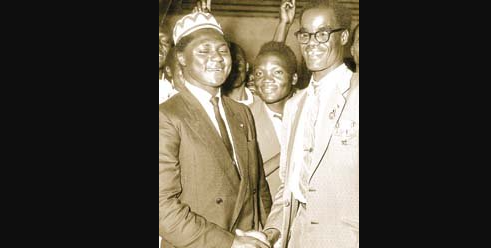
Ochwada, alongside Tom Mboya, emerged as part of a new generation of trade union leaders. The two initially worked together within the Kenya Federation of Labour (KFL), which became a key platform for African political participation during the 1950s.
Ochwada served as Mboya’s deputy and took on leadership responsibilities when Mboya traveled abroad. During this period, the KFL played a critical role in advancing labour rights and political awareness among African workers.
Read Also: How MI5 Secretly Monitored Tom Mboya Like the FBI Did Martin Luther King Jr.
Arthur Ochwada and Global Labour Networks
Ochwada’s influence extended beyond Kenya through his involvement in international labour networks. He traveled extensively, attending conferences in countries such as Uganda, Tunisia, and Ghana.
In 1959, he visited the United States, where he trained at Harvard and engaged with American trade unions. These connections linked the Kenyan labour movement to global networks, particularly through the International Confederation of Free Trade Unions.
Support from organizations such as the AFL-CIO provided funding, training, and political backing. However, these relationships also introduced new dynamics into Kenyan politics, particularly during the Cold War.
Arthur Ochwada Rivalry with Tom Mboya
Despite their early collaboration, Ochwada’s relationship with Mboya became increasingly strained. Differences in ideology and approach led to a growing rivalry.
Ochwada criticized Mboya’s close ties with Western organizations, accusing him of promoting neo-colonial interests. In response, he established the Trade Union Congress of Kenya in 1960 as a rival organization to the KFL.
This move reflected broader political divisions within Kenya, particularly between moderate and more radical nationalist factions.
Although the two leaders briefly reconciled, tensions persisted, and their rivalry remained a defining feature of Kenya’s labour politics.
Arthur Ochwada Political Career
Ochwada transitioned into formal politics during the independence period. He became a founding member of the Kenya African National Union (KANU) and held senior positions within the party.
He served as Member of Parliament and Assistant Minister between 1969 and 1974. His political career also included roles in shaping policy during the early years of independence.
However, his political journey was not without challenges. Legal issues related to the management of trade union funds led to his imprisonment, affecting his political standing.
Arthur Ochwada Regional and International Connections
Ochwada maintained strong regional connections throughout his career. He had ties with leaders such as Milton Obote and later moved to Uganda following Obote’s return to power.
He remained in Uganda until 1985, when the National Resistance Movement led by Yoweri Museveni took control.
Ochwada also had connections with South Sudanese leader John Garang, reflecting his involvement in broader regional political networks.
Read Also: Tom Mboya: A guy that Kenya will never forget
Arthur Ochwada Personal and Political Life
Ochwada’s personal life intersected with his political career. He married Lucy Nyokabi, a granddaughter of Jomo Kenyatta, linking him to Kenya’s first family.
He was also a cousin of Arthur Moody Awori, further connecting him to prominent political figures.
These relationships highlighted the interplay between personal networks and political influence in Kenya’s early years.
Arthur Ochwada Legacy
Ochwada died in 2013, leaving behind a legacy shaped by both achievement and controversy. He is remembered as a pioneering trade unionist and a key figure in Kenya’s labour movement.
His role in founding the Trade Union Congress of Kenya and his contributions to labour organization remain significant milestones.
Outlook on Kenya’s Labour History
The career of Arthur Ochwada illustrates the importance of labour movements in shaping political change. His work reflects the intersection of local struggles and global influences during the Cold War.
His legacy continues to inform discussions on labour rights, political leadership, and the complexities of Kenya’s independence era.
Read Also: When the African Son Tom Mboya was Killed.