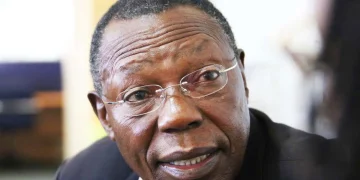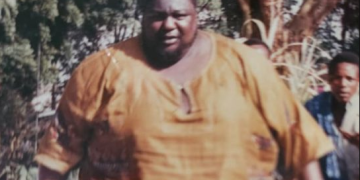
Poxi Presha was one of the most original, controversial and influential figures in Kenyan music. Long before vernacular rap became normal, long before Kenyan artists openly challenged producers and promoters, and long before conversations about music piracy became mainstream, Poxi Presha was already fighting those battles in public.
His real name was Prechard Pouka Olang. He emerged in the mid-1990s as a rapper who refused to sound like everyone else. At a time when Kenyan urban music was still trying to define itself through English, Sheng, reggae, dancehall and imported hip-hop styles, Poxi Presha chose Dholuo as his weapon.
That decision made him different.
It also made him important.
Poxi Presha was loud, witty, rebellious and fearless. His songs carried humour, street language, social observation and cultural confidence. He became known as the “bad boy of Kenyan music,” not only because of his public clashes and unpredictable personality, but because he challenged the systems that controlled artists behind the scenes.
His story is not just about music. It is about ownership, exploitation, language, fame, poverty, illness, and the painful reality that some pioneers are celebrated only after they are gone.
Who Was Poxi Presha?
Poxi Presha was a Kenyan rapper, performer and anti-piracy activist best remembered as one of the earliest artists to bring vernacular hip-hop into the Kenyan mainstream.
Born Prechard Pouka Olang, he became popular in the 1990s with songs that mixed rap, humour, Dholuo lyrics, social commentary and urban attitude. His style stood out because it sounded Kenyan without apology.
He was not trying to copy American hip-hop directly. He was not trying to polish himself for elite audiences. He sounded like the streets, the estate, the village, the matatu stage, the marketplace and the nightclub all at once.
That made him memorable.
His biggest songs included “Dhako,” “Otonglo Time,” “Mummy,” “Jaluo Jeuri,” “Wape Really?” and his version of “Lunchtime,” originally associated with benga legend Gabriel Omolo.
Quick Facts About Poxi Presha
| Detail | Information |
|---|---|
| Stage name | Poxi Presha |
| Real name | Prechard Pouka Olang |
| Nationality | Kenyan |
| Born | 1971 |
| Died | October 2005 |
| Age at death | 34 |
| Main genre | Kenyan hip-hop, vernacular rap |
| Main language influence | Dholuo |
| Known for | “Dhako,” “Otonglo Time,” “Mummy,” “Wape Really?” |
| Nickname | The bad boy of Kenyan music |
| Later work | Anti-piracy activism |
| Legacy | Pioneer of vernacular Kenyan hip-hop |
Why Poxi Presha Matters in Kenyan Music
Poxi Presha matters because he helped prove that Kenyan rap did not have to sound foreign to be powerful.
Before his rise, much of Kenyan urban music was still searching for identity. Artists were influenced by American hip-hop, Jamaican dancehall, Congolese sounds, benga, reggae, gospel, R&B and local pop. The industry had talent, but it lacked a clear modern Kenyan urban sound.
Poxi Presha helped change that by using Dholuo in rap.
This was a bold artistic decision. Vernacular music already existed in Kenya through benga, ohangla, mugithi, taarab, coastal music and other traditions. But vernacular rap was still unusual in the mainstream. Poxi made it feel natural.
He showed that a rapper could use local language, local humour and local stories while still sounding modern.
That influence can be seen in later Kenyan artists who used Sheng, Swahili, Kikuyu, Dholuo, Luhya, Kamba, Kisii, coastal slang and other local expressions without feeling the need to sound imported.
The Rise of Poxi Presha in the 1990s
Poxi Presha rose during a crucial period in Kenyan entertainment.
The 1990s were a bridge between older Kenyan pop traditions and the urban music explosion of the 2000s. Radio was changing. Studios were growing. Producers were experimenting. Young people in Nairobi, Mombasa, Kisumu and other towns were hungry for music that sounded like their lives.
This was the period that produced or prepared the ground for major Kenyan acts across hip-hop, genge, kapuka, gospel, R&B and urban pop.
Poxi Presha entered that environment with a style that was difficult to ignore.
He had charisma. He had humour. He had attitude. He had a voice that could carry both comedy and protest. He also had the courage to sound different in an industry that often rewarded imitation.
His breakthrough helped expand the meaning of Kenyan hip-hop.
“Dhako” and the Power of Vernacular Rap
“Dhako” is one of the songs most closely associated with Poxi Presha’s legacy.
The title means “woman” in Dholuo, and the song became important because it showed the commercial potential of vernacular rap. It was funny, sharp and culturally grounded. It was not written for a foreign audience. It was written from within Kenyan life.
That gave the song power.
Listeners could hear their own language, jokes, social tensions and everyday behaviour reflected in a modern urban sound. It was not traditional music in the old sense, and it was not Western imitation. It sat somewhere in between.
That is why Poxi Presha deserves recognition as one of the artists who helped localize Kenyan hip-hop.
“Otonglo Time” and Social Commentary
“Otonglo Time” remains one of Poxi Presha’s most remembered songs.
The track reflected his ability to mix humour with social commentary. Poxi had a way of turning everyday Kenyan experiences into music that felt entertaining and meaningful at the same time.
He was not only making people dance. He was also making them laugh, think and recognize themselves.
This was one of his strongest gifts.
Many Kenyan artists have built careers on polished vocals or catchy beats. Poxi’s strength was personality. He could command attention because his music carried character. You did not just hear the song. You heard the person behind it.
Why He Was Called Kenya’s Music Bad Boy
Poxi Presha became known as the “bad boy of Kenyan music” because he was difficult to control.
He clashed with producers. He challenged promoters. He criticized exploitation. He spoke openly about piracy. He released songs that sounded like direct attacks on people he believed were mistreating artists.
In an industry where many musicians kept quiet because they needed studio access, airplay or performance opportunities, Poxi often chose confrontation.
That made him controversial.
But it also made him courageous.
The “bad boy” label can be misleading if taken only as scandal. Poxi was not simply rebellious for attention. Much of his rebellion came from frustration with an industry that made artists famous without making them financially secure.
He felt that musicians were being used, underpaid and robbed of their work.
That anger shaped the second half of his public life.
Poxi Presha and the Fight Against Music Piracy
One of the most important parts of Poxi Presha’s story is his anti-piracy activism.
During his later years, he became increasingly focused on fighting music piracy and exploitation. This was a serious issue in Kenya’s music industry. Artists could record songs, become famous, fill shows and dominate radio, but still earn very little from their work.
Pirated cassettes, CDs and unauthorized distribution weakened artists’ income. Producers, middlemen and music sellers often controlled access to money. Many musicians lacked strong legal representation, royalty systems or bargaining power.
Poxi Presha became one of the loudest voices against that system.
He argued that fame without income was meaningless. He wanted artists to benefit from their music. He wanted accountability. He wanted piracy treated as theft, not normal business.
In many ways, his activism came before its time.
Today, Kenyan artists talk about royalties, streaming revenue, copyright, performance rights and digital distribution. Poxi was raising similar issues when the industry was much less organized.
Fame Without Money
One of the saddest parts of Poxi Presha’s life is that he became famous without becoming financially secure.
This is a common story in many African music industries. Artists become household names, but the money disappears through bad contracts, piracy, weak copyright enforcement, poor management or informal business practices.
Poxi Presha’s frustration came from this reality.
He had hits. He had recognition. People knew his name. But recognition did not necessarily translate into wealth, healthcare security or long-term stability.
That gap between public fame and private struggle is one reason his story still feels relevant.
Kenya’s music industry has improved in many ways, but many artists still face the same question: how do you turn popularity into sustainable income?
The Role of Producers and Industry Conflict
Poxi Presha’s career included public disagreements with producers and music industry players. These conflicts contributed to his “bad boy” reputation.
But they also reflected a wider industry problem.
In the 1990s and early 2000s, Kenyan music production was still developing. Producers had significant power because artists depended on them for recording, distribution, radio connections and industry access. Contracts were often weak or poorly understood. Artists sometimes did not know how much money their music generated.
This created room for suspicion and conflict.
Poxi Presha’s disputes should be understood within that environment. He was not only an artist with a difficult personality. He was also a musician trying to fight for control over his work in an industry that did not always protect creators.
Poxi Presha and Nairobi City Ensemble
Poxi Presha was also associated with Nairobi City Ensemble, a project that connected Kenyan urban music with wider musical experimentation.
His collaborations helped preserve and repackage some of his work for audiences beyond the immediate Kenyan pop scene. Tracks such as “Otonglo Time,” “Lunch Time,” “Jaber,” and others helped keep his voice available to listeners after his peak commercial period.
This part of his career matters because it shows that Poxi was not only a local hitmaker. He was part of a broader conversation about African urban music, identity and cultural fusion.
His voice could sit within rap, benga-influenced sounds, Afro-pop and experimental arrangements without losing its identity.
Poxi Presha’s Sound and Style
Poxi Presha’s style was built on several elements.
First, language. His use of Dholuo gave his music a strong identity and helped him stand out.
Second, humour. Even when dealing with serious issues, he often used wit and exaggeration.
Third, attitude. His delivery carried confidence, defiance and sometimes provocation.
Fourth, storytelling. He used characters, situations and social observations that ordinary listeners could recognize.
Fifth, cultural mixing. His music connected urban rap to older Kenyan musical instincts, especially the storytelling tradition found in local music.
This combination made him difficult to classify. He was a rapper, but not in the imported sense. He was a vernacular artist, but not in the purely traditional sense. He was a comic performer, but also a social critic.
That mixture is what made him special.
Why Poxi Presha Was Ahead of His Time
Poxi Presha was ahead of his time in several ways.
He embraced vernacular rap before it became widely accepted. He challenged producers and piracy before artist-rights activism became common. He understood branding before many Kenyan musicians treated music as a business. He used controversy to force conversations that the industry preferred to avoid.
Today, many Kenyan artists build identity around local language, regional pride and cultural specificity. Poxi was already doing that in the 1990s.
Today, artists complain about royalties and unfair deals. Poxi was already doing that two decades ago.
Today, musicians understand that owning rights matters. Poxi was already warning about exploitation.
His tragedy is that he saw the problems clearly, but the industry around him was not ready to solve them.
The Decline and Final Years
Poxi Presha’s later years were difficult.
He continued to be known, but his career was affected by industry battles, financial pressure, illness and the emotional weight of fighting piracy. Reports from the period describe a man who moved between music, activism, courts, police issues and hospitals.
His health declined, and he eventually died in October 2005 at St Mary’s Hospital in Nairobi.
He was only 34.
His death shocked many music fans because he belonged to a generation that had helped create modern Kenyan urban music. He died before the industry fully recognized the value of what he had done.
How Poxi Presha Died
Poxi Presha died in October 2005 after illness. Reports at the time stated that he had been admitted to St Mary’s Hospital in Nairobi before his death.
He was 34 years old.
His passing was a major loss for Kenyan music because he still had influence, personality and unfinished work. He had already made his mark, but he had not fully received the recognition or stability that his contribution deserved.
For many fans, his death became a painful reminder of how poorly Kenya’s music pioneers were often protected.
Poxi Presha’s Legacy
Poxi Presha’s legacy can be seen in three main areas.
The first is language. He helped prove that Kenyan rap could work in vernacular language.
The second is courage. He challenged powerful industry players at a time when many artists were afraid to speak.
The third is artist rights. His anti-piracy campaign helped raise awareness about the financial exploitation of musicians.
He may not have lived long enough to enjoy the digital music era, but many of today’s conversations about copyright, royalties and artist ownership echo the issues he raised.
That makes his story more than nostalgia. It is still relevant.
Poxi Presha’s Most Remembered Songs
| Song | Why It Matters |
| Dhako | Helped popularize Dholuo rap in Kenya |
| Otonglo Time | One of his most remembered social-commentary tracks |
| Mummy | A popular song from his peak years |
| Jaluo Jeuri | Reflected his cultural confidence and bold style |
| Wape Really? | Captured his confrontational industry attitude |
| Lunchtime | Connected his style to older Kenyan popular music |
| Jaber | Helped preserve his voice in later collaborative releases |
| Picha Yanje | Remembered by fans of his catalogue |
These songs show his range. He could be funny, political, romantic, confrontational and deeply local.
Why Younger Kenyans Should Know Poxi Presha
Younger Kenyan music fans should know Poxi Presha because he helped open doors that later artists walked through.
He showed that local language could carry modern music. He showed that an artist could challenge industry exploitation. He showed that music could be entertaining while still carrying cultural identity.
Many young fans know the big names of genge, kapuka, gospel, drill, Arbantone, Afro-pop and Kenyan hip-hop. But Poxi belongs to the foundation beneath those movements.
He was part of the generation that made Kenyan urban music possible.
Poxi Presha and the Business of Kenyan Music
The business side of Poxi Presha’s story may be even more important than the music.
His career exposed the gap between popularity and payment. It showed that radio play, public fame and street recognition do not automatically protect artists from poverty.
This is still one of the biggest issues in Kenyan entertainment.
Artists need contracts. They need publishing rights. They need royalty systems. They need legal advice. They need distribution transparency. They need protection from piracy and unfair exploitation.
Poxi Presha understood this before many people were willing to discuss it openly.
That is why his story should be studied by musicians, producers, managers, lawyers, journalists and policymakers.
What Kenyan Artists Can Learn From Poxi Presha
Modern artists can learn several lessons from Poxi Presha.
First, identity matters. Poxi became unforgettable because he sounded like himself.
Second, rights matter. A hit song is not enough if the artist does not control the business around it.
Third, health matters. Fame should not come at the cost of personal wellbeing.
Fourth, documentation matters. Too many Kenyan pioneers have incomplete archives because their work was not properly preserved.
Fifth, courage matters. Poxi spoke loudly, even when it made him unpopular with powerful people.
His life was not perfect, but it was instructive.
Why Poxi Presha Is Still Remembered
Poxi Presha is still remembered because he represented something rare: originality.
He was not polished in the safest way. He was not easy to manage. He was not always predictable. But he was real.
Kenyan music history needs artists like that.
They disrupt. They annoy. They challenge. They expose hidden problems. They make people uncomfortable. Then, years later, the industry realizes they were saying something important.
That is what happened with Poxi Presha.
He was called a bad boy, but he was also a warning sign. He warned Kenya that artists could be famous and broke. He warned that piracy could kill careers. He warned that local music needed systems, not just talent.
Those warnings still matter.
Poxi Presha in Kenyan Hip-Hop History
Kenyan hip-hop history is often told through groups and movements such as Kalamashaka, Ukoo Flani, Necessary Noize, Gidi Gidi Maji Maji, Hardstone, later genge and kapuka stars, and the digital-era rappers who followed.
Poxi Presha deserves a firm place in that history.
His role was different. He was not only part of the Nairobi conscious rap lane. He was not simply a pop rapper. He created his own lane using Dholuo, humour, social satire and direct confrontation.
That makes him one of the key figures in the localization of Kenyan hip-hop.
He helped answer an important question: what should Kenyan rap sound like?
His answer was simple: it should sound Kenyan.
Common Misunderstandings About Poxi Presha
He Was Not Just a Controversial Artist
The controversy was real, but it should not overshadow his musical importance. He was a pioneer, not just a headline-maker.
He Was Not Only a Luo Artist
His use of Dholuo was central to his identity, but his influence reached beyond one community. He helped expand the possibilities of Kenyan urban music.
He Was Not Fighting for Himself Alone
His anti-piracy activism reflected wider problems affecting many Kenyan artists.
His Career Was Not a Failure
His life had struggles, but his influence remains strong. A short career can still change a whole industry.
His Music Was Not Just Comedy
Humour was part of his style, but many of his songs carried social meaning and industry criticism.
Timeline of Poxi Presha’s Life and Career
| Period | Event |
| 1971 | Prechard Pouka Olang is born |
| Early career | Develops as a performer and rapper |
| Mid-1990s | Emerges as a Kenyan hip-hop pioneer |
| 1997 | Gains attention with music associated with “Dhako” and Total Balaa |
| Late 1990s | Releases and performs major songs including “Otonglo Time” and “Mummy” |
| Early 2000s | Becomes increasingly vocal about piracy and artist exploitation |
| 2004 | Appears in releases linked with Nairobi City Ensemble |
| October 2005 | Dies in Nairobi aged 34 |
| After death | Remembered as one of Kenya’s original vernacular rap pioneers |
Key Takeaways
- Poxi Presha’s real name was Prechard Pouka Olang.
- He was one of Kenya’s early hip-hop pioneers.
- He became famous for rapping in Dholuo.
- His major songs included “Dhako,” “Otonglo Time,” “Mummy” and “Wape Really?”
- He was known as the bad boy of Kenyan music.
- His rebellious image came partly from industry conflicts.
- He fought against music piracy and artist exploitation.
- He helped prove that Kenyan rap could succeed in local languages.
- He died in October 2005 aged 34.
- His legacy remains important in Kenyan music history.
- His story is also a warning about fame without financial protection.
- Modern Kenyan artists can learn from his fight for ownership and rights.
Frequently Asked Questions
Who was Poxi Presha?
Poxi Presha was a Kenyan rapper, performer and anti-piracy activist whose real name was Prechard Pouka Olang. He is remembered as one of the pioneers of vernacular Kenyan hip-hop.
What was Poxi Presha’s real name?
His real name was Prechard Pouka Olang.
Why was Poxi Presha famous?
He was famous for rapping in Dholuo, producing memorable songs such as “Dhako,” “Otonglo Time” and “Mummy,” and challenging exploitation in the Kenyan music industry.
Why was he called the bad boy of Kenyan music?
He earned the nickname because of his rebellious personality, public clashes with industry players, confrontational songs and refusal to stay silent about exploitation.
What language did Poxi Presha rap in?
He was best known for rapping in Dholuo, although his music also reflected wider Kenyan urban culture.
What are Poxi Presha’s most popular songs?
His most remembered songs include “Dhako,” “Otonglo Time,” “Mummy,” “Jaluo Jeuri,” “Wape Really?” and “Lunchtime.”
Was Poxi Presha involved in anti-piracy activism?
Yes. In his later years, he became one of the most vocal Kenyan musicians fighting against piracy and unfair exploitation of artists.
When did Poxi Presha die?
Poxi Presha died in October 2005.
How old was Poxi Presha when he died?
He was 34 years old.
Why is Poxi Presha important today?
He is important because he helped localize Kenyan hip-hop, promoted vernacular rap, challenged music piracy and exposed the difficult business realities facing Kenyan artists.
Conclusion
Poxi Presha was more than Kenya’s original music bad boy. He was a pioneer who used language, humour, rebellion and courage to reshape Kenyan urban music.
He proved that rap could sound local and still be modern. He showed that Dholuo could carry hip-hop energy. He challenged producers, pirates and promoters when many artists were afraid to speak. He became famous, but his life also exposed the painful truth that fame does not always protect musicians from poverty, illness or exploitation.
His death at only 34 left Kenyan music with unfinished questions. How should artists be paid? Who owns their work? Who protects pioneers after the applause fades? How does a country preserve the people who built its sound?
Those questions remain relevant today.
Poxi Presha’s story deserves to be remembered not only because of the controversy, but because of the courage. He was difficult, funny, fearless and original. Kenyan music still carries echoes of his voice.
Read Also: QVSELP Scam Warning: Why Kenyans Should Be Careful