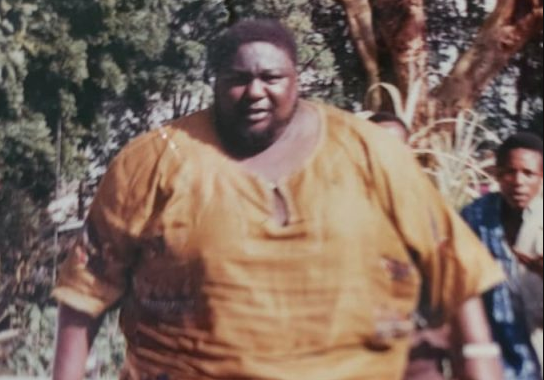
Prof. Naaman remains one of the most unforgettable figures in Kenya’s cultural memory. Known formally as Professor Mohammed Bakari Naaman, and widely remembered as Prof. M.B. Naaman, he stood at the rare intersection of music, traditional healing, folklore, public performance, and popular myth. In the 1980s and early 1990s, his name carried weight across radio, live shows, trade fairs, village stories, and urban conversations.
To some Kenyans, he was the powerful lead voice behind the Nine Stars Orchestra, a band associated with Swahili rhumba, early Kenyan Afro-pop, and songs that became part of the Voice of Kenya radio era. To others, he was a respected traditional herbalist whose public appearances drew crowds at Agricultural Society of Kenya shows and regional exhibitions. To many more, he was simply a larger-than-life personality whose physical presence, musical charm, and mysterious reputation made him impossible to ignore.
Born in Mombasa on February 12, 1946, Prof. Naaman came from a culturally mixed background that reflected the coastal world of Kenya, Tanzania, Oman, Islam, Swahili identity, and inland African traditions. His later years connected him with Nairobi and Kitui, where he built both his music career and herbal practice before his death on October 26, 1992.
His legacy survives because he was not an ordinary entertainer. He was a storyteller, performer, healer, family man, businessman, and folk legend. His best-known song, Mama Wa Kambo, remains a major reference point in Kenyan popular music. It carried a simple but powerful question about step-parents, family life, and social judgment. Decades later, that song still speaks to listeners because it came from everyday life.
Early Life in Mombasa
Prof. Mohammed Bakari Naaman was born in Mombasa, a city whose identity has always been shaped by movement, trade, religion, language, and music. Mombasa’s cultural atmosphere gave him access to Swahili rhythms, Islamic learning, coastal storytelling, and the social life of public performance.
His background was diverse. Accounts of his family roots connect him to Omani, Tanzanian, Mijikenda, and broader coastal heritage. This mixture helped shape his identity as a man who moved easily between different communities.
Although his formal education was limited, his public intelligence was widely recognized. He understood people, crowds, rhythm, performance, and belief. He also immersed himself in Islamic studies, which shaped his spiritual outlook and public personality.
That combination later made him more than a musician. He became a cultural authority figure, especially among people who saw no sharp separation between entertainment, spirituality, healing, and community leadership.
The Rise of Nine Stars Orchestra
Prof. Naaman earned much of his musical fame as the lead singer of the Nine Stars Orchestra. During the 1980s, Kenyan popular music was shaped by radio, live bands, vinyl records, cassettes, bars, social halls, and public dances.
This was the period before streaming platforms and social media. A song became famous because radio presenters played it repeatedly, fans requested it, and live audiences embraced it. Prof. Naaman’s music found a home in that environment.
His songs received airplay on the Voice of Kenya, now known as KBC. Veteran broadcaster Fred Obachi Machoka helped popularize many Kenyan and African classics through shows such as Music Time. For artists like Prof. Naaman, radio exposure was central to national recognition.
Nine Stars Orchestra gave him the platform to blend Swahili lyrics, rhumba-inspired guitar lines, catchy choruses, and social themes. His music was accessible but not shallow. It reflected family conflicts, relationships, identity, humor, and the emotional realities of ordinary people.
Mama Wa Kambo and the Song That Defined Him
Mama Wa Kambo is the song most closely associated with Prof. Naaman. Its chorus asks a memorable social question: between a stepmother and a stepfather, who is worse?
The power of the song lies in its simplicity. Step-parent relationships are common in many families, and the topic carries emotional weight. By turning that subject into a catchy song, Prof. Naaman gave listeners a way to discuss family tension through music.
The song also showed his gift for public storytelling. He did not need complicated language to reach people. He used everyday Swahili, repetition, rhythm, and humor to create a track that remained memorable long after its release.
Mama Wa Kambo became more than a hit. It became part of Kenya’s cultural vocabulary. People who may not know his full biography often remember the song.
Other Major Songs
Prof. Naaman’s catalogue extended beyond Mama Wa Kambo. He also released and performed songs such as Mwana Siti, Christina, Amina, Pembe, and Dada Batuli.
These songs helped establish him as a consistent artist rather than a one-song figure. They carried the sound of an era when Kenyan musicians built reputations through repeated radio play, live shows, and public familiarity.
His music drew from Afro-pop, Swahili rhumba, coastal melody, and the danceable guitar traditions that influenced East African bands. He was not only a vocalist. He was a cultural performer who understood how to hold an audience.
A Star of the VOK Radio Era
To understand Prof. Naaman’s fame, it is important to understand the role of radio in Kenya during the 1980s. The Voice of Kenya was a powerful national broadcaster. When a song entered regular rotation, it could reach homes, shops, matatus, markets, and rural trading centers.
Prof. Naaman’s music benefited from this ecosystem. His voice and songs became familiar to listeners across generations. Unlike today’s digital fame, radio fame created a shared national memory. People heard the same songs at the same time, from the same broadcaster, and often discussed them in daily life.
That is why many Kenyans still associate him with a specific time: the golden age of radio-led local music discovery.
The Herbalist and Public Healer
Beyond music, Prof. Naaman built a major reputation as a traditional herbalist and healer. His herbal practice became part of his identity, and many people sought him out for assistance.
He was especially visible at Agricultural Society of Kenya trade shows in towns such as Kitui and Embu. These exhibitions were not only agricultural events. They were social gatherings where businesspeople, performers, healers, politicians, and ordinary citizens interacted.
Prof. Naaman’s tent reportedly drew large crowds. Some people came out of curiosity. Others came to buy herbal remedies. Others came because they believed he had spiritual power.
For responsible modern reporting, it is important to treat medical claims carefully. Many stories about his healing ability belong to oral history and family memory. They should be presented as part of his reputation, not as verified medical evidence. Still, the fact that so many people associated him with healing shows how deeply he was trusted by sections of the public.
The Man Behind the Myths
Prof. Naaman’s physical size made him the subject of many stories. He was widely remembered as an exceptionally large man, with accounts describing him as nearly two metres tall and extremely heavy.
His size contributed to his public legend. In Kenyan popular memory, stories grew around him: his appetite, his car, his strength, his presence, and his unusual lifestyle.
One of the most repeated stories says he had to modify a vehicle because he could not fit into it comfortably. Family accounts have supported the broad truth of this story, saying the car had to be adjusted for him.
Other stories were exaggerated. Claims that he ate two crates of eggs for breakfast or an entire goat alone became part of urban legend. Family clarification suggests that although he had a large appetite and could slaughter a goat, the meat was shared with band members, visitors, and workers.
That distinction matters. Prof. Naaman was a real person, not only a myth. The exaggerations show how famous he became, but the reality is more interesting: he was a generous public figure surrounded by musicians, family, clients, and followers.
Family Life and Personal Identity
Prof. Naaman was a family man and a devout Muslim. Reports about his family say he had four wives and 17 children.
His family background and household life became part of his public story. Like many famous figures, rumors followed him. One claim suggested that he operated a school mainly for his own children. His son Rashid Naaman later dismissed that story, saying he himself studied only up to Class 8 and would have been the first beneficiary if such a school had existed.
Family memory is important in preserving Prof. Naaman’s story because many details of Kenyan music history remain underdocumented. In such cases, the voices of children, relatives, bandmates, broadcasters, and fans become essential.
Kitui, Nairobi and the Healing Practice
Although born in Mombasa, Prof. Naaman’s later life connected him strongly with Kitui and Nairobi. He reportedly ran a major herbal clinic in Kitui and also had operations in Nairobi’s Milimani area near Sagret Hotel.
This movement between towns shows how his influence extended beyond the Coast. He became a national figure whose clients and fans came from different parts of Kenya.
Kitui became especially important to his healing identity. Nairobi gave him access to a wider public, media networks, and national attention. Together, these places helped shape his late-career image as both entertainer and healer.
Cultural Importance of His Dual Identity
Prof. Naaman’s story matters because he challenges narrow definitions of celebrity. He was not only a musician. He was not only a herbalist. He was a complete cultural personality.
In many African societies, music, spirituality, healing, and storytelling are connected. A performer can also be a counselor. A healer can also be a public entertainer. A musician can also become a symbol of community belief.
Prof. Naaman embodied that older cultural model. His fame did not depend only on record sales. It depended on presence, reputation, word of mouth, public trust, radio play, and the emotional bond he built with people.
His Death in 1992
Prof. Mohammed Bakari Naaman died on October 26, 1992, at Nairobi Hospital. Reports and family accounts have linked his death to heart complications, with his extreme weight considered a contributing factor.
His death came at a time when Kenya’s music industry was changing. The early 1990s brought new sounds, new media habits, and shifting tastes. Yet his songs continued to live on because they were already embedded in public memory.
For many fans, his passing marked the end of a unique cultural era. Kenya had lost a man who was part musician, part healer, part legend, and part community spectacle.
Legacy Through His Children
Prof. Naaman’s legacy continues through his family. Reports identify three of his sons, Rashid Naaman, Naaman Mohamed Naaman, and Abubakar Mohamed Naaman, as continuing the family tradition as herbalists.
Rashid Naaman also inherited musical talent. His songs, including Unaniroga, Jera, and Real Life, introduced him to a younger audience. He also worked with Tanzanian artist T.I.D. and produced music for other coastal performers.
Later, Rashid reportedly stepped away from music to focus more fully on herbal medicine. This decision reflects the same dual inheritance that defined his father’s life: music and healing.
Royalties and the Problem of Kenyan Music Archives
One of the most important issues in Prof. Naaman’s story is the question of royalties. His music remains available on modern platforms, but his family has said they have not benefited financially from its continued use.
This raises a wider issue in Kenyan music history. Many older artists recorded music in an industry that lacked strong documentation, transparent contracts, and reliable royalty systems. As a result, families of legendary musicians often struggle to claim earnings from songs that remain popular decades later.
Prof. Naaman’s case should encourage renewed attention to copyright, archiving, artist estates, and digital royalties. Kenya’s cultural memory depends not only on praising old musicians but also on protecting their work and compensating their families fairly.
Why Prof. Naaman Still Matters
Prof. Naaman still matters because he represents a kind of Kenyan celebrity that no longer exists in the same form. He became famous before social media, before YouTube fame, and before instant digital promotion.
His reputation was built through talent, personality, radio, performance, and public mystery. People remembered him because he gave them songs, stories, healing claims, laughter, and spectacle.
He also matters because his music preserved a period of Kenyan urban and coastal sound. His Swahili rhumba and Afro-pop style captured the emotional and social concerns of ordinary listeners.
Most importantly, he remains a reminder that Kenyan cultural history is full of figures who deserve deeper documentation. Without serious biographies, interviews, archives, and family records, important stories risk fading into rumor.
Conclusion
Prof. Mohammed Bakari Naaman was one of Kenya’s most remarkable cultural icons. As the lead singer of Nine Stars Orchestra, he gave the country memorable songs such as Mama Wa Kambo, Mwana Siti, Christina, Amina, Pembe, and Dada Batuli. As a herbalist, he became a trusted and mysterious public figure whose exhibition tents drew crowds across Kenya.
His life was filled with music, healing, faith, family, myth, and public fascination. Some stories about him were true. Others grew larger with time. But together, they show the scale of his impact.
Prof. Naaman was not simply a musician from the past. He was a cultural force. His songs still echo, his name still sparks memory, and his legend remains part of Kenya’s rich artistic history.
FAQs
Who was Prof. M.B. Naaman?
Prof. M.B. Naaman, whose full name was Mohammed Bakari Naaman, was a Kenyan musician, lead singer of Nine Stars Orchestra, and traditional herbalist.
When was Prof. Naaman born?
He was born in Mombasa on February 12, 1946.
When did Prof. Naaman die?
He died on October 26, 1992, at Nairobi Hospital.
What was Prof. Naaman’s most famous song?
His most famous song was Mama Wa Kambo, a popular Kenyan classic about step-parent relationships.
Which band was Prof. Naaman associated with?
He was best known as the lead singer of the Nine Stars Orchestra.
Was Prof. Naaman also a herbalist?
Yes. He was widely known as a traditional herbalist and healer, especially through his public appearances at regional trade shows.
What other songs did Prof. Naaman release?
His other known songs include Mwana Siti, Christina, Amina, Pembe, and Dada Batuli.
Why is Prof. Naaman remembered today?
He is remembered for his music, his public healing reputation, his huge personality, and his lasting place in Kenyan cultural history.
Suggested Tags: Prof Naaman, Kenyan Music, Nine Stars Orchestra, Swahili Rhumba