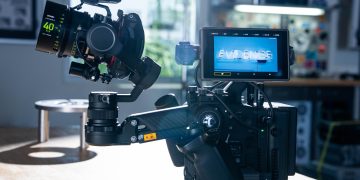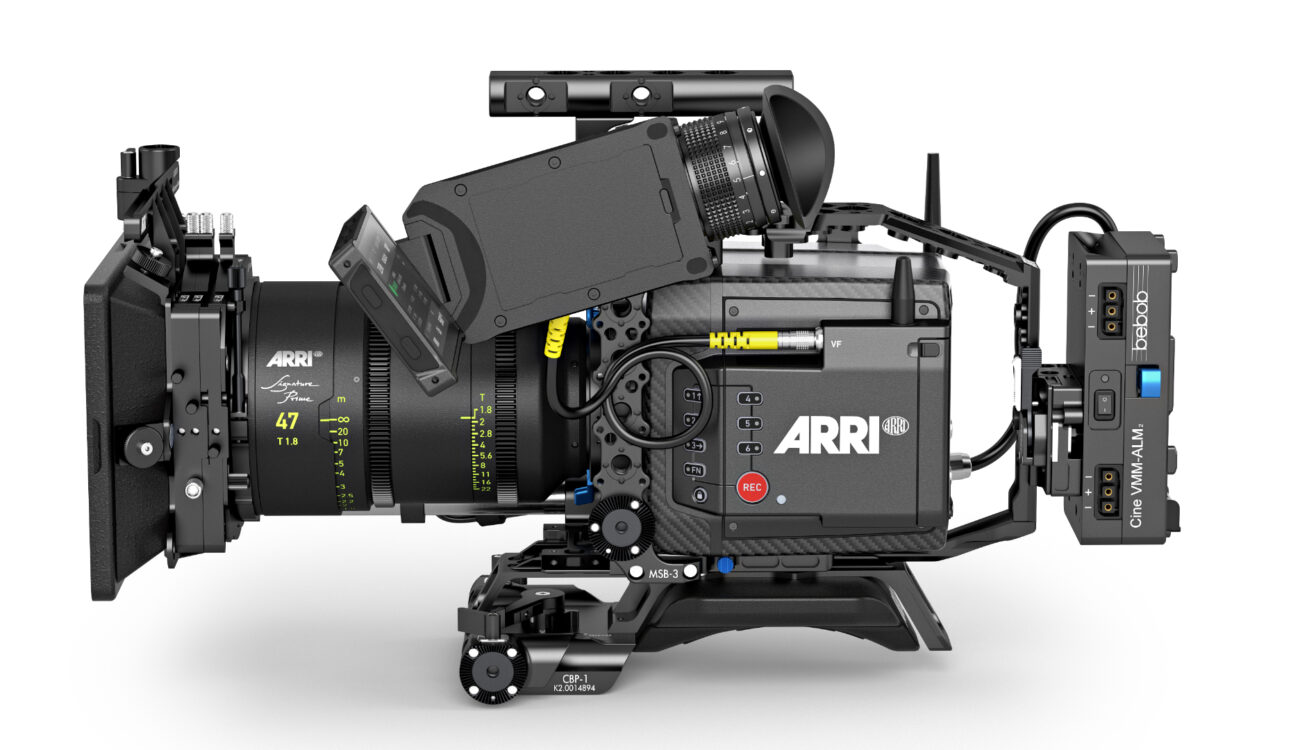
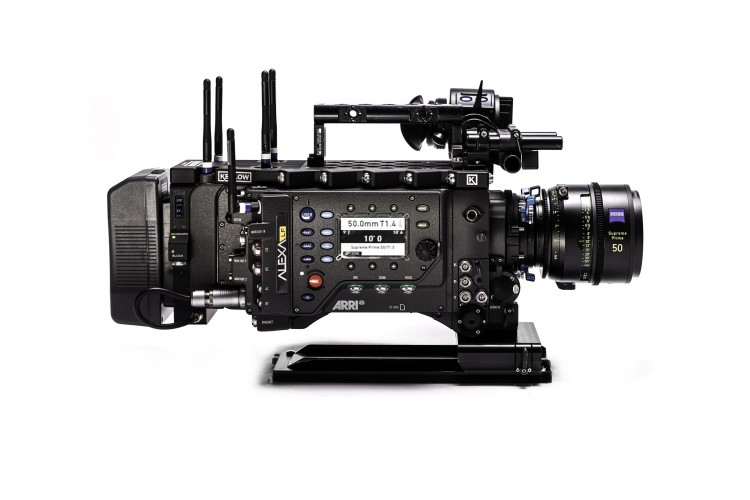
ARRI ALEXA LF is a professional large-format digital cinema camera built for productions that want the classic ALEXA image in a wider sensor format.
Released in 2018, the ALEXA LF marked an important step for ARRI. It brought large-format capture to the ALEXA family while keeping the colour science, highlight handling and production reliability that made ARRI cameras popular on high-end film sets.
The camera uses a large-format sensor measuring 36.70 x 25.54 mm. That sensor is larger than Super 35 and gives cinematographers a wider field of view, different depth behaviour and a more immersive large-format look.
The ALEXA LF is not a small camera. At about 7.8 kg for the body with LPL mount, it is much heavier than later compact models such as the ALEXA Mini LF. However, it remains an important cinema camera because it helped establish ARRI’s large-format system for feature films, commercials, premium streaming productions and high-end visual storytelling.
Key Camera Specifications
The ARRI ALEXA LF uses a large-format ARRI ALEV III A2X CMOS sensor with a Bayer pattern colour filter array.
Its maximum sensor resolution is 4448 x 3096, and its full Open Gate image area measures 36.70 x 25.54 mm. The camera supports ARRIRAW and Apple ProRes recording, giving productions a choice between maximum post-production flexibility and more efficient editorial workflows.
| Feature | ARRI ALEXA LF |
|---|---|
| Camera type | Large-format digital cinema camera |
| Release period | 2018 |
| Sensor type | ARRI ALEV III A2X CMOS |
| Sensor format | Large Format |
| Sensor size | 36.70 x 25.54 mm |
| Maximum resolution | 4.5K Open Gate, 4448 x 3096 |
| Sensor diagonal | 44.71 mm |
| Base sensitivity | EI 800 |
| Exposure index range | EI 160–3200 |
| Dynamic range | 14+ stops, according to ARRI |
| Lens mount | LPL, with PL support |
| Main codecs | ARRIRAW and Apple ProRes |
| Recording media | SXR Capture Drives and SxS PRO+ Cards |
| Sensor frame rates | 0.75–150fps depending on mode |
| Body weight | About 7.8 kg with LPL mount |
| Dimensions | About 364 mm x 158 mm x 201 mm class |
The camera’s main strength is its combination of large-format capture and familiar ALEXA image quality.
Large-Format Sensor and Image Character
The ALEXA LF was designed around a 36.70 x 25.54 mm sensor, giving it a larger image area than traditional Super 35 cameras.
This larger sensor changes how lenses behave. It can create a wider field of view with less distortion and can produce stronger subject separation when paired with the right optics. This is one reason large-format cinematography became attractive for premium drama, commercials and feature films.
The camera’s 44.71 mm sensor diagonal also made lens coverage an important part of production planning. Not every older Super 35 lens can cover the full Open Gate area, so cinematographers often use large-format lenses or carefully tested optics.
Why Large Format Matters
Large format is not only about resolution.
It affects perspective, depth, lens choice and the emotional feel of the image. A large-format camera can make close-ups feel intimate while still showing more of the environment. It can also give landscapes, interiors and wide shots a grander sense of space.
For filmmakers, the ALEXA LF offered that large-format look while keeping the familiar ARRI colour response.
4.5K Open Gate Recording
The ALEXA LF records 4.5K Open Gate at 4448 x 3096.
Open Gate uses the full height and width of the sensor. This gives productions more flexibility for framing, reframing, stabilisation, visual effects and multiple delivery formats.
The camera also supports LF 16:9 and LF 2.39:1 modes, allowing crews to choose the sensor area that best fits the project.
| Recording Format | Resolution |
| LF Open Gate ProRes 4.5K | 4448 x 3096 |
| LF Open Gate ARRIRAW 4.5K | 4448 x 3096 |
| LF 16:9 ProRes HD | 1920 x 1080 |
| LF 16:9 ProRes 2K | 2048 x 1152 |
| LF 16:9 ProRes UHD | 3840 x 2160 |
| LF 16:9 ARRIRAW UHD | 3840 x 2160 |
| LF 2.39:1 ProRes 4.5K | 4448 x 1856 |
| LF 2.39:1 ARRIRAW 4.5K | 4448 x 1856 |
The Open Gate mode is especially useful for filmmakers who want maximum sensor area and the strongest large-format look.
Open Gate for Modern Delivery
Open Gate recording gives editors and post-production teams more room to work.
A project may need cinema widescreen, streaming, 16:9 trailers, vertical social media clips and VFX plates. Capturing the full sensor allows the production to protect several versions from one master image.
This flexibility is one reason Open Gate recording became so important in modern cinema workflows.
Dynamic Range and Image Quality
ARRI lists the ALEXA LF with 14+ stops of dynamic range across its EI 160–3200 sensitivity range.
Dynamic range is one of the reasons ALEXA cameras are trusted in high-end cinematography. It determines how much detail the camera can hold between bright highlights and dark shadows.
The ALEXA LF is designed to handle skies, windows, practical lights, skin tones and dark interiors with a smooth and natural response. This is especially important for narrative films and commercials where the image must remain elegant under difficult lighting.
Why Dynamic Range Matters
High dynamic range gives cinematographers more freedom.
They can expose scenes with bright windows, reflective surfaces or backlight without losing important detail too quickly. It also gives colourists more control in the grade.
ARRI’s highlight roll-off is a major part of the ALEXA look, and the LF continues that tradition in a larger format.
ARRIRAW and ProRes Recording
The ALEXA LF records ARRIRAW and Apple ProRes.
ARRIRAW is the best option when productions need maximum control in post-production. It preserves more image information and gives colourists greater flexibility when adjusting exposure, contrast and colour.
ProRes is easier to manage and widely supported by editing systems. The ALEXA LF supports ProRes 422, ProRes 422 HQ, ProRes 4444 and ProRes 4444 XQ.
Choosing ARRIRAW or ProRes
ARRIRAW is ideal for feature films, VFX-heavy work and premium commercials where image flexibility matters most.
ProRes is useful for projects that still need high quality but want faster editing, simpler data management and lower storage pressure.
The camera’s ability to support both workflows made it practical for different production budgets and post-production needs.
Frame Rates and Slow Motion
The ALEXA LF supports sensor frame rates from 0.75fps to 150fps, depending on the recording mode.
The highest frame rates are available in narrower sensor modes. ARRI lists LF 2.39:1 ARRIRAW 4.5K as supporting up to 150fps, while LF Open Gate ARRIRAW 4.5K supports up to 90fps. LF Open Gate ProRes supports up to 60fps.
| Mode | Maximum Frame Rate |
| LF Open Gate ProRes 4.5K | Up to 60fps |
| LF Open Gate ARRIRAW 4.5K | Up to 90fps |
| LF 16:9 ProRes HD, 2K and UHD | Up to 60fps |
| LF 16:9 ARRIRAW UHD | Up to 90fps |
| LF 2.39:1 ProRes 4.5K | Up to 100fps |
| LF 2.39:1 ARRIRAW 4.5K | Up to 150fps |
This gave filmmakers useful slow-motion options without leaving the ARRI large-format system.
Why 150fps Matters
A 150fps option allows elegant slow motion for action, emotion, commercials, music videos and visual details.
It is not an extreme high-speed camera by modern standards, but for many film and commercial workflows, 90fps to 150fps is enough to create strong slow-motion moments.
Lens Mount and Lens Coverage
The ALEXA LF introduced ARRI’s LPL mount as part of its large-format camera system.
The LPL mount was designed for large-format cinema lenses. It has a wider diameter and shorter flange focal depth than the traditional PL mount, making it better suited to modern large-format optics.
ARRI also supports PL mount workflows, allowing productions to use existing lens sets where coverage permits.
Lens Coverage Is Critical
Lens coverage is one of the most important considerations when shooting with the ALEXA LF.
The full Open Gate image area is much larger than Super 35. Some lenses may vignette, soften heavily at the edges or fail to cover the full frame.
Large-format lenses such as ARRI Signature Primes were developed to support this new system. However, many productions also test vintage lenses, rehoused lenses and selected PL lenses for creative looks.
Recording Media and Workflow
The ALEXA LF records to SXR Capture Drives and SxS PRO+ Cards depending on format and workflow.
SXR Capture Drives are used for heavier recording needs, including ARRIRAW and higher-data-rate ProRes options. SxS PRO+ Cards support ProRes workflows.
Large-format ARRIRAW footage can create major data demands, so productions must plan storage, backups, transfer speeds and post-production capacity carefully.
Data Planning for ALEXA LF
Shooting large-format ARRIRAW is not only a camera decision. It is a production workflow decision.
Crews need enough media on set, reliable data wrangling, backup systems and post-production storage. For large productions, this is normal. For smaller teams, ProRes may be easier to manage.
Body Design and Weight
The ALEXA LF is a large and heavy cinema camera.
Its body weighs about 7.8 kg with the LPL mount, and its dimensions are much bigger than the later ALEXA Mini LF. This makes it best suited to studio builds, tripod work, dollies, cranes, remote heads and controlled production environments.
The size and weight can be a challenge for handheld work or lightweight gimbal setups.
Why the Mini LF Became Important
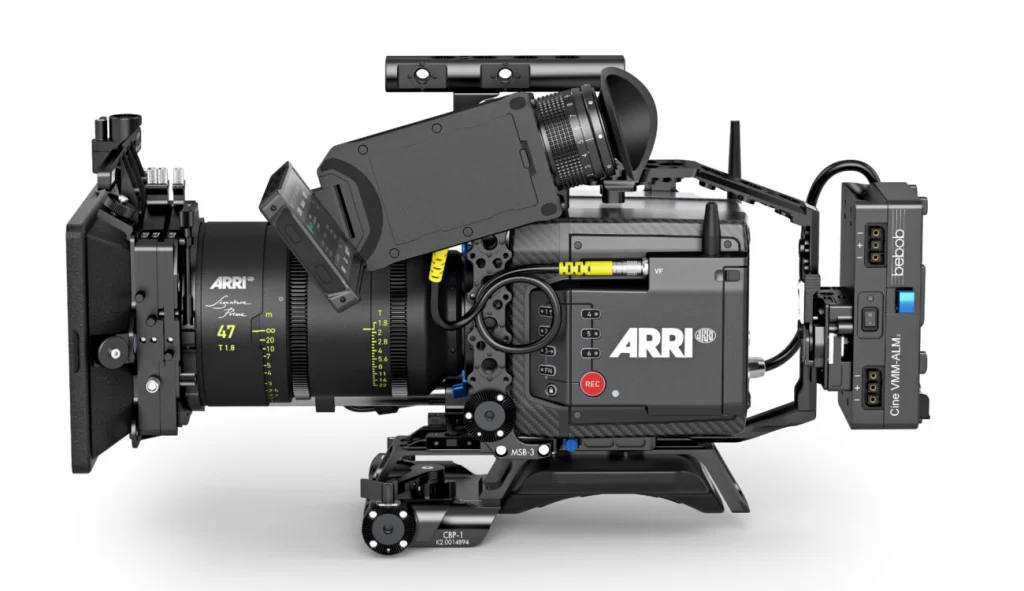
The later ALEXA Mini LF became popular because it delivered similar large-format image quality in a much smaller and lighter body.
However, the original ALEXA LF remains important because it established ARRI’s large-format digital cinema system and gave productions a robust studio-style camera option.
Filters, Monitoring and Production Tools
The ALEXA LF includes professional camera tools for high-end production.
ARRI lists manual behind-the-lens FSND filters ranging from Optical Clear to ND 2.4. The camera also supports EVF-1 and EVF-2 viewfinders, monitoring outputs, false colour, peaking, zoom tools, timecode, remote control and wireless systems.
These features make the camera practical for professional crews that need consistent on-set monitoring, camera control and exposure management.
Why Built-In ND Support Matters
Neutral density filters are essential for controlling exposure without changing aperture, shutter angle or sensitivity.
Having behind-the-lens FSND filter options helps cinematographers maintain their intended depth of field in bright conditions, especially when shooting wide open with large-format lenses.
Best Uses for the ARRI ALEXA LF
The ARRI ALEXA LF is best suited for high-end productions that want large-format ARRI image quality and can support a full professional camera package.
It is a strong choice for:
Feature films
Premium drama series
Luxury commercials
Music videos
VFX-heavy productions
Studio shoots
Large-format visual storytelling
Projects using ARRI Signature Primes or other large-format lenses
The camera is less suited for lightweight run-and-gun work because of its size and weight. For that, the ALEXA Mini LF is usually more practical.
ARRI ALEXA LF vs ALEXA Mini LF
The ALEXA LF and ALEXA Mini LF share the same large-format image philosophy, but their bodies and workflows are different.
| Feature | ALEXA LF | ALEXA Mini LF |
| Sensor format | Large Format | Large Format |
| Sensor size | 36.70 x 25.54 mm | 36.70 x 25.54 mm |
| Maximum Open Gate | 4448 x 3096 | 4448 x 3096 |
| Body weight | About 7.8 kg | About 2.6 kg |
| Lens mount | LPL and PL support | LPL, EF support depending on setup |
| Best for | Studio-style large-format production | Compact large-format production |
| Main advantage | Robust original LF system | Smaller and easier to rig |
The ALEXA LF is better for traditional production builds and controlled environments. The Mini LF is better when mobility matters.
Key Takeaways
- ARRI ALEXA LF is a large-format digital cinema camera released in 2018.
- It uses a 36.70 x 25.54 mm ARRI ALEV III A2X CMOS sensor.
- The maximum Open Gate resolution is 4448 x 3096.
- ARRI lists the camera with 14+ stops of dynamic range.
- The base sensitivity is EI 800.
- The camera supports ARRIRAW and Apple ProRes.
- The LPL mount was introduced for ARRI’s large-format lens system.
- PL mount workflows are also supported.
- The camera supports frame rates up to 150fps depending on mode.
- Recording media includes SXR Capture Drives and SxS PRO+ Cards.
- The body weighs about 7.8 kg with the LPL mount.
- The ALEXA LF helped establish ARRI’s modern large-format cinema system.
Frequently Asked Questions
What is the ARRI ALEXA LF?
The ARRI ALEXA LF is a professional large-format digital cinema camera designed for high-end film, television, commercial and streaming production.
When was the ARRI ALEXA LF released?
The ARRI ALEXA LF was released in 2018.
What sensor does the ARRI ALEXA LF use?
It uses a large-format ARRI ALEV III A2X CMOS sensor with a Bayer pattern colour filter array.
What is the sensor size?
The sensor measures 36.70 x 25.54 mm, with a 44.71 mm diagonal.
What is the maximum resolution?
The maximum Open Gate recording resolution is 4448 x 3096.
What is the base ISO?
The camera’s base sensitivity is EI 800.
What dynamic range does the ALEXA LF offer?
ARRI lists the ALEXA LF with 14+ stops of dynamic range across EI 160–3200.
What codecs does the camera support?
The camera records ARRIRAW and Apple ProRes, including ProRes 422, 422 HQ, 4444 and 4444 XQ.
What lens mount does the ALEXA LF use?
The camera uses the LPL mount and also supports PL mount workflows.
How heavy is the ARRI ALEXA LF?
The camera body weighs about 7.8 kg with the LPL mount.
What is the highest frame rate?
The camera can reach up to 150fps in LF 2.39:1 ARRIRAW mode, depending on settings.
Who should use the ARRI ALEXA LF?
It is best for professional cinematographers, studios, rental houses and high-end productions that need large-format ARRI image quality.
Conclusion
ARRI ALEXA LF remains a landmark cinema camera because it brought large-format capture into the ALEXA ecosystem.
With its 36.70 x 25.54 mm sensor, 4.5K Open Gate recording, ARRIRAW, ProRes, 14+ stops of dynamic range and LPL lens system, it helped define ARRI’s modern large-format workflow.
The camera is large and heavy compared with the ALEXA Mini LF, but it remains an important tool for productions that want a robust studio-style large-format system. For filmmakers who value ARRI colour, large-format perspective and professional reliability, the ALEXA LF still holds an important place in digital cinema history.
Read Also: ARRI ALEXA Mini LF: Specs, Sensor, Dynamic Range and Features