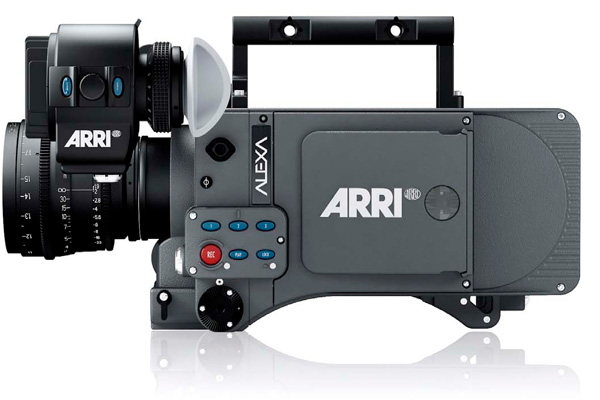
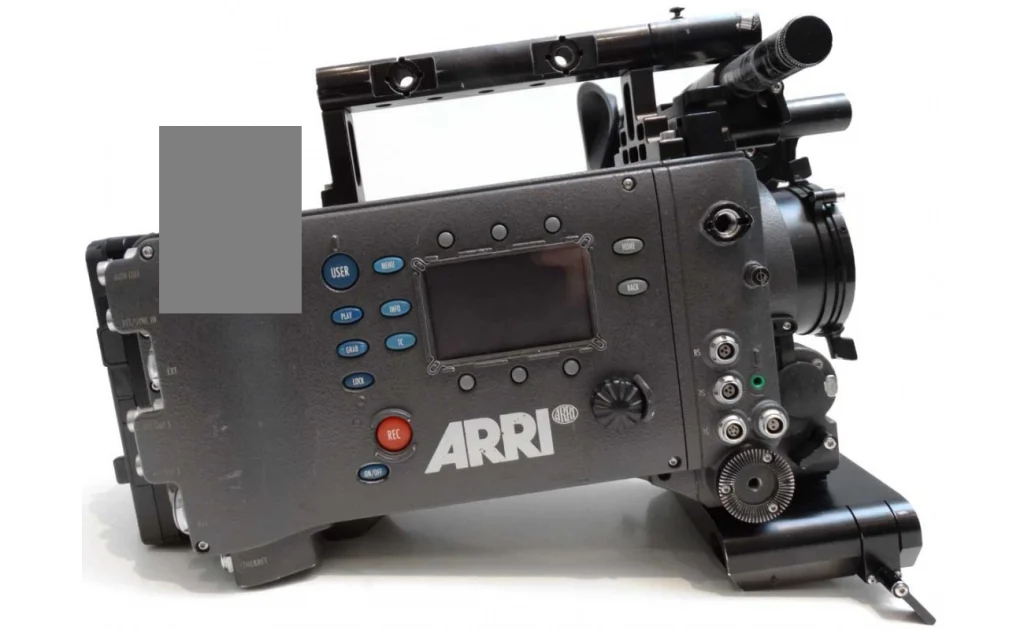
ARRI ALEXA Classic is one of the most influential digital cinema cameras ever made.
Released in 2010, the camera helped change how filmmakers, cinematographers and studios viewed digital acquisition. Before the ALEXA became a standard, many digital cinema cameras struggled to match the highlight roll-off, colour response and natural image texture that cinematographers expected from film.
The ALEXA Classic changed that conversation.
It combined a Super 35 ALEV III sensor, ISO 800 base sensitivity, strong dynamic range, Log C recording and a practical Apple ProRes workflow. The result was a camera that looked cinematic, handled difficult light well and fitted into professional post-production systems without unnecessary complexity.
Although newer ARRI cameras now offer higher resolutions, larger sensors and more advanced colour science, the ALEXA Classic remains important. It established the ALEXA look and helped make ARRI one of the most trusted names in digital cinematography.
Key Camera Specifications
The ARRI ALEXA Classic uses a Super 35mm sensor measuring about 23.8 x 13.4 mm in the 16:9 active image area. It records 2K and HD ProRes internally and uses a PL lens mount.
| Feature | ARRI ALEXA Classic |
|---|---|
| Camera type | Super 35 digital cinema camera |
| Release period | June 2010 |
| Sensor format | Super 35mm |
| Sensor size | About 23.8 x 13.4 mm |
| Sensor family | ARRI ALEV III CMOS |
| Lens mount | PL |
| Base sensitivity | ISO 800 |
| Main recording format | Apple ProRes |
| Main resolutions | 2K 16:9 and HD |
| 2K resolution | 2048 x 1152 |
| HD resolution | 1920 x 1080 |
| Measured dynamic range | Up to 13.8 stops at SNR=2 |
| Measured rolling shutter | 7.2ms |
| Body weight | About 6.3 kg |
| Dimensions | About 332 mm x 158 mm x 153 mm |
The ALEXA Classic may look modest by modern resolution standards, but its image quality remains the reason it is still respected.
Super 35 Sensor and ARRI Image Quality
The ALEXA Classic uses ARRI’s ALEV III Super 35 sensor.
This sensor became one of the most important imaging platforms in digital cinema. It was not designed to win a resolution race. Instead, it focused on dynamic range, colour quality, skin tone reproduction and highlight behaviour.
That decision helped the camera stand out. Many cinematographers cared less about pixel count and more about whether the image felt natural, flexible and film-like.
Why the ALEV III Sensor Became Important
The ALEV III sensor gave the ALEXA Classic a look that many filmmakers trusted.
It handled overexposure gracefully, preserved skin tone detail and produced images that colourists could shape easily in post-production. This made it useful for feature films, television drama, commercials and music videos.
The sensor also helped establish the idea that a digital cinema camera could be judged by image quality rather than resolution alone.
Dynamic Range Performance
Dynamic range is one of the biggest strengths of the ARRI ALEXA Classic.
In CineD lab testing, the camera achieved 13.8 stops at SNR=2 in Full Sensor mode at 2048 x 1152, ProRes, ISO 800 and Log C. It also measured 14.8 stops at SNR=1 and a patch range of 15.3 stops.
| Sensor Mode | Resolution | Codec | ISO | Gamma | Measured Dynamic Range |
| Full Sensor | 2048 x 1152 | ProRes | 800 | Log C | 13.8 stops at SNR=2 |
| Full Sensor | 2048 x 1152 | ProRes | 800 | Log C | 14.8 stops at SNR=1 |
| Full Sensor | 2048 x 1152 | ProRes | 800 | Log C | 15.3 stops patch range |
These results are impressive because the camera was already more than a decade old when tested.
Why Dynamic Range Matters
Dynamic range determines how much detail a camera can hold between the brightest highlights and darkest shadows.
For cinematographers, this matters every day. A scene may include windows, skies, lamps, faces, dark interiors and reflective surfaces. A camera with strong dynamic range gives the cinematographer more room to expose naturally and gives the colourist more control later.
The ALEXA Classic became famous because it protected highlights in a way that felt smooth and cinematic.
Rolling Shutter Performance
The ARRI ALEXA Classic also performs well in rolling-shutter tests.
CineD measured 7.2ms rolling shutter in Full Sensor mode at 2048 x 1152 ProRes. This remains a strong result, especially for an early-generation digital cinema camera.
| Sensor Mode | Resolution | Codec | Rolling Shutter |
| Full Sensor | 2048 x 1152 | ProRes | 7.2ms |
Rolling shutter affects how moving subjects and fast camera movement appear. Poor rolling-shutter performance can make vertical lines bend during fast pans or make moving objects look distorted.
The ALEXA Classic’s 7.2ms result helped it remain reliable for handheld work, camera movement, action scenes and natural motion.
ProRes Recording Workflow
One of the biggest reasons the ALEXA Classic became successful was its ProRes workflow.
The camera records Apple ProRes internally, including high-quality 12-bit 4:4:4:4 and 10-bit 4:2:2 options depending on the selected codec.
This made the camera practical for professional productions. Instead of forcing every project into a heavy RAW workflow, the ALEXA Classic gave crews high-quality files that editors could handle efficiently.
Why ProRes Was a Major Advantage
ProRes helped the ALEXA Classic become production-friendly.
Editors could work with the footage more easily. Data wranglers had fewer storage problems than with heavier RAW formats. Producers could deliver high-quality images without creating unnecessary post-production pressure.
This balance between quality and efficiency helped the ALEXA Classic become popular across film, television and commercial production.
Recording Modes and Formats
The ARRI ALEXA Classic supports 2K 16:9 and HD recording formats.
Its 2K mode records at 2048 x 1152, while HD records at 1920 x 1080. These resolutions may seem low compared with modern 4K, 6K and 8K cameras, but the ALEXA Classic earned its reputation through image quality rather than resolution.
| Recording Format | Resolution |
| 2K 16:9 | 2048 x 1152 |
| HD | 1920 x 1080 |
The camera became widely accepted in professional workflows because its files looked strong, graded well and matched the needs of many cinema and television productions at the time.
2K ProRes Recording Performance
The ALEXA Classic records 2K ProRes at several common production frame rates.
At 2048 x 1152, it supports 24p, 25p, 30p, 50p and 60p depending on codec and setup.
| Resolution | Codec | Frame Rates | Sampling | Bit Depth |
| 2048 x 1152 | ProRes 4444 | Up to 60p | 4:4:4:4 | 12-bit |
| 2048 x 1152 | ProRes 422 HQ | Up to 60p | 4:2:2 | 10-bit |
| 2048 x 1152 | ProRes 422 | Up to 60p | 4:2:2 | 10-bit |
At 24p, the 2K ProRes 4444 data rate is listed around 322 Mb/s, while ProRes 422 HQ is around 214 Mb/s and ProRes 422 is around 143 Mb/s.
Why 2K Still Looked Cinematic
The ALEXA Classic proved that resolution is only one part of image quality.
A 2K ALEXA image often looked more pleasing than higher-resolution footage from less capable cameras because the colour, highlight handling and tonal response were stronger.
This is why many cinematographers still speak highly of the ALEXA Classic image.
Log C and Colour Science
The ALEXA Classic uses ARRI Log C.
Log C records a flat image that preserves more dynamic range for grading. It allows colourists to control contrast, saturation, highlights and shadows during post-production.
ARRI’s colour science became one of the defining strengths of the camera. Skin tones looked natural, highlights rolled off smoothly and colours felt controlled rather than harsh.
Why ARRI Colour Became an Industry Standard
ARRI colour science helped bridge the emotional gap between film and digital.
Many early digital cameras looked sharp but brittle. The ALEXA Classic gave filmmakers an image that felt softer, more organic and easier to shape.
This made it popular with cinematographers who wanted digital convenience without losing a cinematic feel.
Lens Mount and Lens Compatibility
The ARRI ALEXA Classic uses a PL mount.
PL mount is the professional cinema standard and gives access to a wide range of Super 35 lenses. This includes modern cinema primes, zooms, vintage glass and specialty lenses.
Because the ALEXA Classic uses a Super 35 image area, lens coverage is generally easier than with large-format or 65mm cameras.
Why PL Mount Matters
PL mount gave the ALEXA Classic immediate credibility on professional sets.
Cinematographers could use established cinema lens packages rather than adapting still-photo lenses. This made the camera suitable for feature films, commercials and television productions from the beginning.
Body Design and Production Use
The ARRI ALEXA Classic is a large and rugged cinema camera.
At about 6.3 kg, it is much heavier than later compact ARRI cameras such as the ALEXA Mini. Its design is best suited to tripod, dolly, crane, shoulder, studio and traditional cinema builds.
The body was not created for lightweight drones or small gimbals. It was built for professional film sets where reliability and image quality were more important than compact size.
Why the Body Worked for Professional Crews
The ALEXA Classic offered a familiar production layout.
Camera assistants, operators and cinematographers could work with a robust body, professional connections, reliable monitoring and a workflow designed for serious sets.
This helped the camera become trusted quickly in professional production environments.
Best Uses for the ARRI ALEXA Classic
The ARRI ALEXA Classic remains useful for productions that value the original ALEXA look.
It is best suited for:
Feature films
Short films
Music videos
Commercials
Documentary interviews
Studio scenes
Film-school projects
Low-budget narrative work
Vintage digital cinema looks
Productions that do not require 4K delivery
The camera is less practical for productions that need modern 4K or 6K capture, lightweight rigging or current HDR delivery standards. However, for projects that value colour, texture and dynamic range, it still has strong appeal.
ARRI ALEXA Classic vs ALEXA Mini
The ALEXA Classic and ALEXA Mini share the same broad ARRI image DNA, but they are very different cameras in use.
The Classic is larger, heavier and older. The Mini is smaller, lighter and more flexible for modern rigs.
| Feature | ALEXA Classic | ALEXA Mini |
| Sensor format | Super 35 | Super 35 |
| Main recording | ProRes 2K and HD | ProRes, ARRIRAW and 4K UHD upscaling |
| Lens mount | PL | PL, EF and B4 options |
| Body weight | About 6.3 kg | About 2.3 kg |
| Best use | Traditional cinema builds | Gimbals, drones, cars and compact rigs |
| Main advantage | Original ALEXA image | Compact ALEXA flexibility |
The ALEXA Classic is stronger for traditional camera builds and lower-cost access to the ALEXA image. The ALEXA Mini is better for modern productions that need compact size and more recording options.
ARRI ALEXA Classic vs ALEXA 35
The ALEXA 35 is a much newer Super 35 camera with higher resolution, LogC4 and stronger dynamic range.
The ALEXA Classic is older, lower-resolution and more limited, but it remains historically important.
| Feature | ALEXA Classic | ALEXA 35 |
| Release period | 2010 | 2022 |
| Sensor format | Super 35 | Super 35 |
| Main resolution | 2K | 4.6K Open Gate |
| Colour workflow | Log C | LogC4 and REVEAL |
| Measured dynamic range | 13.8 stops at SNR=2 | Up to 15.3 stops at SNR=2 in lab testing |
| Best for | Classic ARRI look on lower budgets | Modern premium cinema production |
The ALEXA 35 is technically superior. The ALEXA Classic remains important because it created the foundation.
Key Takeaways
- ARRI ALEXA Classic was released in 2010.
- It uses a Super 35 ALEV III CMOS sensor.
- The 16:9 sensor area is about 23.8 x 13.4 mm.
- Base sensitivity is ISO 800.
- The camera uses a PL lens mount.
- It records Apple ProRes internally.
- Main recording formats are 2K 16:9 and HD.
- CineD measured 13.8 stops of dynamic range at SNR=2.
- CineD measured 7.2ms rolling shutter.
- 2K ProRes supports up to 60p in standard modes.
- Optional high-speed licensing can expand frame-rate capability.
- The camera weighs about 6.3 kg.
- It helped define the modern digital cinema look.
Frequently Asked Questions
What is the ARRI ALEXA Classic?
The ARRI ALEXA Classic is the original ALEXA digital cinema camera, built around a Super 35 ALEV III sensor and ProRes recording workflow.
When was the ARRI ALEXA Classic released?
The camera was released in 2010.
What sensor does the ARRI ALEXA Classic use?
It uses an ARRI ALEV III Super 35 CMOS sensor.
What is the sensor size?
The active 16:9 sensor area is about 23.8 x 13.4 mm.
What is the base ISO?
The base sensitivity is ISO 800.
What lens mount does it use?
The ARRI ALEXA Classic uses a PL mount.
Does the ALEXA Classic record ProRes?
Yes. It records Apple ProRes internally, including 12-bit 4:4:4:4 and 10-bit 4:2:2 options depending on codec.
Does the ALEXA Classic record 4K?
No. The ALEXA Classic is mainly a 2K and HD camera. It does not record native 4K.
What is the dynamic range of the ALEXA Classic?
CineD measured 13.8 stops at SNR=2 in 2K ProRes, ISO 800 and Log C.
What is the rolling shutter performance?
CineD measured 7.2ms rolling shutter in Full Sensor 2K ProRes mode.
How heavy is the ARRI ALEXA Classic?
The camera body weighs about 6.3 kg.
Is the ALEXA Classic still worth using?
Yes, for productions that value the original ALEXA look and do not require 4K delivery. It remains respected for colour, dynamic range and highlight handling.
Conclusion
ARRI ALEXA Classic is a landmark camera in digital cinema history.
It proved that digital cameras could deliver images with natural colour, strong dynamic range, smooth highlights and a film-like response. Its 2K resolution may seem modest today, but its image quality helped shape the look of modern cinema.
With its Super 35 ALEV III sensor, ISO 800 base sensitivity, ProRes recording, Log C workflow, PL mount and excellent lab-tested performance, the ALEXA Classic remains more than an old camera. It is the foundation of the ALEXA legacy.
For filmmakers who care about colour, exposure latitude and cinematic texture, the ARRI ALEXA Classic still deserves respect.
Read Also: ARRI AMIRA: Specs, Sensor, Recording Modes and Features