iPhone 15 Pro is one of Apple’s most important camera phones for mobile filmmakers, content creators and professional video workflows.
Released in September 2023, the device introduced a stronger filmmaking package built around ProRes video, Apple Log, ACES support and external recording through USB-C. These features made the iPhone 15 Pro more than a normal smartphone camera. It became a compact video tool that could fit into professional productions, social media workflows, travel filmmaking and fast-turnaround content creation.
The iPhone 15 Pro is still a phone first, not a dedicated cinema camera. Its sensors are much smaller than those inside professional cameras from ARRI, Sony, RED, Canon or Blackmagic. However, Apple’s computational imaging, ProRes support and fast sensor readout give the device real value for creators who need portability and speed.
Its strongest advantage is convenience. A filmmaker can shoot 4K video, record in Log, capture ProRes, connect external storage and move quickly without carrying a traditional camera kit.
Key Camera Specifications
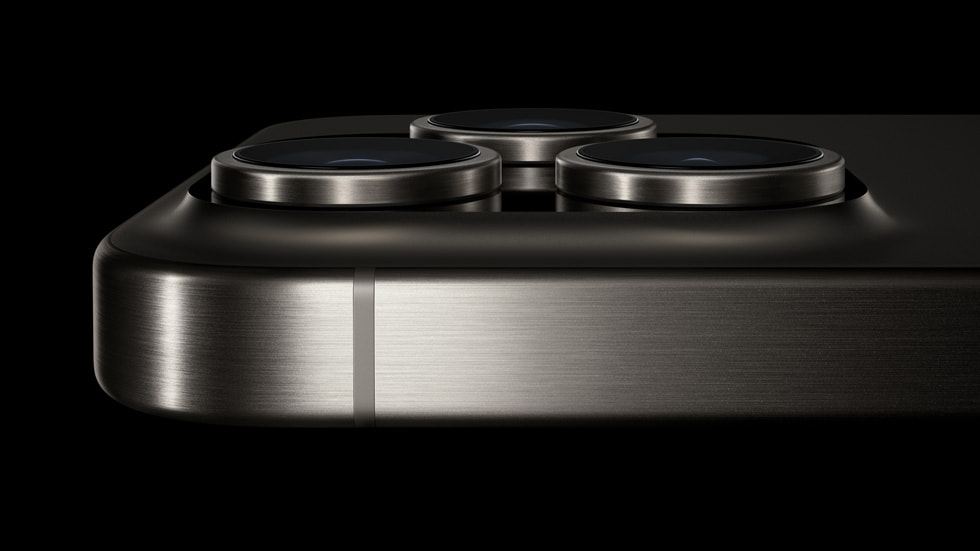
The iPhone 15 Pro uses a fixed multi-camera system rather than an interchangeable lens mount. It has a 48MP Main camera, 12MP Ultra Wide camera, 12MP 3x Telephoto camera and 12MP TrueDepth front camera.
| Feature | Apple iPhone 15 Pro |
|---|---|
| Device type | Smartphone camera system |
| Release period | September 2023 |
| Rear camera system | Triple-camera Pro system |
| Main camera | 48MP, 24mm equivalent |
| Ultra Wide camera | 12MP, 13mm equivalent |
| Telephoto camera | 12MP, 77mm equivalent, 3x optical |
| Front camera | 12MP TrueDepth |
| Lens mount | Fixed lenses |
| Video recording | Up to 4K at 60fps |
| ProRes recording | Up to 4K 60fps with external recording |
| Log recording | Apple Log |
| Colour workflow support | ACES support |
| Connector | USB-C |
| USB data transfer | USB 3 up to 10Gb/s |
| Weight | 187 g |
| Dimensions | About 8.25 mm x 146.6 mm x 70.6 mm |
The pasted camera database lists the sensor size as 0 x 0 mm. That should not be read as a real sensor measurement. It simply means the database did not provide a standard sensor-size value for the phone camera system.
Camera System and Focal Lengths
The iPhone 15 Pro has a flexible rear camera setup designed to cover wide, standard and telephoto shooting.
The 48MP Main camera gives the phone its strongest image quality and is the best option for most video and photography work. The 13mm Ultra Wide camera is useful for landscapes, interiors, action shots and tight spaces. The 77mm Telephoto camera gives a 3x optical view for portraits, details and compressed perspective.
| Camera | Equivalent Focal Length | Best Use |
| Ultra Wide | 13mm | Landscapes, interiors, action, tight spaces |
| Main | 24mm | General video, photos, interviews, travel |
| 2x crop from Main | 48mm | Portraits, details, natural framing |
| Telephoto | 77mm | Close-ups, portraits, compression |
| Front TrueDepth | Wide selfie view | Vlogging, calls, front-facing video |
This range makes the iPhone 15 Pro practical for creators who need multiple perspectives without changing lenses.
Video Recording Features
The iPhone 15 Pro supports 4K video recording at 24fps, 25fps, 30fps and 60fps.
It also supports HDR video with Dolby Vision up to 4K 60fps, Cinematic mode up to 4K HDR at 30fps, Action mode up to 2.8K 60fps and slow-motion video at 1080p up to 240fps.
For creators, this means the phone can handle normal cinematic frame rates, smooth 60fps video, HDR capture, stabilised action footage and slow-motion clips.
Why 4K 60fps Matters
4K 60fps is useful because it gives creators both detail and motion flexibility.
A video can be delivered at 60fps for smooth playback or slowed down to 24fps or 30fps for a mild slow-motion effect. This makes the iPhone 15 Pro useful for travel videos, sports clips, product shots, social media reels and fast-moving documentary scenes.
ProRes and Apple Log Recording
One of the biggest upgrades in the iPhone 15 Pro is its professional video workflow.
The phone supports ProRes recording and Apple Log. ProRes gives editors high-quality files that hold up better in post-production than heavily compressed video. Apple Log gives colourists a flatter image with more room for grading.
This is especially useful for creators who want to match iPhone footage with other cameras or create a more cinematic colour grade.
Why Apple Log Is Important
Apple Log gives mobile filmmakers more control over contrast, highlights and colour.
Standard phone video often looks sharp and vibrant straight out of the camera, but it can be harder to grade. Log footage looks flatter at first, but it gives editors more flexibility when shaping the final image.
For filmmakers, this makes the iPhone 15 Pro more serious than earlier iPhones.
External Recording Over USB-C
The iPhone 15 Pro uses USB-C and supports USB 3 transfer speeds up to 10Gb/s.
This matters because Apple allows ProRes recording up to 4K 60fps with external recording. Instead of filling internal storage quickly, creators can record directly to compatible external storage.
For mobile filmmakers, this is one of the most important workflow improvements.
Why External Recording Helps
ProRes files are large.
Recording externally helps creators shoot longer clips, move files faster and manage storage more easily. It also makes the iPhone 15 Pro more useful on professional sets where footage must be transferred quickly into editing systems.
This feature helped position the iPhone 15 Pro as a practical tool for serious mobile production.
Rolling Shutter Performance
CineD measured strong rolling-shutter performance on the iPhone 15 Pro.
In 4K ProRes at 25fps, the 13mm Ultra Wide camera achieved a 4.7ms rolling-shutter result. The 24mm camera measured 5.3ms, the 77mm camera measured 5ms and the front-facing camera measured 9.3ms.
| Camera Mode | Resolution | Codec | Frame Rate | Rolling Shutter |
| 24mm camera | 3840 x 2160 | ProRes | 25fps | 5.3ms |
| 13mm camera | 3840 x 2160 | ProRes | 25fps | 4.7ms |
| 77mm camera | 3840 x 2160 | ProRes | 25fps | 5.0ms |
| Front camera | 3840 x 2160 | ProRes | 25fps | 9.3ms |
These are excellent results for a phone. Lower rolling shutter helps reduce distortion when panning quickly or filming fast movement.
Why Rolling Shutter Matters
Rolling shutter can make moving subjects or fast camera moves look warped.
If a camera reads the sensor slowly, vertical lines may bend during fast movement. The iPhone 15 Pro’s fast readout helps keep handheld footage, walking shots and fast pans cleaner than many small cameras.
This is one of the phone’s strongest technical advantages.
Dynamic Range Notes
Dynamic range on the iPhone 15 Pro needs careful explanation.
CineD did not rank the iPhone 15 Pro’s dynamic range in the same way as traditional cameras because the IMATEST readings were not reliable. The reason is internal processing. Smartphone cameras use noise reduction, tone mapping and computational imaging in ways that can affect lab measurements.
CineD noted that the iPhone 15 Pro’s IMATEST dynamic-range numbers could appear high, but those results did not tell the full story. Their exposure-latitude testing showed that the phone behaved differently from larger dedicated cameras.
What This Means for Filmmakers
The iPhone 15 Pro can produce impressive video, but it should not be confused with a professional cinema camera sensor.
Its small sensors rely heavily on processing. That helps the image look clean, but it also means the footage has less real-world grading flexibility than larger cameras with bigger sensors and stronger latitude.
For creators, the best approach is to expose carefully, protect highlights and avoid heavy underexposure.
Stabilisation and Handheld Shooting
The iPhone 15 Pro is strong for handheld video.
Apple includes sensor-shift optical image stabilisation on the Main camera, optical stabilisation on the 3x Telephoto camera and cinematic video stabilisation across major video modes.
The phone also includes Action mode for more aggressive stabilisation when filming movement.
Why Stabilisation Matters
Most people shoot iPhone video handheld.
Good stabilisation makes walking shots, travel footage, casual vlogs and documentary clips look smoother. It also helps creators work without a gimbal in many situations.
The iPhone 15 Pro is especially useful for quick capture because it is small, light and always available.
Best Uses for the iPhone 15 Pro Camera
The iPhone 15 Pro is best for creators who need a compact, flexible and high-quality mobile camera.
It is ideal for:
Mobile filmmaking
Travel videos
YouTube content
TikTok and Instagram Reels
Behind-the-scenes footage
Documentary inserts
News-style mobile reporting
Product videos
Social media ads
Quick interviews
B-roll capture
Location scouting
It is not a replacement for an ARRI ALEXA, RED, Sony VENICE or Blackmagic cinema camera, but it can be a powerful secondary camera or everyday creative tool.
iPhone 15 Pro vs Cinema Cameras
The iPhone 15 Pro should be judged differently from dedicated cinema cameras.
A cinema camera has larger sensors, better lens options, stronger dynamic range, more reliable grading flexibility, professional monitoring and better manual control. The iPhone 15 Pro wins in portability, speed and convenience.
| Feature | iPhone 15 Pro | Dedicated Cinema Camera |
| Sensor size | Very small phone sensors | Much larger sensors |
| Lens system | Fixed cameras | Interchangeable lenses |
| Recording | ProRes, HEVC, H.264 | RAW, ProRes and cinema codecs |
| Portability | Excellent | Depends on rig |
| Dynamic range | Processing-dependent | More physically robust |
| Best use | Mobile and fast shooting | Professional productions |
| Main advantage | Always available | Image control and flexibility |
The iPhone 15 Pro is strongest when speed matters more than full cinema-camera control.
Key Takeaways
- iPhone 15 Pro was released in September 2023.
- It has a triple rear camera system with 13mm, 24mm and 77mm options.
- The Main camera is 48MP.
- The phone records 4K video up to 60fps.
- ProRes recording is supported.
- ProRes up to 4K 60fps is available with external recording.
- Apple Log and ACES support make the phone more useful for grading workflows.
- USB-C supports USB 3 transfer speeds up to 10Gb/s.
- CineD measured 4.7ms rolling shutter on the 13mm camera.
- CineD measured 5.3ms on the 24mm camera and 5ms on the 77mm camera.
- Dynamic-range ranking is difficult because internal processing affects lab measurements.
- The iPhone 15 Pro is best for mobile filmmaking, social video, travel content and compact production work.
Frequently Asked Questions
What is the Apple iPhone 15 Pro?
The iPhone 15 Pro is Apple’s 2023 premium smartphone with a Pro camera system, 4K video, ProRes recording, Apple Log and USB-C external recording support.
When was the iPhone 15 Pro released?
The iPhone 15 Pro was released in September 2023.
What cameras does the iPhone 15 Pro have?
It has a 48MP Main camera, 12MP Ultra Wide camera, 12MP 3x Telephoto camera and 12MP TrueDepth front camera.
Can the iPhone 15 Pro record 4K video?
Yes. It can record 4K video at 24fps, 25fps, 30fps and 60fps.
Does the iPhone 15 Pro support ProRes?
Yes. The iPhone 15 Pro supports Apple ProRes video recording.
Can the iPhone 15 Pro record ProRes 4K 60fps?
Yes. ProRes recording up to 4K 60fps is supported with external recording.
Does the iPhone 15 Pro support Apple Log?
Yes. The iPhone 15 Pro supports Apple Log video recording.
Does the iPhone 15 Pro support ACES?
Yes. Apple lists Academy Color Encoding System support for the iPhone 15 Pro.
What is the rolling shutter of the iPhone 15 Pro?
CineD measured 4.7ms on the 13mm camera, 5.3ms on the 24mm camera, 5ms on the 77mm camera and 9.3ms on the front-facing camera.
Is the iPhone 15 Pro dynamic range reliable in lab tests?
CineD noted that IMATEST dynamic-range results were not reliable because internal processing and noise reduction affected the measurements.
Is the iPhone 15 Pro good for filmmaking?
Yes, it is very useful for mobile filmmaking, social content, travel video and behind-the-scenes work. However, it does not replace a dedicated cinema camera for high-end productions.
What is the weight of the iPhone 15 Pro?
The iPhone 15 Pro weighs 187 g.
Conclusion
The iPhone 15 Pro is one of Apple’s strongest mobile filmmaking devices because it combines 4K video, ProRes, Apple Log, ACES support, USB-C external recording and fast rolling-shutter performance in a pocket-sized body.
Its camera system is not equal to a professional cinema camera, especially in real-world dynamic range and grading latitude. However, it gives creators a powerful set of tools for fast, flexible and high-quality video capture.
For filmmakers, vloggers, journalists, marketers and social media creators, the iPhone 15 Pro remains a serious mobile camera. Its biggest strength is not that it replaces cinema cameras, but that it brings professional-style video workflows into a device that fits in a pocket.
Read Also: ARRI ALEXA Classic: Specs, Dynamic Range, Recording Modes and Features