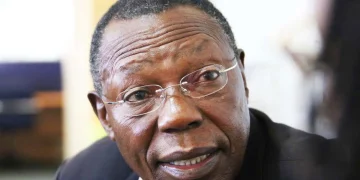
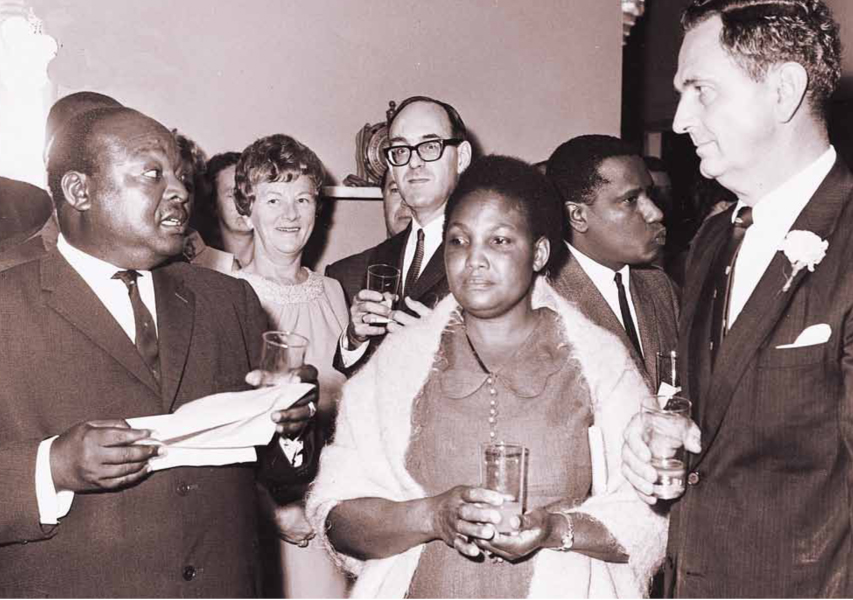
The first-ever PhD recipient from Kenya, Julius Gikonyo Kiano, was a trailblazing academic and national hero. He was born in Kangema, Murang’a District, in 1926 in Githiga. Prior to attending Alliance High School, he attended Weithaga Primary and Kagumo Intermediate schools. After completing two post-secondary school programs at Makerere University in Uganda, he finally enrolled in 1948 at Antioch College in Ohio, United States, and earned his economics degree there in 1952. Kiano became interested in the cooperative movement at Antioch, which would transform agriculture and other economic areas following independence.
Kiano was aware of the political climate (colonialism) in Kenya before to his departure for the US, and he understood that both educated and uneducated Kenyans needed to work together for emancipation. In 1953, Kiano received a university grant from Stanford University to study political science. He spent eight years studying economics and political science in the US. When Kiano was a high school student in 1945, African troops returning from World War II had planted the seed of his determination to free Kenya from the tyranny of colonialism.
Kiano pursued a PhD in comparative studies on colonial liberation in Asia and Africa at California University’s Institute of International Studies, Berkeley. He eventually became independent Kenya’s first Minister for Commerce and Industry. He was employed by professors and other academics at Berkeley who had experience with China, Japan, and other south-east Asian nations that had expressed interest in Africa.
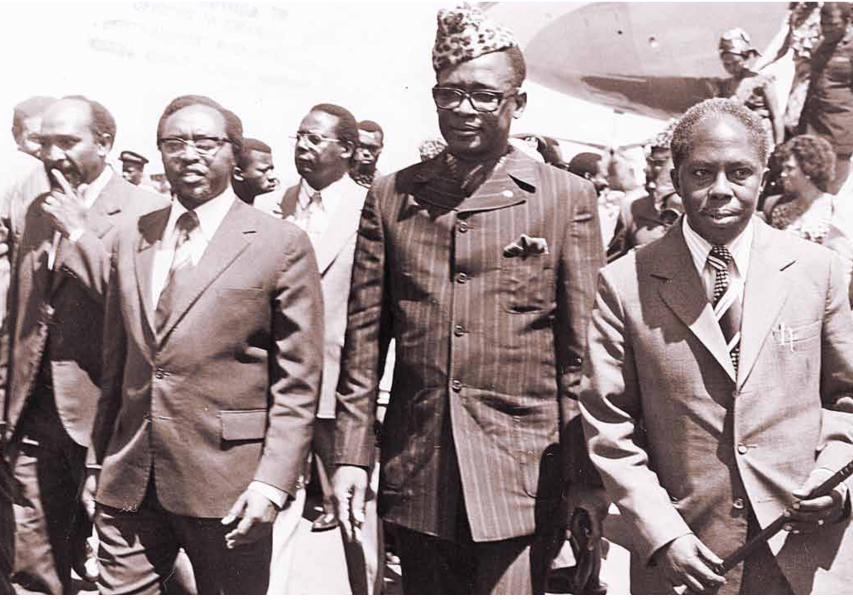
Kiano remembered in a 1996 interview that his intention to study nationalism at Berkeley was, therefore, not theoretical in the slightest. I was aware of the events that had occurred in Indonesia, Dien Bien Phu, India, and other places, so I knew that similar events would occur in Africa.The Gold Coast (Ghana) was led by Dr. Kwame Nkrumah in 1951, and a year after I had my PhD, in 1957, Ghana became the first African nation to be free of British domination. I made every effort to connect my academic work to current events and potential future developments in Africa.
After studying in the US for eight years, Kiano returned to Kenya in September 1956 and was hired as the nation’s first African instructor at the Royal Technical College, which is now the University of Nairobi. This was the sole post-secondary institution in the country. He was a constitutional law and economics professor. Later, he left the classroom to pursue a career in politics, and in 1958, he was chosen to represent Central Province South on the Legislative Council. Leaders like Kiano and Tom Mboya realized that independence wouldn’t mean anything unless the nation had enough people to replace the departing colonial technocrats.
As a result, they wrote to friends in American institutions, universities, political leadership, and labor union organization, requesting scholarships for young Kenyans to pursue higher education in the United States. American universities responded with tremendous force. As a result, there was a “Great Airlift,” which sent hundreds of Kenyan students to study in the US.