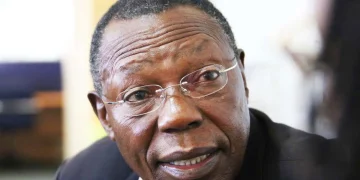
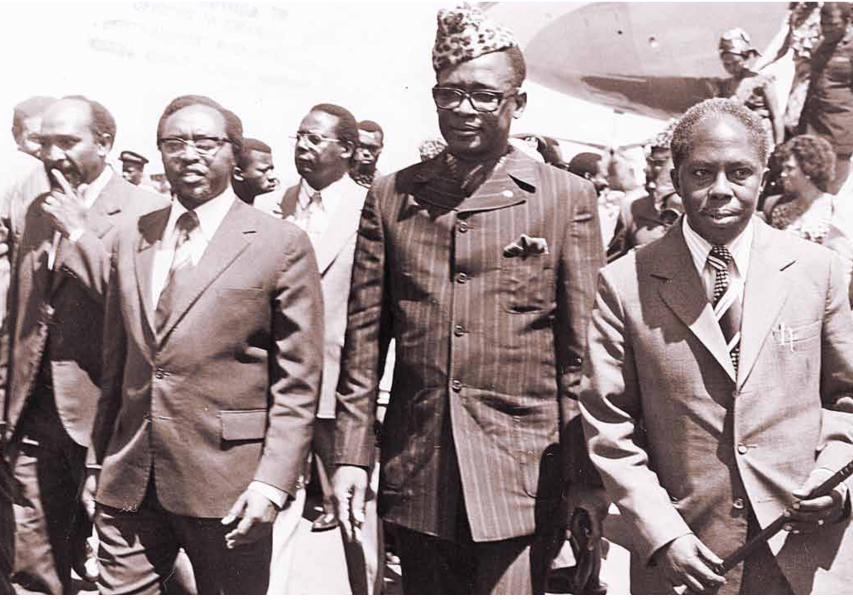
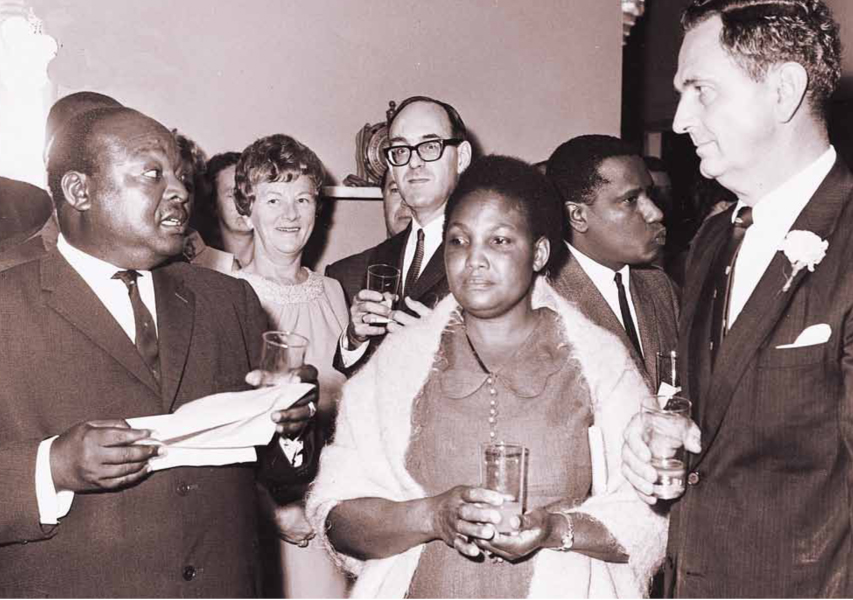
One of the rare Kenyan politicians to leave the diplomatic field and into politics is Jaxon Levi Madoka Shako, who became the Minister of Tourism in the Cabinet in 1969.
He attended the basic and secondary schools in his community after his 1918 birth in Wundanyi, Taita-Teveta District, and enrolled at Alliance High School, Kikuyu, in the 1930s. He attended the prestigious Oxford University in the United Kingdom to pursue his higher studies.
He took a public administration degree upon his return to Kenya, worked as a school headmaster for a while, and then entered the colonial government at a time when the majority of top officials were Caucasian. He worked his way up to become a Mombasa Regional Government Agent, a position he held until the country gained independence in 1963.
On October 20, 1952, Shako was serving as an administrator when colonial governor Evelyn Baring issued a proclamation of emergency in an attempt to rein in the Mau Mau in Nairobi and central Kenya. Thousands of Africans, including KAU officials, were detained that day, prosecuted, and imprisoned.
However, other leaders put pressure on the colonial authorities to give the African majority more independence, which led to the colonial authorities allowing Africans to form political parties—albeit on a regional rather than a national level. There were two regional parties in the Coast by 1955: the Kilifi African Peoples Union (Kapu) led by Ronald Ngala and the Mombasa African Democratic Union (Madu) led by Francis Khamisi. Eventually, the more inclusive Coast African Association (CAA) would replace Madu and Kapu.
There wasn’t much of an appeal for the CAA outside of Mijikenda and Mombasa in the province. The Coast was ruled by Madu, which, a few weeks after Kanu was created in May 1960, evolved into Kadu under the leadership of Ngala.
One of Kenyatta’s five overseas envoys, Shako was appointed ambassador to France and West Germany in 1964. The others were Dr. Josephat Karanja (London), Henry Muli (Cairo), Okuto Bala (Moscow), and Burudi Nabwera (Washington and the UN headquarters in New York).
Shako was recalled in 1967 after serving as ambassador. At a period when his relative by marriage, Dawson Mwanyumba, was the MP for Wundanyi and the Minister of Power and Communications, he retired from the Civil Service and entered politics. After his return, Shako solidified his position in Wundanyi during the next two years. He removed his younger relative from Parliament in the 1969 elections.
Shako was named Minister of Tourism and Wildlife in Kenyatta’s Cabinet, which was established following the election. Mwanyumba’s former Ministry of Power and Communications was taken over by Ngala, a prominent Coast politician who formerly led the opposition party Kadu.
Shako had strong economic and political ties with Kiambu’s influential ministers as well as the Kenyatta family. The connection was mostly focused on the mining of rubies and the development of cash crops, particularly sisal. This sparked debate. The greater Taita-Taveta and many of Shako’s constituents expressed open dissatisfaction with their MP, charging him of taking use of their natural riches without contributing anything back to the community. It makes sense why Shako lost the 1974 elections and Mwanyumba returned to parliament.