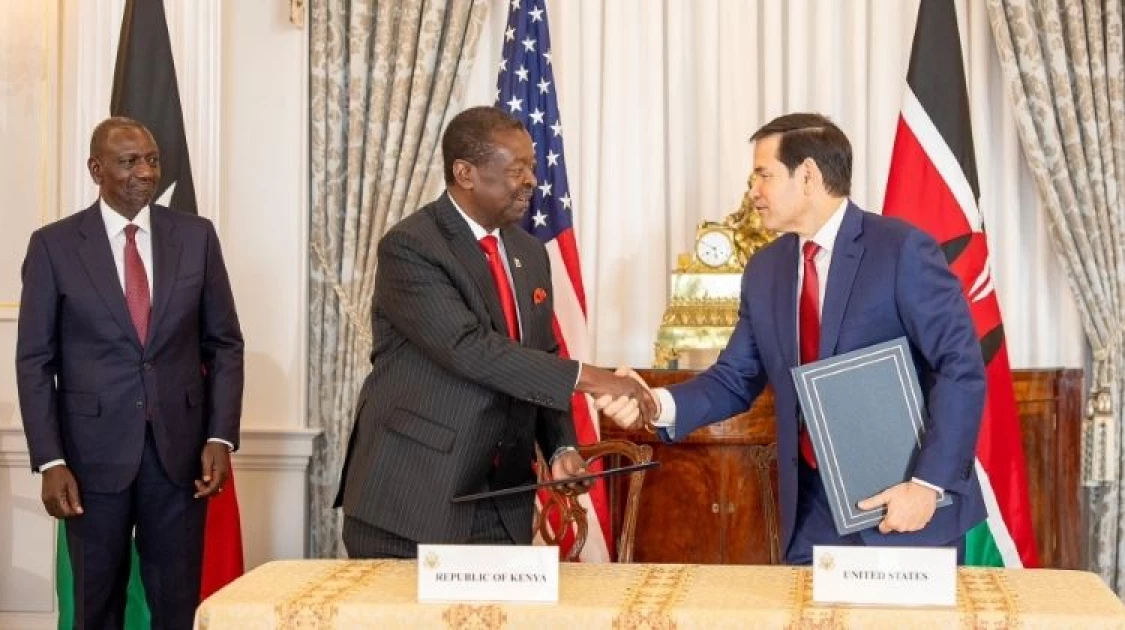
Kenya is once again at the centre of a major public health debate after reports emerged that an Ebola quarantine facility could be set up in the country. For many Kenyans, the news has raised fear, anger and confusion. Some are asking why Kenya should host such a facility when the current Ebola outbreak is outside the country. Others want to know whether the move is about protecting Kenyans, helping foreign nationals, or serving international interests.
The discussion has become even more sensitive because the proposed facility has been linked to plans by the United States to quarantine or treat Americans who may have been exposed to Ebola in the region. Reports indicate that the proposed site is Laikipia Air Base, a military location in central Kenya.
The plan has already faced legal and public opposition. Kenya’s High Court temporarily suspended the proposal pending further hearing, while doctors, activists and civil society groups demanded more transparency from the government.
To understand the issue clearly, Kenyans need to separate fear from facts. Ebola is a serious disease. Quarantine can be a valid public health tool. But any quarantine facility must be explained properly, managed safely, and approved through a transparent process that protects Kenyan citizens first.
Why Ebola quarantine Kenya has become a national issue
The phrase Ebola quarantine Kenya has become a major topic because the proposal touches on public health, national security, sovereignty, foreign relations and public trust.
Ebola is not an ordinary illness. It is a highly serious viral disease that requires strict infection prevention, trained health workers, secure isolation systems and careful monitoring of anyone exposed. When an outbreak happens in a neighbouring or regional country, governments often increase surveillance at borders, airports and health facilities.
Kenya is not currently the epicentre of the outbreak, but it is a major regional transport hub. Nairobi connects East, Central and Southern Africa through aviation, trade, diplomacy and humanitarian work. That means Kenya is often involved in regional emergency preparedness, even when the disease outbreak begins elsewhere.
The current concern is linked to an Ebola outbreak in the Democratic Republic of Congo and reported regional risks affecting parts of East and Central Africa. Because Kenya receives travellers, aid workers, diplomats, military personnel and businesspeople from many countries, health authorities are expected to prepare for possible imported cases.
That preparation may include screening, laboratory testing, isolation rooms, trained rapid response teams and quarantine facilities. In public health terms, quarantine is used for people who may have been exposed but are not yet confirmed to be infected. Isolation is used for people who are already sick or confirmed to have the disease.
The problem is not simply that Kenya is preparing. The problem is that many Kenyans feel the reported arrangement has not been explained openly enough.
What the proposed Ebola quarantine facility is said to be for
According to international reports, the proposed facility was intended to hold or treat American citizens who may have been exposed to Ebola while working or travelling in the region. These could include health workers, government personnel or other individuals linked to the outbreak response.
The reported idea was that instead of flying such individuals all the way back to the United States immediately, they could be monitored or treated in Kenya, closer to the outbreak region. Supporters of such a plan may argue that Kenya has better regional connectivity, available military infrastructure and existing cooperation with the United States on health security.
However, that explanation has not satisfied many Kenyans. The strongest concern is simple: why should people exposed to Ebola be brought into Kenya if they were not exposed in Kenya?
This is the question driving public anger.
Many citizens fear that bringing exposed individuals into the country could increase risk, even if the facility is professionally managed. Medical unions and civil society groups have also questioned whether Kenya’s health system is fully prepared, whether local communities were consulted, and whether the country has enough safeguards if anything goes wrong.
Why Kenya may be considered strategically important
Kenya is attractive for such emergency planning because of its regional position. It has major airports, diplomatic missions, military cooperation links, and relatively advanced health facilities compared with some countries affected by conflict.
Nairobi is also home to international agencies, humanitarian organisations and foreign missions. In regional crises, Kenya often becomes a coordination point for evacuation, logistics, emergency meetings and supply movement.
There is also a deeper background. Kenya and the United States already have a formal cooperation framework on biological threat reduction. The agreement covers efforts to detect, monitor, report and respond to biological threats, including naturally occurring diseases, accidental releases and biological security risks. It also supports disease surveillance, laboratory capacity, biosafety, biosecurity, training and emergency preparedness.
This does not automatically mean Kenyans must accept any quarantine centre without question. But it helps explain why Kenya and the United States may already be working together on disease preparedness.
The key issue is whether a specific Ebola quarantine plan follows Kenyan law, protects the public, and respects public participation.
Why Kenyans are worried
Kenyans are worried for several reasons.
First, Ebola carries a heavy emotional and public health burden. Many people remember past outbreaks in West and Central Africa and the fear that surrounded them. Even when experts say a facility can be run safely, the public wants proof, not promises.
Second, Kenya’s public hospitals already face many challenges. Citizens often complain about shortages of doctors, nurses, medicines, beds, ambulances and equipment. When people hear that a special facility may be created for foreigners, they naturally ask why similar urgency is not always shown for Kenyan patients.
Third, there is concern about transparency. Kenyans want to know who approved the plan, what legal process was followed, where the facility would be located, who would operate it, and what would happen if a patient tested positive.
Fourth, there is fear of unequal treatment. If the facility is mainly for Americans, many Kenyans may see it as unfair. They may ask whether Kenya is being used as a convenient holding ground for foreign health emergencies.
Fifth, communities near the proposed site may feel exposed to risk without consultation. Even if the medical risk is low under strict controls, people living near such a facility deserve clear information.
What the government needs to explain clearly
The Kenyan government needs to communicate better. Silence or vague statements only create suspicion.
The Ministry of Health should clearly explain whether the facility is part of Kenya’s own Ebola preparedness, a foreign-supported regional response, or a special arrangement for foreign citizens. Kenyans also need to know whether the facility would admit Kenyan patients, foreign nationals, or both.
The government should also explain the safety design. This includes how patients would be transported, who would staff the facility, what protective equipment would be available, how waste would be handled, how laboratory samples would be tested, and what emergency plan would apply if a worker or community member was exposed.
The public also deserves to know whether county leaders, local health officials, professional associations and nearby communities were consulted. Public health works best when people trust the system. A quarantine facility cannot succeed if the public believes decisions are being made in secrecy.
Why quarantine facilities are used during outbreaks
Quarantine facilities are not automatically dangerous. In fact, they can help stop disease spread when properly designed and managed.
During outbreaks, people who may have been exposed need to be monitored for symptoms. If they remain well, they can safely leave after the required monitoring period. If they develop symptoms, health workers can move quickly to test and isolate them.
Without quarantine, exposed people may travel freely, interact with others and delay reporting symptoms. That can make an outbreak harder to control.
So the public health logic is clear: quarantine can reduce risk. But that only works if the system is strong, transparent and trusted.
For Kenya, the concern is not whether quarantine is useful. The concern is whether this particular arrangement is necessary, lawful, safe and fair.
Why the High Court intervention matters
The High Court’s decision to temporarily halt the plan is important because it shows that public health decisions must still follow the Constitution and Kenyan law.
In an emergency, governments need speed. But speed cannot replace accountability. Courts exist to ask whether due process was followed, whether public participation was ignored, and whether citizens’ rights were protected.
The court process does not mean Kenya should ignore Ebola preparedness. It means the government must justify its decisions and provide enough information for the public to understand what is being planned.
This is healthy in a democracy. Public health cannot be built on secrecy, especially when fear is high.
What Kenyans should know about Ebola risk
Kenyans should take Ebola seriously, but they should not panic.
Ebola does not spread like common flu. It usually requires direct contact with the body fluids of a person who is sick or has died from the disease, or contact with contaminated materials. This is why trained health workers, protective gear and strict procedures are essential.
The biggest danger in any outbreak is delayed detection, poor communication, unsafe care practices and public mistrust. If people hide symptoms or avoid health workers because they fear stigma, the risk increases.
That is why honest public education matters. Kenyans need clear messages in simple language, not rumours and political shouting.
What Kenya should do now
Kenya should strengthen Ebola preparedness regardless of whether the proposed foreign-linked quarantine facility proceeds.
The country should improve screening at airports and border points, train health workers, prepare isolation units, equip laboratories, and support counties that are more likely to receive travellers from affected regions.
The government should also publish a clear national Ebola preparedness plan. This plan should explain where suspected cases would be handled, how counties should respond, what hospitals are ready, and how the public can report concerns.
If any international partner supports Kenya, the terms should be public. Kenyans should know what support is being offered, what Kenya is accepting, and what safeguards are in place.
The bigger question: preparedness or foreign pressure?
The Ebola quarantine Kenya debate is not only about disease. It is also about trust.
If the facility is part of a serious national preparedness plan, the government should explain it openly. If it is mainly designed to serve foreign citizens, Kenyans deserve to know why the country was chosen and what benefits or protections Kenya receives.
No country should gamble with public health. At the same time, Kenya should not reject science-based preparedness simply because people are afraid.
The right position is balance. Kenya must prepare for Ebola. Kenya must cooperate with international partners. But Kenya must also protect its citizens, respect the law, consult the public and avoid arrangements that make the country look like a holding zone for foreign emergencies.
Conclusion
The debate over an Ebola quarantine facility in Kenya has exposed a deeper issue: Kenyans want public health decisions that are transparent, lawful and citizen-first.
Quarantine can save lives when it is done properly. Regional cooperation can help stop outbreaks before they spread. International support can strengthen Kenya’s health system.
But public trust is not optional. The government must explain the plan clearly, answer difficult questions, involve health professionals, consult affected communities and prove that Kenya’s safety comes first.
Until that happens, public resistance will continue.
For now, the most important message is this: Kenya should be ready for Ebola, but readiness must never come at the cost of transparency, dignity and national confidence.
Read Also: Kenya Medical Research Institute