Nyongesa Sande
No Result
View All Result
  • News
    • World
    • Africa
  • Politics
  • Business
  • Tech
  • AI
  • Telecom
  • Sports
  • Opinion
  • Lifestyle
  • Live
  • World Cup 2026
    • World Cup 2026 Standings
    • World Cup 2026
Nyongesa Sande
  • About Us
    • Nyosake Designers
      • Nyosake Webmasters
      • Nyosake Investment
  • Contact Us
    • Newsroom Contact
  • Ownership Disclosure
  • Advertise
No Result
View All Result
Nyongesa Sande
No Result
View All Result
  • News
  • Politics
  • Business
  • Tech
  • AI
  • Telecom
  • Sports
  • Opinion
  • Lifestyle
  • Live
  • World Cup 2026
ADVERTISEMENT

Home » Star Basics

Star Basics

NyongesaSande News Desk by NyongesaSande News Desk
2 years ago
in Facts
Reading Time: 3 mins read
A A
Star Basics

Astronomers estimate that the universe may contain up to one septillion stars—an unfathomable number that represents the incredible scale of the cosmos. Our Milky Way galaxy alone houses over 100 billion stars, including our well-studied Sun, which serves as the cornerstone for life on Earth. Stars are immense balls of hot gas, primarily composed of hydrogen and helium, with trace amounts of other elements. They undergo complex life cycles, evolving over millions to trillions of years, depending on their mass and composition.

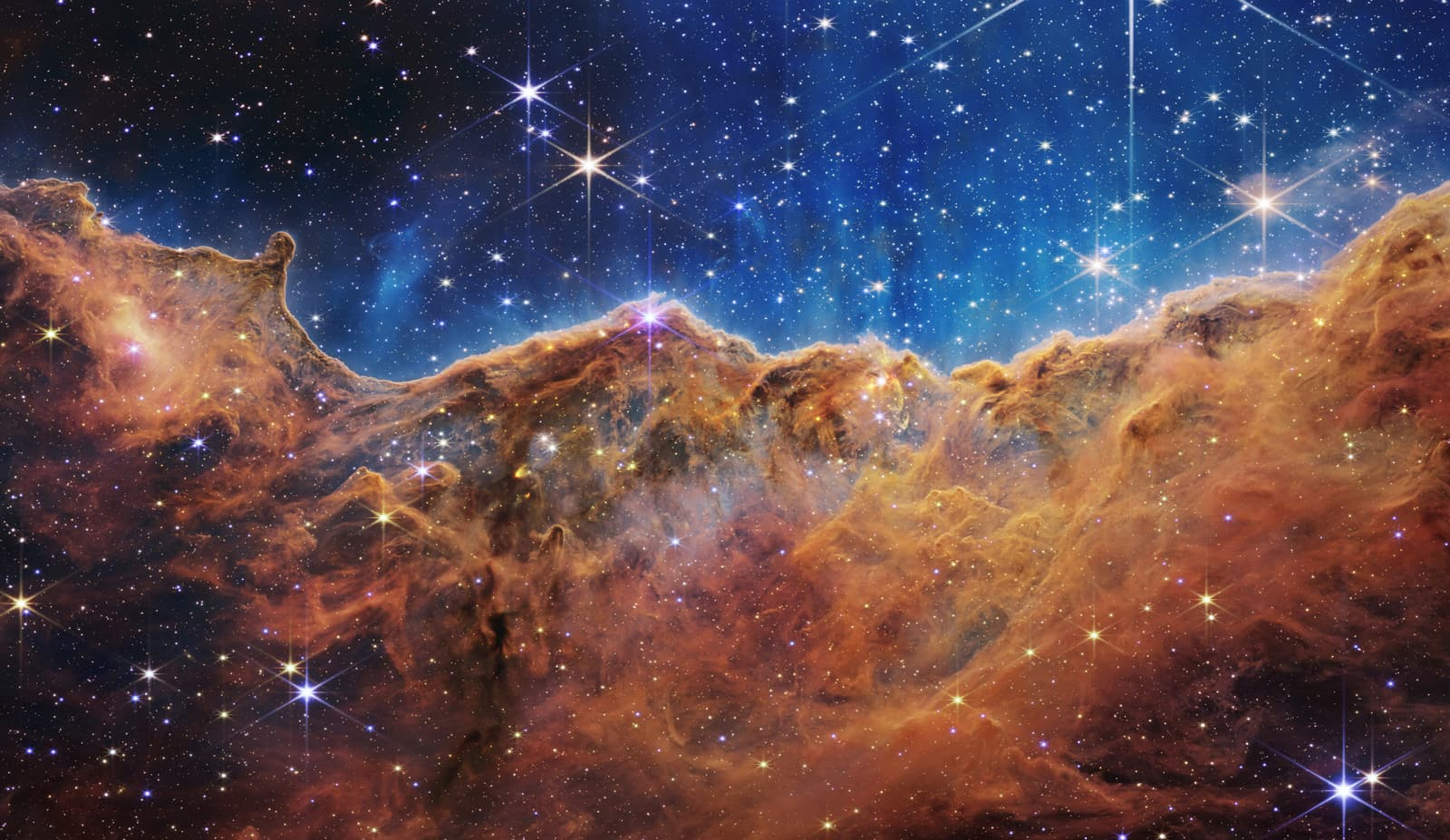
Birth of Stars: Stars are born in vast molecular clouds, immense regions of gas and dust that can contain up to 10 million times the mass of the Sun and stretch across hundreds of light-years. These clouds are cold, which causes the gas within them to clump together, forming dense pockets. As these pockets gather more material, their gravitational forces increase, leading to the eventual collapse of some clumps. The collapse generates friction and heat, giving rise to protostars—essentially, stars in their infancy. Often, these newborn stars form in groups known as stellar clusters, within regions referred to as stellar nurseries. One such stellar nursery is NGC 3324 in the Carina Nebula, where young stars carve out striking landscapes captured by telescopes like NASA’s James Webb Space Telescope.

Life of Stars: A protostar’s initial energy comes from the heat generated during its formation. Over millions of years, pressures and temperatures in the star’s core become so intense that nuclear fusion begins—hydrogen atoms fuse into helium, releasing tremendous energy. This energy prevents the star from collapsing further and marks its transition into the main sequence phase. Main sequence stars, like our Sun, spend the majority of their lives in this stable phase, where they slowly change in size, luminosity, and temperature over millions to billions of years.

ADVERTISEMENT

The lifespan of a star depends on its mass. Low-mass stars, burning through their hydrogen fuel at a slower rate, can shine dimly for trillions of years—longer than the universe has existed thus far. In contrast, massive stars burn their fuel rapidly, living only a few million years. The differences in life spans among stars highlight the delicate balance between mass, energy production, and the eventual fate of these celestial bodies.

Death of Stars: As stars approach the end of their lives, they exhaust their hydrogen fuel. Without the energy from fusion to counteract gravity, the core begins to collapse. This collapse increases the core’s temperature and pressure, causing the outer layers to expand. For low-mass stars like the Sun, this process leads to the formation of a giant star, where helium fusion in the core produces carbon. These giants may eventually eject their outer layers, creating planetary nebulas—beautiful, expanding clouds of gas and dust. What remains is the core, now a white dwarf, a dense and hot remnant roughly the size of Earth that will cool slowly over billions of years.

ADVERTISEMENT

High-mass stars follow a more dramatic path. After exhausting their hydrogen, they fuse heavier elements like carbon, oxygen, and eventually silicon into iron. However, iron fusion does not produce energy—it consumes it. This imbalance leads to a catastrophic collapse of the star’s core, which rebounds in a massive explosion known as a supernova. The core left behind may become a neutron star or, if the star was massive enough, collapse further into a black hole. The material expelled by supernovae enriches the surrounding space, seeding future generations of stars with the elements necessary for planet formation and life.

The cycle of star birth, life, and death is a fundamental process that drives the evolution of galaxies and the universe as a whole. The remnants of dead stars become the building blocks for new ones, perpetuating the cosmic cycle. Through this continuous process, the universe remains dynamic and ever-changing, with stars playing a central role in its ongoing development.


Share1Tweet1SendShareScanSharePinShareShare
Google Add as a Preferred Source on Google
Previous Post

No sun, no life on earth

Next Post

How many stars are in the universe?

NyongesaSande News Desk

NyongesaSande News Desk

Nyongesa Sande offers diverse content across news, technology, entertainment, and more, aiming to provide readers with a wide range of informative and engaging articles. NYONGESA SANDE's dedicated team provides our audience not only with the highly relevant news but also with outstanding interactive experience.

Related Posts

Why Kenya Is Facing an Ebola Quarantine Debate
Facts

Why Kenya Is Facing an Ebola Quarantine Debate

2 weeks ago
Timeline of Earth's Final Days and Ultimate Death
Facts

Timeline of Earth’s Final Days and Ultimate Death

1 year ago
Why Tanker Trucks Have Chains Hanging at the Rear
Facts

Why Tanker Trucks Have Chains Hanging at the Rear

1 year ago
List Of Best Wines And Spirits Distributors In Kenya
Facts

How Long Does Wine Last?

2 years ago
UEFA unveils the ball for the Champions League knock-out stages
Facts

The Hidden Dangers of Illegal Streaming

2 years ago
No sun, no life on earth
Facts

No sun, no life on earth

2 years ago
Load More
Next Post
How many stars are in the universe?

How many stars are in the universe?

Robotic Russian Progress 89 cargo ship docks at ISS with tons of fresh supplies

Robotic Russian Progress 89 cargo ship docks at ISS with tons of fresh supplies

Trending

  • Top 10 Richest People in Tripura (2026)

    Top 10 Richest People in Tripura (2026)

    169 shares
    Share 68 Tweet 42
  • Product Review: Bose Portable Smart Speaker

    184 shares
    Share 74 Tweet 46
  • QVSELP Scam Warning: Why Kenyans Should Be Careful

    4 shares
    Share 2 Tweet 1
  • ZimLoan: A Quick Guide to Salary Advance Loans in Zimbabwe

    288 shares
    Share 115 Tweet 72
  • Top 10 Richest People in Manipur (2026)

    58 shares
    Share 23 Tweet 15
  • List of All Phone Numbers for the Kenyan 13th Parliament – Contact your MP today

    156 shares
    Share 62 Tweet 39
  • Final World Cup 2026: Messi, Ronaldo and Veteran Stars Facing Their Last Dance

    1 shares
    Share 0 Tweet 0
  • 2026 World Cup Absentees: Biggest Stars Missing the Tournament

    1 shares
    Share 0 Tweet 0
  • Top 10 Richest People in Jammu & Kashmir (2026)

    90 shares
    Share 36 Tweet 23
  • Top 10 Richest People in Meru County

    86 shares
    Share 34 Tweet 22
ADVERTISEMENT
ADVERTISEMENT

Who We Are

Nyongesa Sande

NyongesaSande.com is a digital news and media platform covering breaking news, business, technology, AI, politics, sports, world affairs and African innovation.

News Sections

  • News
    • World
    • Africa
  • Politics
  • Business
  • Tech
  • AI
  • Telecom
  • Sports
  • Opinion
  • Lifestyle
  • Live
  • World Cup 2026
    • World Cup 2026 Standings
    • World Cup 2026

Editorial Standards

  • Editorial Policy
  • Fact Checking Policy
  • Corrections Policy
  • Ethics Policy
  • AI Usage Policy
  • News Tips
  • Submit Press Release

Legal

  • Privacy Policy
  • Terms of Use
  • Cookie Policy
  • Disclaimer
  • Risk Disclaimer
  • DMCA
  • Ad Choices

Our Company

  • About Us
    • Nyosake Designers
      • Nyosake Webmasters
      • Nyosake Investment
  • Contact Us
    • Newsroom Contact
  • Ownership Disclosure
  • Advertise
  • Privacy Policy
  • Terms of Use
  • Cookie Policy
  • Disclaimer
  • Risk Disclaimer
  • DMCA
  • Ad Choices

NyongesaSande.com is an independent digital news and media platform covering Africa, business, technology, AI, politics and global developments.

© 2026 NyongesaSande.com. All rights reserved.

No Result
View All Result
  • News
    • World
    • Africa
  • Politics
  • Business
  • Tech
  • AI
  • Telecom
  • Sports
  • Opinion
  • Lifestyle
  • Live
  • World Cup 2026
    • World Cup 2026 Standings
    • World Cup 2026

NyongesaSande.com is an independent digital news and media platform covering Africa, business, technology, AI, politics and global developments.

© 2026 NyongesaSande.com. All rights reserved.