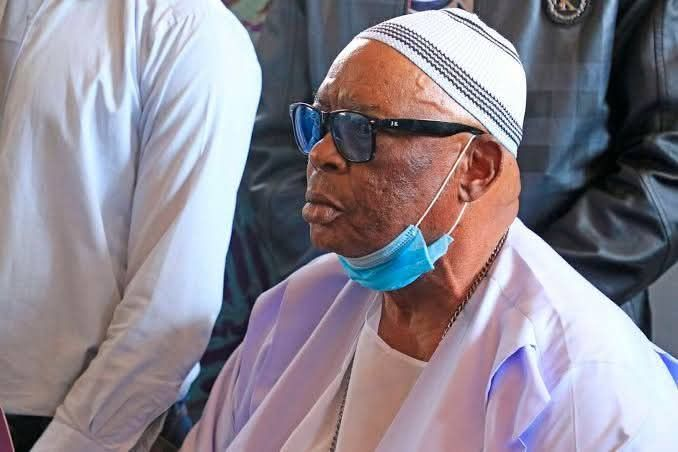
Pope John Pesa, the controversial founder of the Holy Ghost Coptic Church of Africa, has died, closing one of the most debated chapters in Kenya’s independent church history.
Known formally as John Juma Pesa and widely addressed by followers as “Pope,” he spent decades at the centre of religious devotion, public suspicion, legal scrutiny and doctrinal conflict. To his supporters, he was a spiritual leader with a gift for prayer, healing and church building. To his critics, he was a polarizing preacher whose ministry raised difficult questions about authority, accountability and the boundaries between faith, power and public oversight.
His death in Kisumu marks the end of a long and controversial public life. It also reopens debate about the role of African Independent Churches in Kenya, the legacy of breakaway religious movements and the complex relationship between charismatic leadership and institutional religion.
Pope John Pesa and the Roots of His Religious Journey
The religious journey of Pope John Pesa is closely tied to the history of African Independent Churches in western Kenya. His early spiritual path can be traced to the wider Nomiya Church tradition, one of Kenya’s earliest indigenous Christian movements.
The Nomiya Church was founded by Nabii Johana Owalo, a religious leader remembered for building a movement rooted in African religious self-determination. Owalo’s church emerged during a period when many African Christians were questioning colonial missionary control, foreign religious hierarchies and the limited space given to African leadership within mainstream churches.
Before founding Nomiya, Owalo had links with the Church of Scotland mission. He is also historically remembered for having taught Jomo Kenyatta during Kenyatta’s time at Kikuyu. His movement became part of a broader wave of African religious renewal that sought to combine Christian teaching with African spiritual identity, local leadership and resistance to colonial religious dominance.
After Owalo’s death in 1921, the church experienced leadership disputes and internal divisions. These splits shaped the environment in which later religious figures, including John Juma Pesa, would emerge.
Early Breakaway Ministry and the Rise of Pope John Pesa
Pesa’s emergence as a religious leader began in the late 1960s. Then a young man who had reportedly been associated with the Roman Catholic Church, he became linked to the Nomiya tradition and later declared himself a spiritual successor within that movement.
His claim to spiritual authority was not accepted by all. Tensions grew between him and established church leaders. He and his supporters were eventually pushed out of the Nomiya fold and later associated with Nomiya Luo Roho under Bishop Zablon Ndiege.
That relationship also collapsed after disagreements between the two leaders. Pesa then moved to establish his own ministry, the Holy Ghost Coptic Church. The decision placed him among Kenya’s most visible independent church founders and set the stage for decades of doctrinal disputes, public attention and conflict with both religious and state authorities.
Founding of the Holy Ghost Coptic Church
The Holy Ghost Coptic Church became the institution most closely associated with Pope John Pesa. Based in Kisumu, along the Kisumu-Kakamega highway, the church grew into a recognizable religious centre that attracted followers from western Kenya and beyond.
The church’s identity was unusual. It used the name “Coptic,” yet its teachings, rituals and leadership structure often drew scrutiny from those familiar with the official Coptic Orthodox tradition. Reports over the years suggested that some observers saw Pesa’s church as blending elements of Catholic-style worship, African independent church practice and charismatic healing ministry.
For many followers, however, the church was not defined by theological debates. It was a place where they sought healing, spiritual protection, prayer and community. Pesa built his influence among people who believed that mainstream institutions had failed to address their spiritual, emotional and personal struggles.
That appeal made him powerful. It also made him controversial.
Pope John Pesa and the Coptic Orthodox Dispute
One of the most significant controversies in Pesa’s religious career involved his use of the name “Coptic.” In 1975, Bishop Makarios of the Egyptian Orthodox Coptic Church visited Kenya and began efforts to bring churches using the Coptic name into alignment with official Coptic Orthodox doctrine and practice.
Missionaries connected to the Egyptian Orthodox Coptic Church reportedly raised concerns that Pesa’s ministry, though using the Coptic name, did not fully reflect authentic Coptic Orthodox theology or liturgy. Instead, they believed some of its practices appeared closer to Roman Catholic forms of worship.
Those concerns were reportedly communicated to Patriarch Shenouda III of Alexandria. The Egyptian Orthodox leadership later strengthened efforts to establish an officially recognized Coptic Orthodox Church in Kenya.
The registration and recognition of an official Coptic Orthodox presence created tensions between Pesa and Egyptian Orthodox leaders. Public disputes followed, including claims of confrontations involving Bishop Makarios. There were also allegations linking Pesa to hostility toward Egyptian missionaries, though some of the most serious claims were never conclusively proven in public records.
This dispute became one of the defining themes of his ministry. It raised questions about church names, religious legitimacy and the difference between independent African religious authority and global ecclesiastical structures.
Legal Battles and Public Controversies
The life of Pope John Pesa was marked by repeated legal and public controversies. Some of the most serious emerged in the 1980s, when he faced criminal charges involving assault and allegations of sexual misconduct against members of his church.
In 1985, Kisumu Resident Magistrate Salim Machio convicted him and sentenced him to prison. Pesa, who was represented by advocate L.G. Menezes, maintained his innocence and argued that the case was part of a religious and political witch-hunt by his opponents.
The conviction became one of the most damaging moments in his public life. For critics, it reinforced long-standing concerns about his leadership and the internal workings of his church. For his supporters, it was viewed through the lens of persecution, rivalry and state interference in religious affairs.
After his release in 1987, Pesa returned to ministry. His comeback showed the resilience of his following and the depth of loyalty he commanded among believers who continued to regard him as a spiritual leader despite the controversies surrounding him.
Pope John Pesa in Public and Political Life
Beyond the pulpit, Pesa also engaged with public affairs. He appeared at events attended by government representatives and urged religious leaders to support national peace, development and government initiatives.
During the era of Kenya’s controversial mlolongo queue-voting system, Pesa publicly defended the method, saying he was prepared to line up behind his preferred candidate. His comments placed him within the political conversations of the time and showed his willingness to speak beyond strictly religious matters.
Like many independent church leaders, Pesa operated in a space where religion, politics and community influence overlapped. His church gave him a platform, while his public statements helped keep him in the national conversation.
This visibility came with risks. Every public appearance attracted renewed attention to his past, his claims and the controversies surrounding his ministry.
2020 Claims After Visiting William Ruto
Pesa returned to national attention in 2020 after visiting then Deputy President William Ruto at his Sugoi residence. Following the visit, he claimed that his life was in danger after an alleged break-in at his home.
He said unknown individuals had demanded money, apparently believing he had received financial support during the visit. He also reported receiving threats. The claims were covered by Kenyan media and added another chapter to his long record of dramatic public controversies.
During the same period, Pesa also drew public discussion after mistakenly saying in a public address that King Solomon killed Goliath, instead of David. The comment was widely circulated and became part of the public image of a preacher who was both influential and frequently mocked by critics.
The 2023 Raid and Allegations at His Church
One of the most serious late-career controversies involving Pope John Pesa came in 2023, when a multi-agency security team raided his Holy Ghost Coptic Church in Kisumu.
Authorities and public health officials raised concerns that vulnerable individuals, including people described as mentally ill, were allegedly being held at the church. Reports also said graves were found within the church compound. The incident brought renewed scrutiny to the ministry and raised difficult questions about religious healing, human rights and the state’s duty to protect vulnerable citizens.
Pesa denied wrongdoing. He maintained that those at the church had come for prayer and spiritual healing. His defenders argued that his ministry had long offered help to people who felt abandoned by hospitals, families or social institutions.
The raid, however, deepened the public debate over independent religious centres in Kenya. It came at a time when the country was already paying closer attention to religious groups accused of exploiting followers or operating outside proper legal and medical oversight.
Speculation Around Road Accidents Near the Church
Pesa’s church was also the subject of speculation because of its location near a place frequently associated with road accidents. Over the years, some members of the public made unproven claims linking the church to ritual practices.
Pesa strongly denied such accusations. His memorable response, “If I kill people, where will I get members to fill my church?” became one of the most quoted lines associated with him.
The statement reflected both his defiance and the unusual nature of the allegations that followed him throughout his career. Even when claims were not proven, they became part of the folklore surrounding his church and public image.
Why Pope John Pesa Remained Influential
Despite decades of controversy, Pope John Pesa remained influential because he represented a form of religious leadership that spoke directly to many ordinary people.
His ministry appealed to followers seeking healing, deliverance, spiritual authority and belonging. For people facing illness, family conflict, poverty, addiction or social rejection, churches like his often became places of last resort. That reality helps explain why his following survived scandals, court cases and public criticism.
Pesa’s influence also rested on his ability to create a religious identity outside mainstream church structures. He did not depend on approval from Catholic, Protestant or official Orthodox hierarchies. Instead, he built authority through personal charisma, local networks and the loyalty of believers who saw him as a chosen spiritual figure.
That independence made him attractive to followers but troubling to critics. It placed him beyond the normal accountability systems of established denominations while giving him enormous personal influence over those who trusted him.
A Complicated Legacy in Kenya’s Church History
The legacy of Pope John Pesa cannot be reduced to praise or condemnation alone. He was admired, feared, criticized, defended and ridiculed in almost equal measure.
To his followers, he was a religious father who offered prayer, healing and leadership. They saw him as a man who endured persecution and remained committed to his calling despite opposition from rival churches, government officials and the media.
To his critics, he symbolized the dangers of unchecked religious authority. His ministry raised concerns about doctrine, leadership, vulnerable followers, legal accountability and the need for stronger oversight of religious institutions.
To historians of religion, he remains an important figure in the study of African Independent Churches. His life shows how local religious movements can challenge established denominations, create new spiritual communities and generate public conflict when personal authority becomes central to church identity.
Pope John Pesa Obituary: What His Death Means
The death of Pope John Pesa marks the end of an era for the Holy Ghost Coptic Church and for Kenya’s independent religious landscape. His passing leaves behind practical questions about succession, church leadership, property, followers and the future direction of the ministry he founded.
It also leaves behind a larger national conversation. Kenya continues to wrestle with how to protect freedom of worship while ensuring that religious institutions do not operate outside the law. Pesa’s life sits directly inside that debate.
He was not a simple figure. He was a church founder, a spiritual leader, a convicted cleric, a public speaker, a political commentator, a controversial healer and a symbol of religious independence. His name will remain attached to both devotion and dispute.
For supporters, his legacy will be remembered through sermons, prayers, healing testimonies and the survival of the church he built. For critics, it will remain tied to unanswered questions and controversies that followed him for decades.
What is certain is that Pope John Pesa occupied a rare place in Kenya’s religious history. He was one of the country’s most widely known independent church leaders, and his life reflected the power, complexity and danger of charismatic religious authority.
His death closes his personal chapter, but the debate over his ministry, his followers and his legacy is far from over.
Read Also: Paul Mwangi Kamau Wa Makuti Obituary