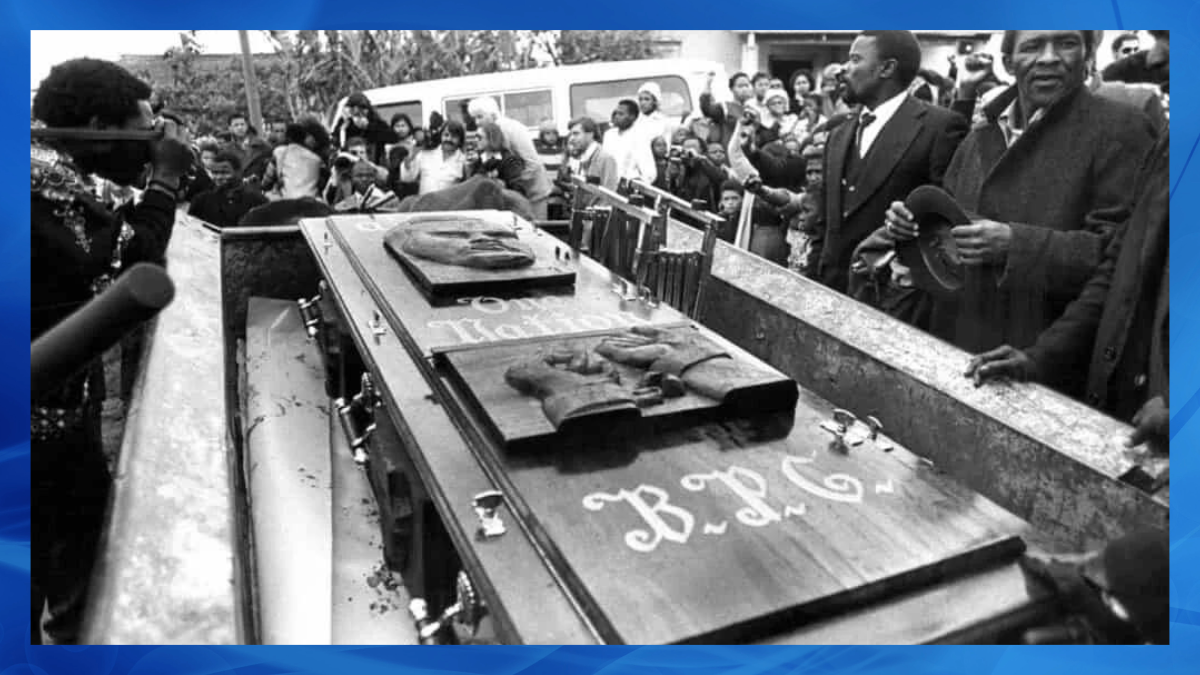
The Steve Biko funeral 1977 remains one of the most powerful moments in South Africa’s history. On 25 September 1977, tens of thousands gathered in King William’s Town to bid farewell to a man whose ideas had already transformed a generation.
Although Steve Biko had died in police custody, his influence had only grown stronger. His funeral became more than a moment of mourning. It became a bold statement of unity, resistance, and defiance against apartheid.
Key Details
| Detail | Information |
|---|---|
| Event | Steve Biko Funeral |
| Date | 25 September 1977 |
| Location | King William’s Town, Eastern Cape |
| Attendance | Tens of thousands |
| Significance | Anti-apartheid resistance |
Background
Steve Biko was a leading voice in South Africa’s struggle against apartheid. As the founder of the Black Consciousness Movement, he encouraged Black South Africans to embrace their identity and reject oppression.
His philosophy focused on psychological liberation. He believed that true freedom began in the mind. This message resonated widely, especially among young people.
However, his activism made him a target. In September 1977, he died in police custody under controversial circumstances, sparking outrage both locally and internationally.
What Happened at the Funeral
The Steve Biko funeral 1977 drew an extraordinary crowd. Tens of thousands gathered to pay their respects. The presence of such a large number of mourners was itself an act of defiance.
People traveled from across the country despite heavy restrictions and fear of state retaliation. The funeral became a rare moment where resistance could be seen openly.
Religious leaders, activists, and ordinary citizens stood together. The atmosphere was both somber and powerful. It was clear that Biko’s ideas had spread far beyond his immediate circle.
Historical Significance
The Steve Biko funeral 1977 marked a turning point in the anti-apartheid movement. It demonstrated that the government could silence individuals, but not the ideas they inspired.
International attention intensified after his death. Pressure on the apartheid regime increased. Within South Africa, more people became aware of the need for change.
The funeral also strengthened unity among activists. It reminded people that the struggle was collective and ongoing.
Legacy
Today, Steve Biko is remembered as one of the most influential figures in African history. His ideas continue to inspire movements focused on identity, dignity, and justice.
The Steve Biko funeral 1977 stands as a lasting symbol of resistance. It showed that even in loss, a movement can grow stronger.
His message lives on. His impact remains undeniable.