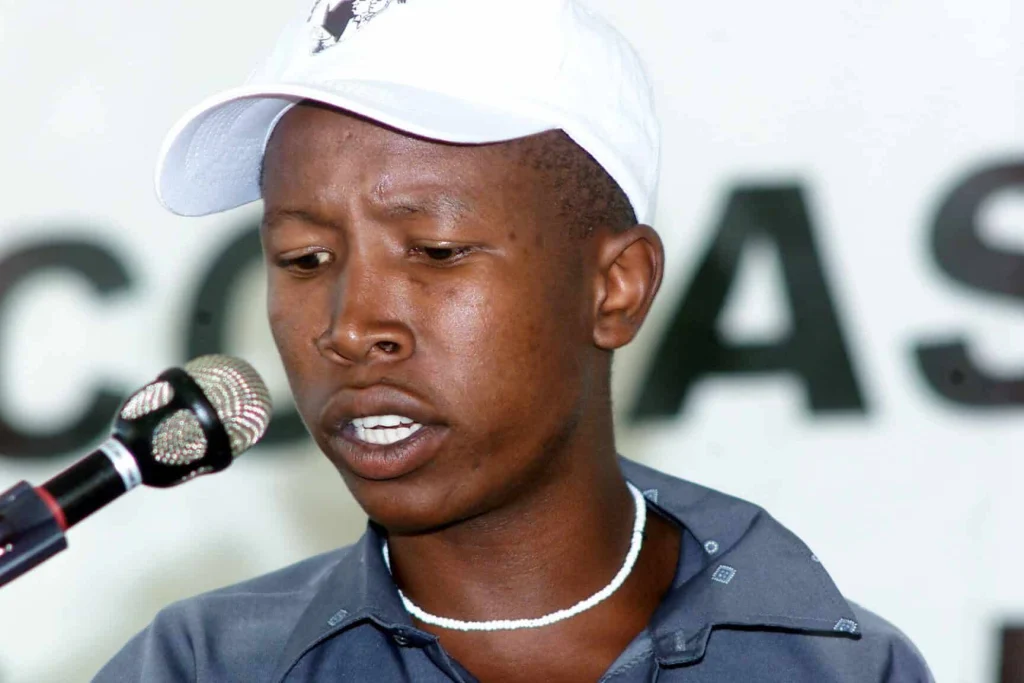
Long before becoming one of South Africa’s most recognizable and controversial political figures, Julius Malema built his political foundation through student activism and youth mobilization.
Julius Sello Malema (born 3 March 1981) is a South African politician. He is the founder and leader of the Economic Freedom Fighters (EFF), a communist and black nationalist political party since 2013. Before founding the EFF, he served as president of the African National Congress Youth League (ANCYL) from 2008 until his expulsion from the party in 2012.
In 2001, Malema became national president of the Congress of South African Students (COSAS), a major student movement closely associated with youth political activism in post-apartheid South Africa.
His rise within COSAS marked the beginning of a political journey that would later take him into the African National Congress (ANC) Youth League and eventually to the leadership of the Economic Freedom Fighters (EFF).
Read Also: Why Julius Malema will never be President of South Africa
Early Political Activism
Born in 1981 in Limpopo Province, Julius Malema became politically active at a young age.
He has publicly stated that he joined the ANC’s Masupatsela movement as a child, reportedly around the age of nine or ten. During the years following the end of apartheid, youth political organizations played a major role in mobilizing communities, students, and young activists across South Africa.
Malema quickly became known for his outspoken style and strong grassroots organizing abilities.
Rise Through COSAS
By 1997, Malema had already risen to become the provincial chairperson of COSAS in Limpopo.
His growing visibility within student politics eventually led to his election as national president of COSAS in 2001.
During his tenure, he became associated with student demonstrations, youth mobilization campaigns, and advocacy around educational and political issues affecting young South Africans.
COSAS itself had historically been influential in anti-apartheid activism and remained politically active during South Africa’s democratic transition years.
Entry Into National Politics
Malema’s leadership within COSAS opened the door to wider political opportunities inside the African National Congress structures.
He later joined the ANC Youth League, where he gained national prominence because of his fiery speeches, populist messaging, and aggressive political style.
As leader of the ANC Youth League, Malema frequently dominated headlines through:
- outspoken criticism of political opponents,
- strong support for economic transformation,
- and calls for land redistribution and nationalization policies.
His political rhetoric made him highly popular among sections of South Africa’s youth while also attracting criticism from opponents and some senior ANC leaders.
Read Also: South African Presidential Election Update
Formation of the Economic Freedom Fighters
After his expulsion from the ANC in 2012, Julius Malema launched the Economic Freedom Fighters (EFF) in 2013.
The EFF rapidly became one of South Africa’s most influential opposition parties, especially among younger voters and economically marginalized communities.
The party’s platform emphasized:
- land reform,
- economic justice,
- state intervention in the economy,
- and anti-corruption messaging.
Malema’s political style continued to generate strong support as well as intense controversy across South African politics.
A Polarizing Political Figure
Over the years, Julius Malema has become one of Africa’s most debated political personalities.
Supporters view him as a fearless advocate for economic equality and African empowerment, while critics accuse him of populism and inflammatory rhetoric.
Regardless of political opinion, his journey from student activist to national opposition leader remains one of the most significant political stories in post-apartheid South Africa.
The Importance of Youth Political Movements
Malema’s rise through COSAS also highlights the historical importance of youth and student organizations in African politics.
Across the continent, student movements have often served as launching grounds for future political leaders, activists, and reformers.
His early years in student politics therefore continue to attract historical and political interest as part of South Africa’s evolving democratic story.