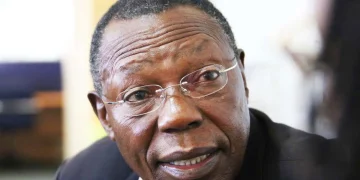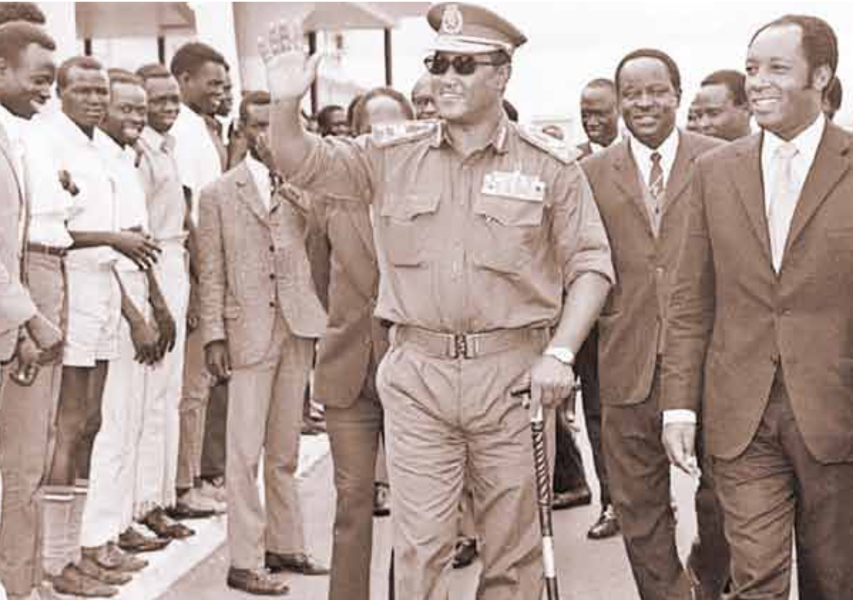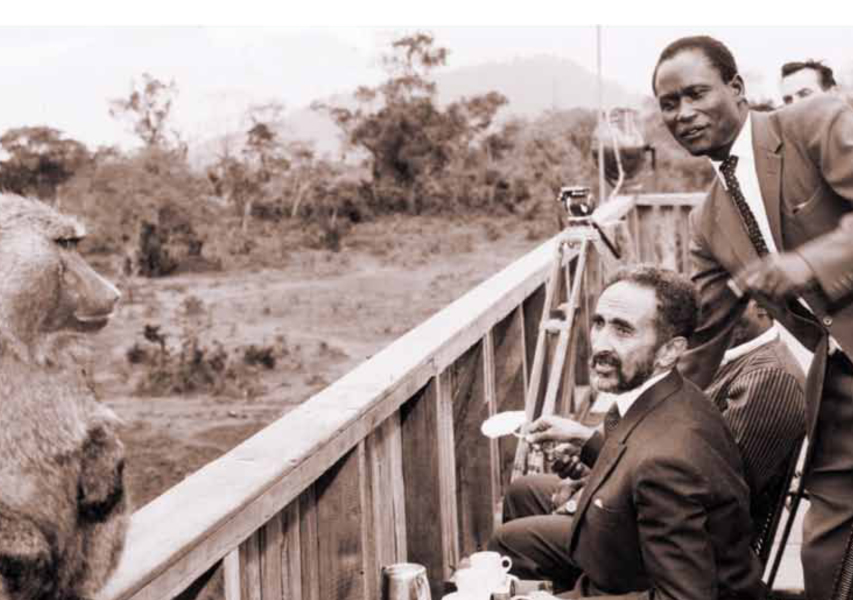
Ramogi Achieng Oneko, a freedom warrior, would be regarded as a moral politician who was willing to give his life in defense of his nation. The only liberation warrior to survive being imprisoned by both the colonial and Kenyatta regimes was he. He served as the Minister of Information and Broadcasting in Prime Minister Jomo Kenyatta’s first Cabinet.
Oneko began working as a weather reporter for the Meteorological Department shortly after graduating from Maseno School. He was born in Tieng’a village in Uyoma, Bondo, in 1920. He was employed by a British person he hated. In 1949, he ventured into politics by becoming one of the first Africans to hold a municipal council seat in Nairobi.
In 1945, Oneko was one of the first people from Kenya to start the Dholuo journal Ramogi Weekly. It was there only to stir up independence movements. G. L. Vidyathi, a printer in Nairobi, was behind him. The single daily newspaper in the area, the East African Standard, served the needs of the British colonists, the commercial sector, and the colonial government.
The independence fighter’s oldest son, Dr. Ongong’a Oneko, states: “He started it as a family business and later opened it up to others.” The project’s primary goals were to make money and inform our people about political developments. Because of the biased reporting of Kenyatta in the East African Standard, my dad decided to launch his own weekly.
Between 1948 to 1951, Oneko served as secretary of the Luo Thrift and Trading Corporation, which his friend Oginga Odinga had founded. When Oneko interviewed Kenyatta for the publication in the late 1940s, it is when they first met. Kenyatta was KAU’s leader at the time. The two become close friends before being arrested and held for their membership in the Mau Mau movement along with four other coworkers.
During their well reported trial in the isolated region of Kapenguria, Oneko was the one who was closest to Kenyatta. Oneko was re-arrested and held at Lokitaung, a remote outpost in northwest Kenya, along with Kenyatta and the other four people, even though the court found him not guilty. They gained notoriety as the “Kapenguria Six.”
Oneko claimed that the colonial authorities thought he was too close to Kenyatta, whom he considered to be a learned and well-spoken orator. As a result, they were divided up and imprisoned in various detention facilities. Kubai and Kaggia, two labor unionists, were judged to be too extreme. They allegedly thought Kenyatta would serve as an acting leader or had given up on the independence war.
Karumba was more dedicated to the independence cause, even though Kenyatta and Oneko acknowledged that he was illiterate. Prior to the State of Emergency being declared in 1952, Ngei was the first to launch a Kikamba newspaper. He was also called a radical by his colleagues, who felt that he was a little self-centered and did not completely support Kenyatta.