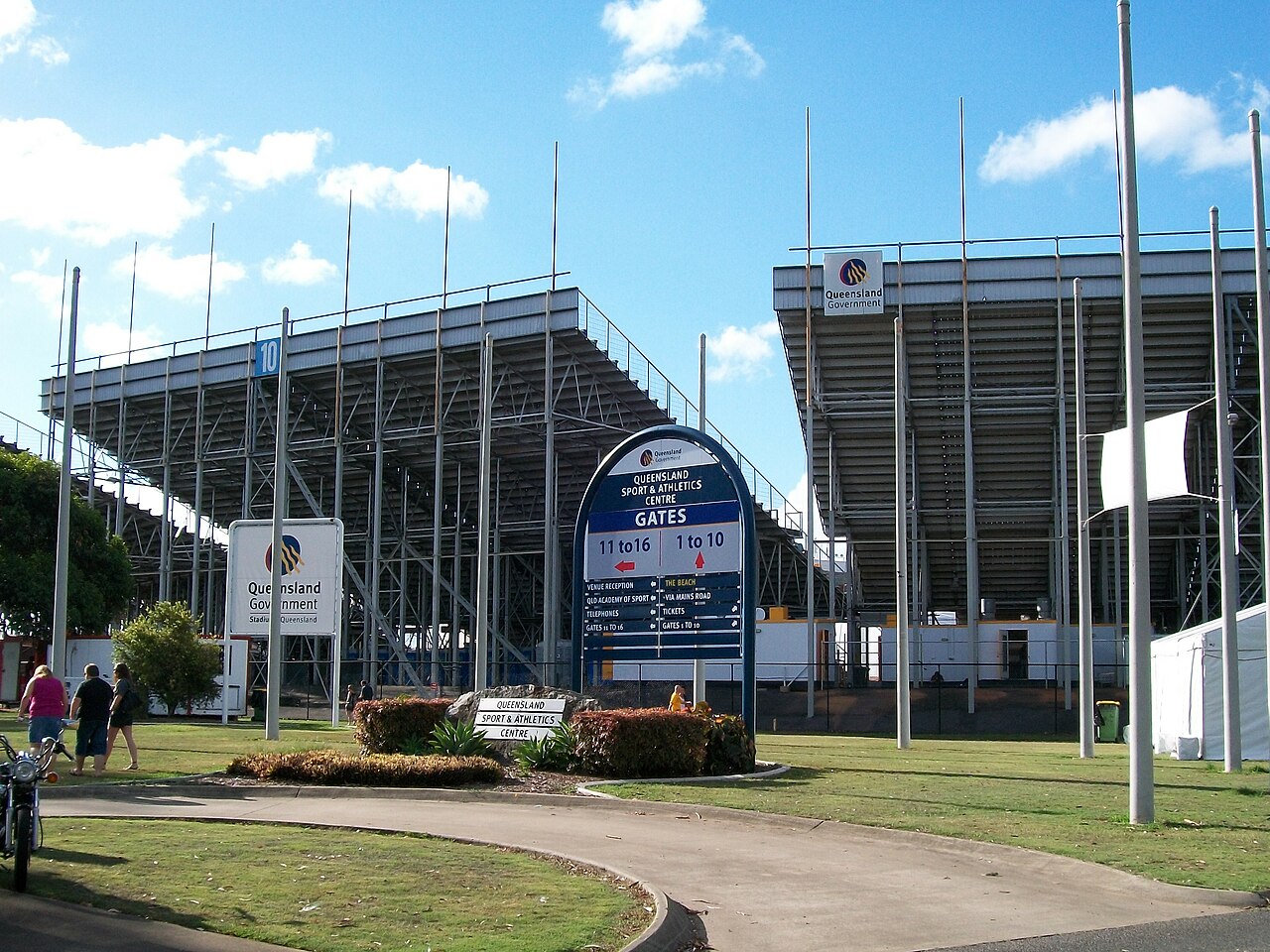
The Queensland Sport and Athletics Centre (QSAC), formerly known as Queen Elizabeth II Stadium, is one of Brisbane’s premier multi-purpose sporting venues. Located in Nathan, just 10 kilometers from Brisbane’s CBD, QSAC serves as a hub for athletics, rugby league, and other events. With a seating capacity of 48,500, it hosts a wide range of competitions, including local, state, and national athletics championships, as well as high-profile rugby league matches.
The History and Development of QSAC
QSAC opened in 1975, originally providing Queensland with its first synthetic running track, which was not affected by wet weather, making it ideal for athletics competitions. In 1977, it was officially named Queen Elizabeth II Jubilee Sports Centre in honor of the Queen’s Silver Jubilee. Over the years, the venue underwent several renovations and name changes, including ANZ Stadium (1993–2003) and Queen Elizabeth II Stadium (1977–1993), before becoming the Queensland Sport and Athletics Centre.
In addition to hosting athletics events, QSAC has also served as the home ground for rugby league teams, including the Brisbane Broncos from 1993 to 2003, and the Queensland State of Origin games. The stadium was also a key venue for the 2001 Goodwill Games and has hosted various international events, such as AFL and soccer matches.
- Inauguration Date: 1975
- Renaming History: Queen Elizabeth II Jubilee Sports Centre (1977–1993), ANZ Stadium (1993–2003), Queensland Sport and Athletics Centre (present)
- Capacity: 48,500
- Record Attendance: 58,912 (Brisbane Broncos vs Cronulla-Sutherland Sharks, 1997)
Design and Architecture of QSAC
QSAC is designed to accommodate a variety of sports, with a primary focus on athletics and rugby. The main stadium features a synthetic running track and a natural grass field, providing an ideal venue for athletic events and rugby league matches. The facility includes both permanent seating and temporary seating options, allowing for an increase in capacity during major events.
The stadium also features a State Athletics Facility, which can accommodate 2,100 spectators, making it one of the most versatile venues in Brisbane for track and field events. The venue’s design has evolved over time, with numerous renovations ensuring it meets the latest standards for international competitions.
- Architectural Features: Synthetic track, natural grass field, multi-purpose design
- Capacity: 48,500 (main stadium), 2,100 (State Athletics Facility)
QSAC’s Role in Brisbane’s Sports Scene
QSAC is an integral part of Brisbane’s sporting community. It has hosted the Commonwealth Games, Goodwill Games, and numerous rugby league events, including the 1997 Super League Grand Final. It has also served as a venue for State of Origin rugby league matches, and AFL games. The stadium continues to play a significant role in the development of athletics in Queensland, hosting annual state and national competitions.
In addition to these events, the stadium is the training ground for the Queensland Academy of Sport and the Queensland State Netball Centre, making it a central facility for developing talent in multiple sports.
- Home Teams: Queensland State of Origin, Brisbane Broncos (formerly)
- Events Hosted: Commonwealth Games (1982), Goodwill Games (2001), Rugby League World Cup (1994), AFL and Soccer matches
Upcoming Developments and the 2032 Summer Olympics
Looking ahead, QSAC is set to undergo renovations to accommodate events for the 2032 Summer Olympics. The stadium will be renovated to host athletics competitions and is expected to be a key venue in the Olympic Games. These renovations will include upgrades to the seating areas, new facilities, and improvements to accessibility, ensuring that QSAC remains a world-class venue.
- Renovations for 2032: Facility upgrades, expanded seating, improved accessibility
Conclusion
The Queensland Sport and Athletics Centre (QSAC) is a cornerstone of Brisbane’s sporting infrastructure. With its rich history, versatile design, and commitment to hosting major international events, QSAC continues to be a vital venue for athletics, rugby league, and other sports in Brisbane. As the city prepares for the 2032 Summer Olympics, QSAC will remain a key player in Queensland’s sporting future.