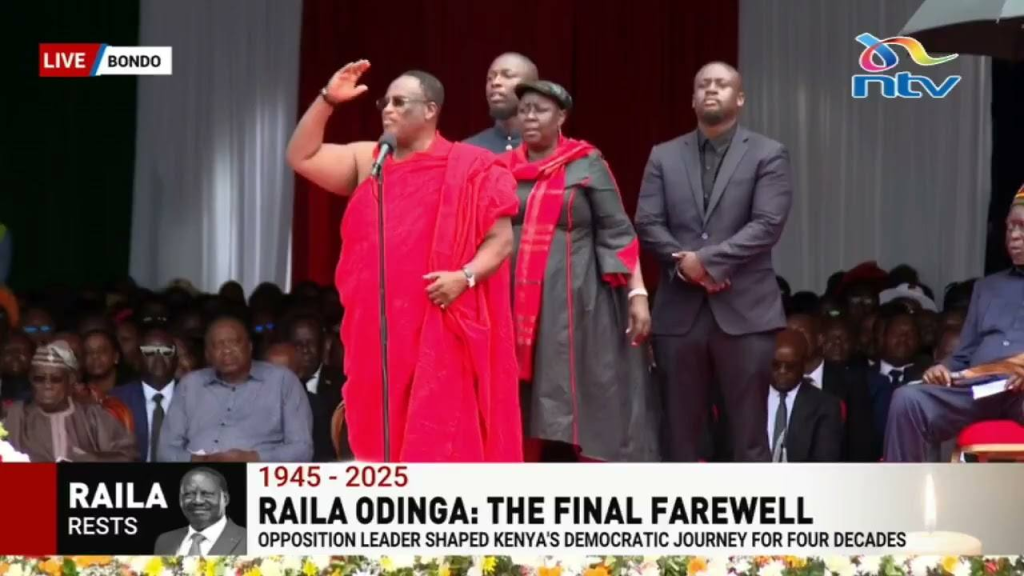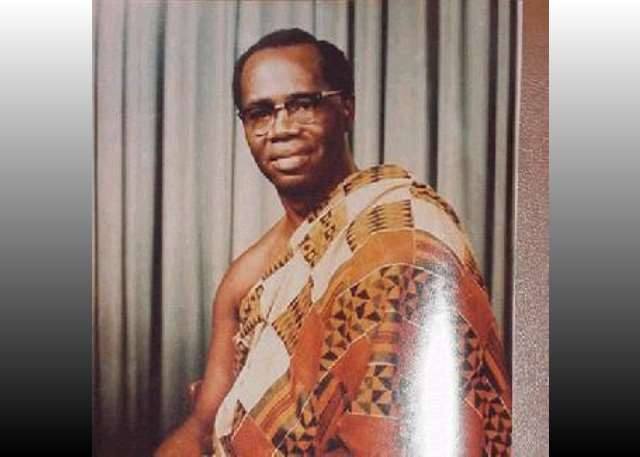
Prof. Kofi Abrefa Busia was born on 11 July 1913 in Wenchi, in present-day Bono Region, Ghana. He descended from royal lineage as a prince of the Wenchi Kingdom, making him both a traditional aristocrat and an intellectual pioneer. His family background tied him to Ghana’s Akan heritage, while his descendants later connected him to Kenya’s political elite through his son’s marriage to H.E. Ruth Odinga, the sister of the late Kenyan Prime Minister Raila Odinga. This union also made Ruth’s husband a prince of the Ashanti Kingdom and son of a Ghanaian Prime Minister.
Academic Brilliance and Early Career
Busia’s education defined his path to greatness. He attended Mfantsipim School, Ghana’s prestigious Methodist institution, before teaching at Achimota School and Wesley College. He earned his first degree with honours in Medieval and Modern History from the University of London, studying by correspondence. His brilliance made history when he became the first African student admitted to University College, Oxford.
Returning to the Gold Coast in 1942, Busia later completed a Bachelor of Arts in Philosophy, Politics, and Economics, followed by a Doctor of Philosophy (DPhil) in Social Anthropology at Nuffield College, Oxford, in 1947. His academic achievements elevated him to one of Africa’s earliest intellectuals recognized internationally. In 1959, he became Professor of Sociology and the Culture of Africa at the University of Leiden near The Hague in the Netherlands—cementing his legacy as both scholar and statesman.
Political Rise and Exile
Prof. Busia’s political journey began as a fierce critic of President Kwame Nkrumah, Ghana’s first leader. As Leader of the Opposition, he challenged Nkrumah’s centralized governance and socialist policies, promoting liberal democracy and rule of law instead. Facing intimidation and threats, Busia fled Ghana to escape persecution.
His exile ended in March 1966, when Nkrumah’s government was overthrown by the National Liberation Council (NLC). Upon his return, Busia became a key figure in the new administration—appointed Chairman of the National Advisory Committee of the NLC. In 1967–68, he also chaired the Centre for Civic Education (NCCE), where he used civic platforms to promote democratic ideals and subtly position himself for future leadership.
Prime Minister of Ghana
When the ban on political activity was lifted, Busia co-founded the Progress Party (PP) with allies from the defunct United Party (UP). In the 1969 general elections, his party secured an overwhelming victory—104 of 105 parliamentary seats—ushering him in as Prime Minister of Ghana.
As Prime Minister, Busia embraced liberal economic reforms and pursued policies distinct from Nkrumah’s socialism. However, his tenure was marred by controversial decisions, including the mass deportation of nearly 500,000 Nigerian citizens from Ghana and the 44% devaluation of the cedi in 1971. These policies drew widespread opposition and economic unrest.
Overthrow and Final Years
While Busia was in Britain for medical treatment, his government was overthrown on 13 January 1972 by the military regime led by Colonel Ignatius Kutu Acheampong. Unable to return home, Busia remained in exile in Oxford, England, resuming academic life and writing extensively about democracy and African governance.
He died of a heart attack in August 1978 at Oxford, leaving behind a mixed legacy of intellectual brilliance, reformist vision, and political turbulence.
Family and Legacy
Prof. Kofi Abrefa Busia was survived by eight children—Kwasi Osei, Afua Safoa, Nana Gyasi, Yaw, Abena, Kofi, Nana Frema, and Akosua Busia, the internationally acclaimed actress and author known for her role in The Color Purple.
Busia’s legacy endures as that of a royal intellectual, a defender of liberal democracy, and one of Ghana’s foremost scholar-politicians. His influence continues to resonate across Africa, linking academic excellence with public service—and bridging the royal traditions of Ghana and Kenya through his family lineage.