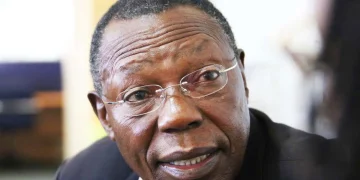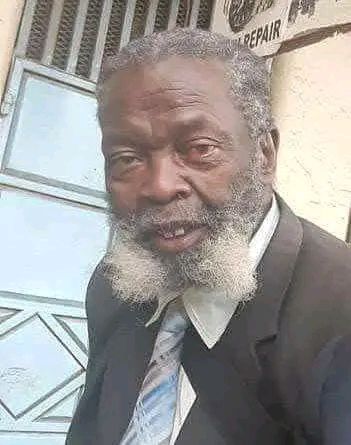
Prof. Joseph Ouma Muga was a towering intellectual mind from Rangwe, Homa Bay County, whose brilliance made him one of the most respected scholars in Kenya’s early academic circles. Born with a passion for learning, he consistently excelled throughout his education. During his school years, he topped the Kenya African Certificate of Secondary Education (KACE), an achievement that earned him a place at Makerere University, one of Africa’s most prestigious institutions at the time.
At Makerere, Muga pursued a degree in Geography, marking the beginning of a distinguished academic journey. His exceptional performance opened doors for further studies abroad, where he obtained both Master’s and Doctorate degrees in Fluvial Geomorphology from an Australian university. His academic excellence set him apart as one of Kenya’s earliest scholars with advanced degrees in environmental and physical geography.
A Stellar Career in Academia
Prof. Muga began his professional journey at Makerere University in 1966 as a lecturer in Geography. His deep insight into environmental systems and river processes earned him admiration among peers and students. Colleagues often described him as a man of rare intellect, articulate and visionary in his ideas.
He later moved back to Kenya, where he played a key role in founding the School of Environmental Studies at Moi University. Under his guidance, the school became a center of excellence in environmental education, influencing policy and research across East Africa. His academic legacy remains deeply woven into Kenya’s environmental studies programs to this day.
The Leap into Politics
After nearly two decades in academia, Prof. Muga made a bold move into politics. In the 1988 general election, he contested and won the Rangwe parliamentary seat, marking his entry into national politics. His intellect and eloquence quickly caught the attention of President Daniel arap Moi, who appointed him Minister for Environment.
However, his ministerial career was short-lived. Reports circulated that he had been dismissed for allegedly boasting about writing a speech that President Moi delivered during a 1989 environmental conference in Brazil. Whether true or exaggerated, the claim cost him his cabinet post and strained his relationship with the establishment.
Opposition Politics and Decline
Unbowed by the setback, Prof. Muga joined FORD-Kenya, the opposition party led by Jaramogi Oginga Odinga. He reclaimed his seat during the 1992 general election, reaffirming his popularity in Rangwe. But the political tide shifted in 1997, when Raila Odinga rose as the dominant political figure in Nyanza. Muga lost his seat and, with it, his influence.
The once-prominent professor gradually faded from the public eye. His fall from power left him financially strained and socially isolated. The respected academic, who had once stood among Kenya’s brightest minds, now faced the harsh reality of life after politics.
A Lonely End
By the mid-2000s, Prof. Muga was living a life far removed from the prestige of academia or Parliament. In 2006, during a political rally in Homa Bay, he publicly declared that Raila Odinga would not win the 2007 presidential election—a statement that alienated him further from his community. Ironically, his prediction came true when Mwai Kibaki controversially retained power that year.
Yet the prophecy brought him no solace. His later years were marked by poverty, loneliness, and illness. Once an intellectual beacon, he became a symbol of unfulfilled promise—a reminder of how brilliance and power can fade without stability or legacy planning.
In September 2018, the curtain fell on his life after a long, undisclosed illness. He passed away quietly, far from the academic corridors and parliamentary halls where he once commanded respect.
Legacy of a Forgotten Genius
Despite his tragic ending, Prof. Joseph Ouma Muga remains celebrated as one of Kenya’s earliest academic trailblazers. His contribution to geography and environmental science, his role in shaping environmental education, and his brief but impactful political career are still remembered by those who knew his brilliance.
He stands as both an inspiration and a cautionary tale — a man whose intellect and ambition once promised greatness, but whose journey ended in solitude. Kenya remembers him not only as a scholar and leader, but as a symbol of how fleeting fame and fortune can be.