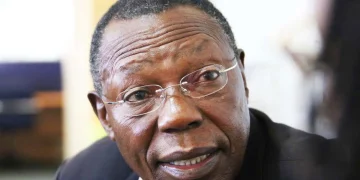
Philip Sheffield (born 1960) is a renowned British operatic tenor celebrated for his performances at leading international opera houses and in several world premieres. Born in Nairobi, Kenya, Sheffield has built a career defined by versatility, ranging from Mozart’s classics to contemporary operatic works.
Early Life and Education
Sheffield was born in Nairobi in 1960 before moving to the United Kingdom. He studied English literature at Trinity College, Cambridge, later pursuing vocal studies at both the Royal College of Music and the Guildhall School of Music and Drama. Before his operatic breakthrough, he was a member of The Swingle Singers, and also worked as a session and jazz vocalist. Notably, he provided the voice of the polar bear in Howard Blake’s “The Bear”, one of the best-selling animated videos of its time.
Opera Career
Sheffield made his operatic debut in 1988 at La Monnaie in Brussels in Monteverdi’s L’incoronazione di Poppea. He soon established himself in lyric tenor roles, including:
- Ferrando (Così fan tutte, Mozart)
- Tamino (The Magic Flute, Mozart)
- Lenski (Eugene Onegin, Tchaikovsky)
He went on to create roles in significant world premieres, including:
- Terry Bond in Benedict Mason’s Playing Away (Opera North, 1994), broadcast on BBC.
- Appearances in Hans-Jürgen von Bose’s 63 Dream Palace and Thomas Adès’s The Tempest.
- Participation in the world premiere of Elena Firsova’s The Nightingale and the Rose (Almeida Theatre, 1994).
Sheffield also appeared as Parpignol in Antonio Pappano’s 1995 London recording of Puccini’s La bohème.
In 2020, he took the leading role of Živný in Janáček’s Osud (Destiny) at the National Theatre Brno, a performance widely praised for its emotional depth.
Film and Concert Work
Beyond the stage, Sheffield featured in the Leonard Bernstein biopic “Maestro”, performing the tenor solo in Bernstein’s MASS. He also sang the role of François in the UK’s only performance of Bernstein’s A Quiet Place.
Legacy
Philip Sheffield’s career demonstrates a balance between classical repertoire and modern works, making him one of Britain’s most adaptable tenors. From Nairobi roots to international opera stages, he has built a reputation as a performer of nuance, power, and cultural significance. His involvement in premieres and recordings ensures his influence extends well beyond traditional opera audiences.