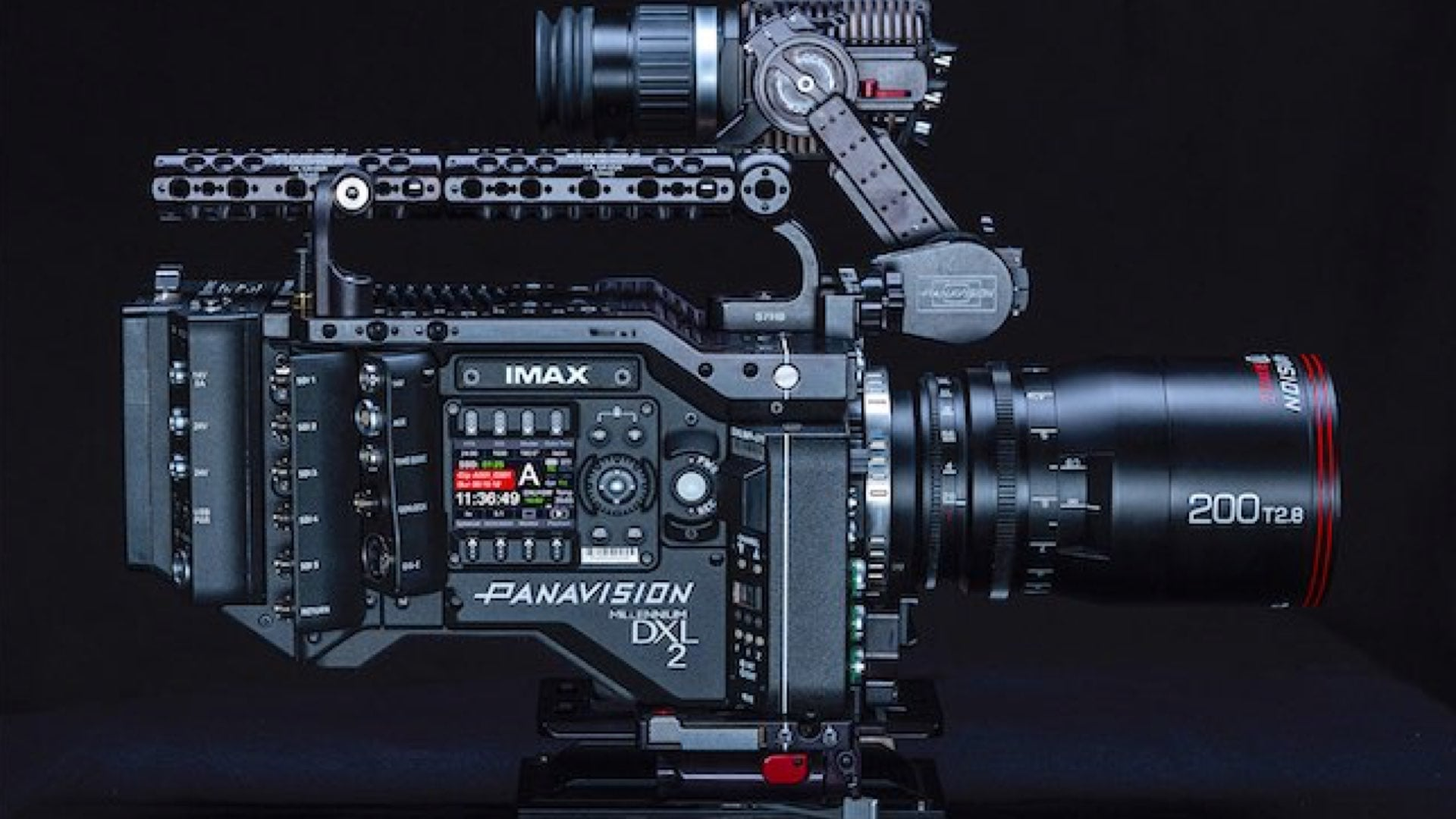
Panavision Millennium DXL2 is a large-format 8K digital cinema camera built for premium film, television, commercial and high-end streaming production.
The original Panavision Millennium DXL was unveiled in 2016 as a collaboration between Panavision, RED Digital Cinema and Light Iron. It marked a major shift for Panavision because it brought the famous Millennium name into the digital large-format era.
The DXL2 followed in 2018 as a major update. It brought the RED MONSTRO 8K VV sensor, improved low-light performance, native ISO 1600, Light Iron Color 2, 16-bit image capture and a claimed 16-plus stops of dynamic range.
The camera uses a VistaVision-sized sensor measuring 40.96 x 21.6 mm and records up to 8K Full Format at 8192 x 4320. It is designed around Panavision’s PV mount and the company’s large-format lens ecosystem, making it a specialist camera for productions that want a premium cinematic look.
Panavision Millennium DXL2 Key Specifications
| Feature | Panavision Millennium DXL2 |
|---|---|
| Camera type | Large-format digital cinema camera |
| Original DXL release | June 2016 |
| DXL2 announcement | 2018 |
| Sensor format | VistaVision / large format |
| Sensor size | 40.96 x 21.6 mm |
| Maximum resolution | 8K Full Format, 8192 x 4320 |
| Sensor technology | RED MONSTRO 8K VV in DXL2 |
| Lens mount | Panavision PV mount |
| Base sensitivity | ISO 1600 on DXL2 |
| Main codec | REDCODE RAW |
| Bit depth | 16-bit |
| Weight | About 4,500 g |
| Dimensions | About 334 mm x 178 mm x 165 mm |
| Dynamic range | Not independently tested in supplied data |
| Official DXL2 claim | 16-plus stops of dynamic range |
| Market position | Rental-focused professional cinema system |
The DXL/DXL2 is not a consumer or prosumer camera. It is a rental-house cinema system made for experienced crews, high-end cinematographers and major productions.
VistaVision Sensor and 8K Full Format Capture
The Panavision Millennium DXL2 uses a VistaVision-sized large-format sensor.
Its 40.96 x 21.6 mm imaging area is larger than Super 35 and close to the large-format digital cinema class. This allows cinematographers to use wider fields of view, shallower depth control and larger-format lens characteristics.
The full 8K recording mode captures 8192 x 4320 pixels in a 17:9 aspect ratio. This gives productions a highly detailed digital negative for cinema finishing, streaming delivery, visual effects, reframing and large-screen projection.
Why VistaVision Matters
VistaVision and large-format capture affect the look of an image.
The format can create a wider sense of space, smoother perspective, stronger separation and a more immersive frame. When paired with Panavision large-format lenses, the DXL2 can produce a cinematic image with scale, depth and controlled character.
This is why large-format cameras like the DXL2 are often used on projects where the image itself must feel premium.
RED MONSTRO 8K VV Sensor
The DXL2 is built around the RED MONSTRO 8K VV sensor.
This sensor gives the camera 8K resolution, 16-bit color capture and strong low-light performance. Compared with the original DXL, the DXL2 improved sensitivity and shadow performance while keeping the large-format 8K workflow.
The camera records REDCODE RAW and supports 8K capture up to 60p in full-format modes, depending on compression and recording settings.
DXL vs DXL2
The original Millennium DXL used an 8K RED sensor and was introduced in 2016 with a claimed 15 stops of dynamic range and ISO 800.
The DXL2 improved the platform with the RED MONSTRO 8K VV sensor, native ISO 1600 and a claimed 16-plus stops of dynamic range. It also added Light Iron Color 2 and workflow improvements that made the camera more attractive for high-end productions.
In simple terms, DXL2 is the more refined and more capable version.
Light Iron Color Science
One of the most important parts of the DXL system is Light Iron color science.
Panavision developed the DXL platform with Light Iron to give the camera a distinctive image pipeline. The goal was not only to combine a RED sensor with a Panavision body, but also to create a more cinematic and production-friendly image from capture to post.
DXL2 introduced Light Iron Color 2, often called LiColor2. This helped streamline the 8K workflow and gave productions a refined image starting point.
Why Light Iron Color Matters
Color science affects how skin tones, highlights, shadows and contrast appear before grading.
The DXL2 was designed to deliver a pleasing on-set image while keeping the flexibility of RAW recording. This is useful for directors, cinematographers and colorists who want a high-quality monitoring image during production and strong control in post.
For productions already using Light Iron post-production workflows, the camera fits naturally into the finishing pipeline.
REDCODE RAW Recording
The Panavision Millennium DXL2 records in REDCODE RAW.
REDCODE RAW gives productions strong flexibility in post-production. It allows colorists to adjust exposure, white balance, color, contrast and final look with more control than standard compressed video formats.
The supplied recording data lists 8K Full Format at 8192 x 4320 with several REDCODE compression ratios, including 12:1, 10:1, 8:1, 7:1, 6:1 and 5:1.
| Recording Mode | Codec | Frame Rate | Approximate Datarate | Bit Depth |
| 8K Full Format | REDCODE 12:1 | 60p | 2.2 Gb/s | 16-bit |
| 8K Full Format | REDCODE 12:1 | 50p | 1.8 Gb/s | 16-bit |
| 8K Full Format | REDCODE 12:1 | 24p | 864 Mb/s | 16-bit |
| 8K Full Format | REDCODE 10:1 | 50p | 2.2 Gb/s | 16-bit |
| 8K Full Format | REDCODE 8:1 | 40p | 2.2 Gb/s | 16-bit |
| 8K Full Format | REDCODE 7:1 | 30p | 1.9 Gb/s | 16-bit |
| 8K Full Format | REDCODE 6:1 | 30p | 2.2 Gb/s | 16-bit |
| 8K Full Format | REDCODE 5:1 | 24p | 1.7 Gb/s | 16-bit |
These are serious data rates. Productions using the DXL2 need experienced data wranglers, fast media, strong backup systems and a proper post-production plan.
8K Recording Formats
The DXL2 supports a wide range of recording formats and aspect ratios.
This flexibility allows cinematographers to choose a format based on lens coverage, delivery needs, anamorphic workflow, visual effects requirements and creative framing.
| Format | Resolution |
| 8K Full Format | 8192 x 4320 |
| 8K 2.1 | 8192 x 4096 |
| 8K 2.4:1 | 8192 x 3456 |
| 8K 16:9 | 7680 x 4320 |
| 8K 14:9 | 6720 x 4320 |
| 8K 3:2 | 6480 x 4320 |
| 8K 6:5 | 5184 x 4320 |
| 8K 8:9 | 3840 x 4320 |
| 7.5K Full Format | 7680 x 4080 |
| 7K Full Format | 7168 x 3780 |
| 6.5K Full Format | 6656 x 3536 |
| 6K Full Format | 6144 x 3240 |
| 5K Full Format | 5120 x 2700 |
| 4K Full Format | 4096 x 2160 |
| 2K Full Format | 2048 x 1080 |
This broad recording menu is useful because not every production needs full 8K all the time. Lower-resolution modes can reduce data needs, support different aspect ratios or match specific lens requirements.
Anamorphic and Large-Format Lens Options
The DXL2 is built around Panavision’s lens ecosystem.
It uses the PV mount, which gives productions access to Panavision’s large-format lenses and anamorphic optics. This is one of the major reasons filmmakers choose the system.
The camera can be used with lenses such as Primo 70, Ultra Panavision 70 and other Panavision large-format options, depending on project requirements and rental availability.
Why Lens Choice Is Central to DXL2
The DXL2 is not only about resolution.
The camera is designed as a full imaging system. Sensor, optics, color science and workflow all work together to create the final image. A cinematographer may choose the DXL2 because of how it works with a specific Panavision lens set, not only because it records 8K.
This makes the DXL2 especially attractive for productions where the lens look is central to the film’s visual identity.
Dynamic Range and ISO Performance
The supplied camera data says dynamic range was not tested.
However, Panavision describes the DXL2 as offering more than 16 stops of usable dynamic range. The original DXL was commonly described as a 15-stop camera, while the DXL2 improved that claim with the MONSTRO sensor and native ISO 1600.
Because the supplied lab data does not include independent dynamic-range results, an accurate article should avoid presenting a measured value as fact. The safest wording is to say the DXL2 has a claimed 16-plus stops of dynamic range.
Native ISO 1600
The DXL2’s native ISO 1600 is important for low-light scenes.
A higher native ISO gives cinematographers more flexibility when working with available light, night interiors, practical lighting and large sets where lighting every area can be difficult.
It also helps preserve detail in darker scenes while maintaining the large-format look.
Rolling Shutter
The supplied camera data does not include rolling-shutter test results.
That means any rolling-shutter performance should be treated carefully unless a production has tested the camera directly. Like many large-format digital cinema cameras, the DXL2 should be evaluated based on the actual shooting style, movement and frame rate required.
For controlled narrative work, rolling shutter may not be a major concern. For fast pans, handheld action or rapid movement, cinematographers should test the camera and lens setup before production.
Body Design and Handling
The Panavision Millennium DXL2 is a professional cinema body designed for production crews.
The supplied details list the body weight at about 4,500 g and dimensions of roughly 334 mm x 178 mm x 165 mm. This makes it much larger and heavier than mirrorless cameras or compact cinema bodies, but it is designed for film sets rather than casual shooting.
The DXL system was built with professional operation in mind. It supports on-set accessories, lens control, monitoring, power distribution and crew-friendly workflows.
Built for Film Sets
The DXL2 is not designed for solo creators.
It is meant for productions with camera assistants, digital imaging technicians, data teams, focus pullers and post-production planning. Its size and workflow make sense on professional sets where image quality, reliability and system integration matter more than portability.
ProRes Proxy and Direct-to-Edit Workflow
One of the DXL system’s strengths is its workflow design.
The camera can record high-resolution REDCODE RAW while also supporting proxy workflows for editing. This helps productions begin editing faster without waiting for heavy 8K RAW files to be processed first.
DXL2 improved direct-to-edit features, making it more practical for large productions that need efficient post-production movement.
Why Proxy Workflows Matter
8K RAW files are heavy.
A proxy workflow lets editors work with lighter files while the RAW originals remain available for final color grading and finishing. This saves time, reduces workstation strain and keeps the production moving.
For studio films, episodic television and commercials, this workflow can be just as important as the camera’s sensor.
Who Should Use the Panavision Millennium DXL2?
The Panavision Millennium DXL2 is best for high-end productions that need large-format 8K capture and access to Panavision optics.
It is ideal for:
Feature films
Premium streaming dramas
High-end commercials
Luxury brand campaigns
Music videos
Large-format cinematography
Anamorphic productions
Visual effects-heavy projects
Projects finishing in 4K or 8K
Productions using Panavision lens packages
It is not a camera for casual purchase. It is a rental-focused professional system built around Panavision’s service model.
Panavision Millennium DXL2 Price and Availability
The Panavision Millennium DXL2 is generally part of Panavision’s rental ecosystem rather than a standard retail camera.
That means public purchase pricing is not usually listed like mirrorless or owner-operator cinema cameras. Productions typically work with Panavision or an approved rental provider to build a camera package.
Rental cost depends on location, production scale, lens package, accessories, support, insurance, shooting schedule and availability.
For article accuracy, it is better to avoid giving a fixed retail price unless a specific rental quotation or package price is provided.
Panavision Millennium DXL2 vs Original DXL
The DXL2 improved several major areas over the original DXL.
| Feature | Millennium DXL | Millennium DXL2 |
| Announcement period | 2016 | 2018 |
| Sensor | 8K RED sensor | RED MONSTRO 8K VV |
| Native ISO | ISO 800 | ISO 1600 |
| Dynamic range claim | About 15 stops | 16-plus stops |
| Color workflow | Light Iron Color | Light Iron Color 2 |
| Resolution | 8K | 8K |
| Lens ecosystem | Panavision large format | Panavision large format |
The original DXL was already a major camera, but the DXL2 refined the formula with better sensor performance, improved color science and stronger workflow tools.
Key Takeaways
- Panavision Millennium DXL was unveiled in 2016.
- Panavision Millennium DXL2 followed in 2018.
- The DXL2 uses the RED MONSTRO 8K VV sensor.
- The sensor size is 40.96 x 21.6 mm.
- Maximum full-format resolution is 8192 x 4320.
- The camera uses the Panavision PV mount.
- Native ISO on DXL2 is ISO 1600.
- Panavision claims more than 16 stops of dynamic range for DXL2.
- The supplied data does not include independent dynamic-range or rolling-shutter tests.
- The camera records 16-bit REDCODE RAW.
- 8K Full Format can reach up to 60p depending on compression.
- The body weighs about 4,500 g.
- The DXL2 is a rental-focused cinema camera, not a typical retail product.
Frequently Asked Questions
What is the Panavision Millennium DXL2?
The Panavision Millennium DXL2 is a large-format 8K digital cinema camera developed by Panavision with RED sensor technology and Light Iron color science.
When was the Panavision Millennium DXL released?
The original Millennium DXL was unveiled in June 2016.
When was the Panavision Millennium DXL2 announced?
The Millennium DXL2 was announced in 2018 as an upgraded version of the original DXL.
What sensor does the DXL2 use?
The DXL2 uses the RED MONSTRO 8K VV sensor.
What is the sensor size?
The sensor area is 40.96 x 21.6 mm.
What is the maximum resolution?
The maximum full-format recording resolution is 8192 x 4320.
What codec does the DXL2 use?
The camera records REDCODE RAW and supports professional proxy workflows.
What lens mount does the DXL2 use?
The DXL2 uses the Panavision PV mount.
What is the native ISO of the DXL2?
The DXL2 has a native ISO of 1600.
Is the Panavision Millennium DXL2 sold to the public?
The DXL2 is mainly available through Panavision’s rental ecosystem rather than standard retail sale.
Conclusion
The Panavision Millennium DXL2 remains one of the most distinctive large-format cinema cameras of the modern digital era.
It combines an 8K VistaVision-class sensor, RED MONSTRO technology, 16-bit REDCODE RAW, Light Iron Color 2 and Panavision’s famous lens ecosystem. The result is not just a high-resolution camera, but a complete production platform built around premium image-making.
For filmmakers, the DXL2’s value is not only its 8K resolution. Its real strength lies in how sensor, optics, color science and workflow come together. That makes it a serious choice for high-end films, commercials and streaming productions that want the scale, depth and character of large-format cinema.
Read Also: Nikon Z 6: Specs, Dynamic Range, Video Features and Used-Market Value