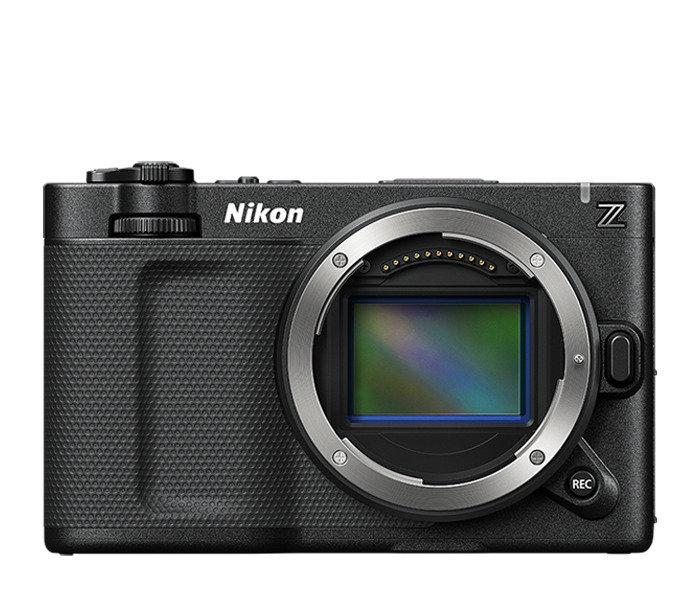
Nikon ZR is a full-frame compact cinema camera designed to bring RED-style video workflows into a smaller and more affordable Nikon Z mount body.
Released in September 2025, the Nikon ZR marks a major step for Nikon’s cinema ambitions after its acquisition of RED Digital Cinema. Instead of being only a hybrid mirrorless camera with strong video features, the ZR is positioned as a dedicated cinema-focused model for filmmakers, creators, documentary shooters, small production teams and independent studios.
The camera uses a 35.9 x 23.9 mm full-frame sensor and supports internal 6K RAW recording. Its most important feature is R3D NE, a Nikon-exclusive version of RED’s R3D RAW video format. This gives users access to REDWideGamutRGB, Log3G10 and a workflow designed to bring RED-style colour handling into a much lower-cost camera.
At about $2,196.95 before tax, the ZR is one of the most aggressive cinema camera entries in its class.
Nikon ZR Key Specifications
| Feature | Nikon ZR |
|---|---|
| Camera type | Full-frame compact cinema camera |
| Release period | September 2025 |
| Sensor size | 35.9 x 23.9 mm |
| Lens mount | Nikon Z mount |
| Base ISO | ISO 800 |
| Dual base ISO in R3D | ISO 800 and ISO 6400 |
| Maximum video resolution | 6K, 6048 x 3402 |
| Main RAW formats | R3D NE, N-RAW, ProRes RAW |
| Other codecs | ProRes HQ, H.265, H.264 |
| Weight | 540 g |
| Dimensions | 49 mm x 81 mm x 133 mm |
| Approximate price | $2,196.95 before tax |
The headline is simple: Nikon has created a compact full-frame cinema camera that brings together Z mount lenses, RED colour science, internal RAW recording and a lightweight body at a price that undercuts many traditional cinema systems.
Full-Frame Sensor and 6K Recording
The Nikon ZR uses a full-frame 35mm sensor measuring 35.9 x 23.9 mm.
This gives filmmakers a wide field of view, strong low-light potential and a familiar large-format look. The sensor supports a full 6048 x 4032 photo area, while video modes include 6K recording at 6048 x 3402 in a 16:9 format.
The 6K capture gives editors room for reframing, stabilization, downsampling to 4K and multiple delivery formats. For small production teams, that extra resolution can be very useful because it allows a single shot to be adjusted later without losing 4K output quality.
Why 6K Matters for Filmmakers
6K recording is not only about resolution.
It gives creators more flexibility in post-production. A filmmaker can crop a frame, create digital zooms, stabilize handheld footage or deliver both horizontal and vertical versions from one master recording.
For documentary work, interviews, travel films, YouTube productions and commercial content, that flexibility can save time and reduce the need for multiple cameras.
R3D NE Brings RED Workflow to Nikon ZR
The biggest feature of the Nikon ZR is R3D NE.
R3D NE is a RAW video format based on RED’s R3D technology and developed specifically for Nikon cameras. It gives the ZR a major advantage over many other cameras in its price range because it brings RED-style colour science into a compact Nikon body.
The format supports Log3G10 and REDWideGamutRGB, which helps footage match more closely with RED cinema camera workflows. That is important for productions that already use RED cameras or want a more cinema-focused grading pipeline.
R3D NE Recording Modes
The Nikon ZR records R3D NE in 12-bit quality.
In FX 6K mode, it can record 6048 x 3402 at frame rates up to 59.94p. The supplied recording data lists bitrates from about 1.5 Gb/s at 23.98p to about 3.8 Gb/s at 59.94p.
This is serious data output, so users need fast CFexpress cards and proper storage planning. RAW video gives more grading flexibility, but it also creates larger files than standard compressed codecs.
Dual Base ISO and Dynamic Range
The Nikon ZR has a standard base sensitivity of ISO 800. In R3D NE mode, it supports dual base ISO values of ISO 800 and ISO 6400.
This helps filmmakers shoot in different lighting conditions. ISO 800 is ideal for controlled lighting, daylight work and standard production setups. ISO 6400 helps in darker scenes, available-light shooting and documentary conditions where adding lights is not always possible.
Nikon claims the ZR can deliver more than 15 stops of dynamic range. However, independent lab-style data supplied for the camera shows more complex results depending on codec and test method.
Lab-Tested Dynamic Range Results
The supplied lab data shows a maximum measured result of 13.2 stops at SNR=2 in Full Frame mode at 25fps, using 3840 x 2160 H.265 LongGOP at ISO 800 in N-Log.
That result is strong, but the same data includes an important warning: the 4K H.265 mode uses severe internal noise reduction that can destroy image detail. This means the highest measured dynamic-range number should be read carefully.
RAW modes tell a different story. The supplied data shows lower measured SNR=2 values in R3D NE, ProRes RAW and N-RAW, but those formats may preserve more natural detail and give more post-production control.
For real filmmaking, the best choice will depend on whether the user values cleaner lab charts, sharper detail, grading flexibility or smaller files.
Rolling Shutter Performance
The Nikon ZR performs well in rolling shutter tests.
The supplied data lists a minimum rolling shutter result of 9.4 ms in full-frame 6K modes, including R3D NE, ProRes RAW and N-RAW at 6048 x 3402. It also shows 9.4 ms in full-frame 4K ProRes HQ modes.
In DX crop 4K H.265 modes, the result improves to 6.3 ms.
This is a useful result for handheld shooting, fast movement and action work. Lower rolling shutter reduces skew when panning or filming moving subjects.
What 9.4 ms Means in Practice
A 9.4 ms full-frame readout is strong for a compact full-frame video camera.
It does not remove all rolling shutter, but it helps keep movement more controlled than slower full-frame cameras. Filmmakers shooting handheld documentaries, music videos, weddings, travel films or fast-moving scenes should benefit from this performance.
Recording Formats and Codecs
The Nikon ZR supports a wide range of recording formats.
Its main formats include R3D NE, N-RAW, ProRes RAW, ProRes HQ, H.265 and H.264. This gives users flexibility depending on the project, storage budget and post-production workflow.
| Recording Format | Resolution |
| FX 6K R3D NE | 6048 x 3402 |
| FX 6K N-RAW | 6048 x 3402 |
| FX 6K ProRes RAW | 6048 x 3402 |
| FX 4K R3D NE | 4032 x 2268 |
| FX 4K N-RAW | 4032 x 2268 |
| FX 4K ProRes RAW | 4032 x 2268 |
| FX 5.4K ProRes | 5376 x 3024 |
| FX 5.4K H.265 | 5376 x 3024 |
| FX 4K UHD ProRes | 3840 x 2160 |
| FX 4K UHD H.265 | 3840 x 2160 |
| DX 4K R3D NE | 3984 x 2240 |
| DX 4K N-RAW | 3984 x 2240 |
| DX 4K ProRes RAW | 3984 x 2240 |
| DX 4K UHD H.265/H.264 | 3840 x 2160 |
This makes the ZR highly flexible. A filmmaker can shoot R3D NE for maximum grading flexibility, N-RAW for Nikon’s internal RAW workflow, ProRes RAW for Apple-oriented post-production, ProRes HQ for reliable editing, or H.265 for smaller files.
6K RAW and High-Frame-Rate Options
The Nikon ZR supports 6K RAW recording up to 59.94p in FX mode.
For higher frame rates, the camera also supports 4K RAW options and high-speed HD modes. This gives creators more flexibility for slow motion, action scenes, sports, music videos and commercial work.
The supplied recording data shows FX 6K R3D NE and N-RAW High Quality recording up to 59.94p at around 3.8 Gb/s. N-RAW Normal reduces data rates while keeping 12-bit recording.
Why Codec Choice Matters
Choosing the right codec affects the whole production.
R3D NE gives the RED-style workflow. N-RAW keeps users inside Nikon’s RAW system. ProRes RAW works well for Apple-friendly editing environments. ProRes HQ is easier to edit on many systems. H.265 saves space but may apply stronger internal processing.
The best option depends on whether the project needs maximum colour control, fast turnaround or smaller storage requirements.
Nikon Z Mount and Lens Coverage
The Nikon ZR uses Nikon’s Z mount.
The Z mount has a short flange distance and a wide diameter, which makes it flexible for both native Z lenses and adapted lenses. Filmmakers can use Nikon Z lenses, adapted F mount lenses and many cinema lens options through third-party adapters.
Because the sensor is full frame, users should check lens coverage carefully. Full-frame lenses should cover the FX modes, while APS-C or Super 35 lenses may work better in DX crop modes.
Why the Z Mount Is Important
The Z mount gives the ZR a major advantage for lens flexibility.
It allows compact native lenses, autofocus-friendly setups and adapted cinema glass. This makes the camera useful for different production styles, from solo content creation to more controlled cinema shoots.
Body Size and Portability
The Nikon ZR is extremely compact for a full-frame cinema camera.
It weighs only 540 g and measures about 49 mm x 81 mm x 133 mm. That makes it lighter than many cinema-focused competitors and easier to use on gimbals, handheld rigs, drones, sliders and small production setups.
The compact body also makes it attractive to solo filmmakers who need strong video quality without building a heavy rig.
Built for Small Crews
Many modern filmmakers work with small teams or alone.
The Nikon ZR fits that production style. It gives users RAW video, full-frame capture, high dynamic range, compact handling and Z mount flexibility without requiring a large cinema camera setup.
This could make it especially popular with travel filmmakers, documentary creators, YouTubers, wedding filmmakers and indie productions.
Audio and Filmmaker Tools
The Nikon ZR also stands out because of its audio features.
The camera supports 32-bit float audio, which gives creators more room to recover quiet or loud recordings. This can be helpful when recording interviews, live events, documentary scenes or unpredictable audio environments.
The camera also includes filmmaker-focused monitoring and workflow tools, including log recording, LUT support and cinema-style video options.
These features show that Nikon is not only competing on resolution. It is trying to build a complete video production tool.
Nikon ZR Price and Value
The Nikon ZR is listed at around $2,196.95 before sales tax or VAT.
That price is one of its strongest selling points. For less than many traditional cinema cameras, buyers get a full-frame sensor, 6K RAW, R3D NE, RED colour workflow, ProRes RAW, N-RAW, strong rolling shutter performance and a compact body.
However, buyers should remember that the body price is only the beginning. A complete cinema setup may require CFexpress cards, lenses, batteries, cages, microphones, monitors, ND filters and storage.
Even with those extra costs, the ZR remains one of the most interesting compact cinema camera options in its class.
Who Should Buy the Nikon ZR?
The Nikon ZR is best suited for filmmakers who want cinema features in a compact body.
It is a strong option for:
Independent filmmakers
Documentary shooters
YouTube creators with advanced workflows
Wedding filmmakers
Music video directors
Travel filmmakers
Small production companies
Nikon Z users moving into video
Creators who want RED-style colour science at a lower price
It may not be the best choice for users who only need simple video files or casual photography. The ZR is strongest when used by people who understand log recording, RAW workflows, colour grading and data management.
Nikon ZR Strengths and Weaknesses
Main Strengths
The ZR’s biggest strengths are full-frame 6K recording, R3D NE, compact size, strong rolling shutter performance, Z mount flexibility and aggressive pricing.
It gives filmmakers access to a serious cinema workflow without the cost of a traditional RED camera.
Main Weaknesses
The biggest concerns are data rates, heat management under heavy recording, storage costs and the need for careful codec choices.
The supplied lab data also suggests that some compressed modes may rely heavily on internal noise reduction, which can reduce fine detail. Users who care about texture and grading should test RAW and ProRes modes before choosing a main recording format.
Key Takeaways
- Nikon ZR is a full-frame compact cinema camera released in September 2025.
- It uses a 35.9 x 23.9 mm full-frame sensor.
- The camera records 6K video at 6048 x 3402.
- It supports R3D NE, N-RAW, ProRes RAW, ProRes HQ, H.265 and H.264.
- R3D NE brings RED-style colour science to Nikon’s Z mount system.
- Dual base ISO in R3D mode is ISO 800 and ISO 6400.
- Nikon claims more than 15 stops of dynamic range.
- Supplied lab data shows a maximum measured 13.2 stops at SNR=2 in 4K H.265 LongGOP.
- Full-frame rolling shutter is listed at 9.4 ms.
- DX crop rolling shutter improves to 6.3 ms.
- The body weighs only 540 g.
- The listed price is about $2,196.95 before tax.
Frequently Asked Questions
What is the Nikon ZR?
The Nikon ZR is a full-frame compact cinema camera designed for filmmakers, creators and video professionals.
When was the Nikon ZR released?
The Nikon ZR was released in September 2025.
What sensor does the Nikon ZR use?
It uses a full-frame 35mm sensor measuring 35.9 x 23.9 mm.
What lens mount does the Nikon ZR use?
The Nikon ZR uses the Nikon Z mount.
What is R3D NE on the Nikon ZR?
R3D NE is a Nikon-exclusive RAW video format based on RED’s R3D technology. It supports REDWideGamutRGB and Log3G10 for RED-style colour workflows.
Does the Nikon ZR support dual base ISO?
Yes. In R3D NE mode, the Nikon ZR supports dual base ISO values of ISO 800 and ISO 6400.
What is the maximum video resolution?
The Nikon ZR records up to 6K at 6048 x 3402.
What is the Nikon ZR dynamic range?
Nikon claims more than 15 stops of dynamic range. Supplied lab data shows a maximum measured 13.2 stops at SNR=2 in 4K H.265 LongGOP.
What is the rolling shutter performance?
The supplied data lists 9.4 ms in full-frame modes and 6.3 ms in DX crop 4K H.265 modes.
How much does the Nikon ZR cost?
The Nikon ZR is listed at about $2,196.95 before sales tax or VAT.
Conclusion
The Nikon ZR is one of the most important cameras in Nikon’s modern video strategy.
It combines a full-frame sensor, 6K internal recording, R3D NE, N-RAW, ProRes RAW, Z mount flexibility and a compact 540 g body at a price that makes cinema-style production more accessible.
Its strongest appeal is clear: filmmakers can get a RED-inspired workflow without buying a large and expensive cinema system. The ZR is not perfect, and users must manage heavy data rates and codec choices carefully. Still, for independent filmmakers, content creators and small production teams, it is one of the most exciting compact cinema cameras in its price range.
Read Also; Leica SL2-S: Specs, Price, Dynamic Range and Video Features