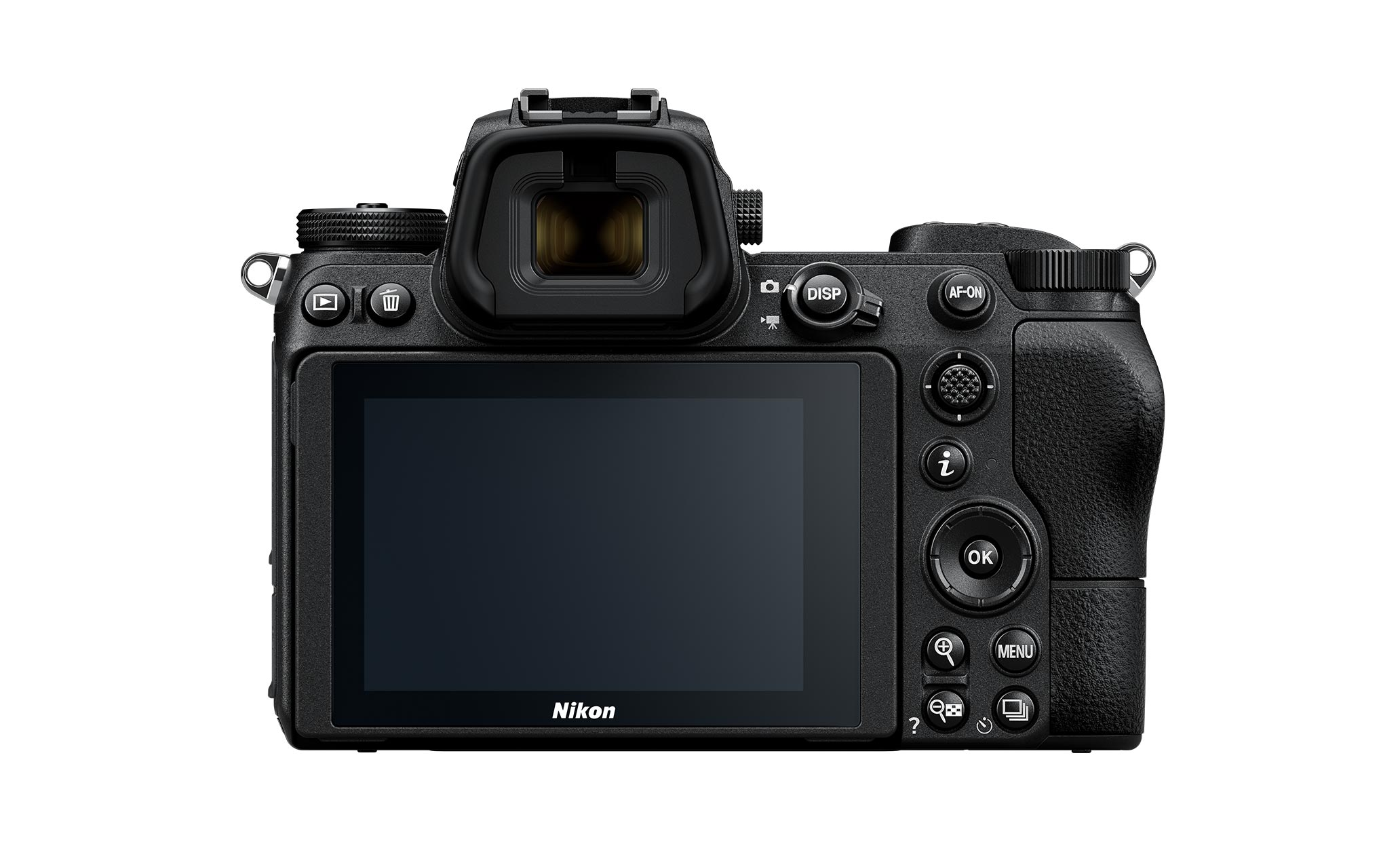
Nikon Z 6 is a full-frame mirrorless camera that helped launch Nikon’s Z mount system and remains one of the most important cameras in the brand’s mirrorless history.
Released in November 2018, the Nikon Z 6 arrived as a lower-resolution, faster and more video-friendly companion to the higher-resolution Nikon Z 7. It was aimed at photographers and hybrid creators who wanted full-frame image quality, strong low-light performance, 4K video and a modern mirrorless body without moving into a heavy professional DSLR system.
The camera uses a 35.9 x 23.9 mm full-frame sensor, Nikon’s Z mount, EXPEED 6 processing and a compact body weighing about 585 g. It records 4K UHD video and supports 10-bit N-Log output over HDMI, making it an important early option for Nikon shooters moving into serious video production.
Although newer models such as the Nikon Z6II, Z6III, Z 8, Z 9 and Nikon ZR now offer stronger video tools, the original Nikon Z 6 still has value for photographers, filmmakers and content creators who want an affordable full-frame Z mount camera.
Nikon Z 6 Key Specifications
| Feature | Nikon Z 6 |
|---|---|
| Camera type | Full-frame mirrorless hybrid camera |
| Release period | November 2018 |
| Sensor format | Full Frame 35mm |
| Sensor size | 35.9 x 23.9 mm |
| Effective resolution | 24.5MP |
| Lens mount | Nikon Z mount |
| Image processor | EXPEED 6 |
| Base sensitivity | ISO 800 for N-Log workflows |
| Video resolution | 4K UHD up to 30p |
| External video | 10-bit N-Log over HDMI |
| RAW video option | External RAW output through upgrade-supported workflows |
| Weight | About 585 g body only |
| Dimensions | About 134 mm x 101 mm x 68 mm |
| Market status | Mostly used, refurbished or second-hand |
The Z 6 was not built as a cinema camera, but it became popular because it offered a clean full-frame image, good low-light capability and stronger video potential than many Nikon DSLRs before it.
Full-Frame Sensor and Image Quality
The Nikon Z 6 uses a 24.5MP full-frame sensor.
This resolution gives the camera a strong balance between detail, low-light performance and manageable file sizes. For many photographers, 24MP is still enough for portraits, weddings, travel, events, documentary work, social media, web publishing and medium-size prints.
The sensor size is 35.9 x 23.9 mm, which gives the camera a full-frame look with wide-angle lens coverage and shallow-depth-of-field control. This makes it suitable for both still photography and cinematic video work.
Why 24.5MP Still Works
A 24.5MP sensor remains practical because it does not overload storage or editing systems.
Higher-resolution cameras can offer more cropping room, but they also create larger files. The Nikon Z 6 keeps things balanced. It gives enough detail for most professional and enthusiast work while helping users shoot more images without filling cards too quickly.
For wedding shooters, event photographers and travel creators, this balance remains one of the Z 6’s strengths.
Nikon Z Mount System
The Nikon Z 6 uses Nikon’s Z mount.
This was one of the biggest changes in Nikon’s modern camera history. The Z mount has a wide diameter and short flange distance, allowing Nikon to design new mirrorless lenses with strong optical performance.
The camera works with native Nikon Z lenses and can also use many older Nikon F mount lenses through the FTZ adapter. That made the Z 6 attractive to long-time Nikon DSLR users who already owned F mount glass.
Lens Coverage
Because the Nikon Z 6 has a full-frame sensor, Nikon FX-format Z lenses are the best match for full-frame shooting.
DX lenses can still be used in crop mode, but they do not cover the full sensor area. Filmmakers using adapted cinema lenses should also check coverage before shooting, especially when using wide lenses or specialty optics.
Nikon Z 6 Video Features
The Nikon Z 6 was one of Nikon’s most important early video cameras.
It records 4K UHD video from the full-frame sensor area and supports 10-bit N-Log output over HDMI. That made it attractive to filmmakers who wanted better grading flexibility than standard 8-bit internal recording could offer.
The camera can output a cleaner, more flexible video signal to an external recorder. This helped the Z 6 become popular with hybrid creators who wanted a compact full-frame camera for interviews, documentary shooting, YouTube production, weddings and travel films.
4K UHD Recording
The Nikon Z 6 records 4K UHD video at up to 30p.
This is not as advanced as newer Nikon bodies that offer 6K, 8K, N-RAW or high-frame-rate 4K, but it remains useful for many projects. For creators delivering content to YouTube, websites, social platforms or corporate clients, 4K UHD is still a strong standard.
The camera also supports Full HD recording for smaller files and easier editing.
External 10-Bit N-Log
One of the Nikon Z 6’s most important video features is external 10-bit N-Log output.
N-Log gives filmmakers a flatter image profile with more room for colour grading. When recorded externally in 10-bit, footage can hold more colour information than standard 8-bit internal recording.
This makes the Z 6 more useful for controlled video projects where the editor plans to grade the footage later.
Why N-Log Matters
N-Log helps protect highlight and shadow information.
For filmmakers, this matters in high-contrast scenes such as bright windows, outdoor interviews, sunsets, weddings, city streets and night scenes. A flat log image may look dull before grading, but it gives the colourist more room to shape the final look.
The Z 6’s external 10-bit N-Log option was one of the reasons video creators took the camera seriously when it launched.
External RAW Video Support
The Nikon Z 6 later became known for external RAW video support through Nikon’s RAW video output upgrade.
This allowed compatible workflows with external recorders, giving users access to 12-bit RAW-style recording options. For filmmakers, this made the Z 6 more powerful than its original spec sheet suggested.
External RAW is not as convenient as internal N-RAW on newer cameras, but it still gives users more control in post-production than standard compressed recording.
External Recorder Workflow
To get the best video quality from the Nikon Z 6, users often pair it with an external recorder.
This setup can improve recording formats, monitoring tools and post-production flexibility. However, it also makes the rig larger and more expensive.
For small run-and-gun shooting, internal recording is simpler. For controlled filmmaking, interviews and short films, external recording can unlock more of the camera’s potential.
Dynamic Range Performance
The supplied lab-style data lists the Nikon Z 6 with a maximum measured dynamic range of 11.9 stops at SNR=2.
That result comes from full-frame 3840 x 2160 recording at 25fps using external ProRes HQ, ISO 800 and N-Log.
| Mode | Resolution | Codec | ISO | Gamma | Measured Dynamic Range |
| Full Frame | 3840 x 2160 | ProRes HQ external | ISO 800 | N-Log | 11.9 stops at SNR=2 |
This is a respectable result for a first-generation full-frame mirrorless camera. It shows why the Z 6 became popular with video shooters who were willing to use external recording.
What 11.9 Stops Means
A measured 11.9 stops at SNR=2 gives the Nikon Z 6 enough usable range for many real-world scenes.
It can handle controlled interviews, natural light, indoor work, event shooting and outdoor scenes if exposure is managed carefully. However, newer Nikon cameras now offer more advanced video tools, higher resolutions and better internal recording options.
The Z 6 still performs well, but it is no longer Nikon’s most advanced video body.
Rolling Shutter
Rolling shutter was not tested in the supplied camera data.
In real-world shooting, users should still be careful with fast pans, quick handheld movement and fast-moving subjects. Like most full-frame mirrorless cameras from its generation, the Nikon Z 6 may show some skew in demanding motion scenes.
For interviews, landscapes, travel, events and controlled filmmaking, this is usually manageable. For sports, fast action or whip pans, newer bodies such as the Z6III, Z 8 and Z 9 offer stronger readout performance.
Photo Performance
The Nikon Z 6 remains a strong stills camera.
Its 24.5MP full-frame sensor produces detailed images with good colour and low-light performance. The camera is suitable for portraits, weddings, travel, events, landscapes, street photography and everyday professional work.
The Z 6 also supports continuous shooting up to 12fps, depending on settings. That made it useful for casual action and event work, even though it was not designed as a dedicated sports flagship.
Best Photography Uses
The Nikon Z 6 works especially well for:
Portrait photography
Wedding photography
Travel photography
Event coverage
Street photography
Documentary work
Family photography
Low-light stills
General hybrid shooting
It gives photographers a full-frame look in a compact body and remains a sensible entry point into Nikon’s Z system.
Autofocus System
The Nikon Z 6 uses a hybrid autofocus system with 273 autofocus points.
When it launched, this was a major step for Nikon mirrorless cameras. It gave users wide frame coverage and better subject tracking than many older DSLR live-view systems.
However, autofocus has improved significantly in newer Nikon models. Cameras such as the Z6III, Z 8 and Z 9 offer more advanced subject detection, stronger tracking and faster processing.
Autofocus in 2026
The Z 6 autofocus system is still usable, but it is no longer class-leading.
For portraits, weddings, travel and general shooting, it performs well with good technique. For demanding wildlife, sports and fast-moving action, newer Nikon cameras are better choices.
This is important for buyers comparing a used Z 6 with a newer Z6II or Z6III.
Body Design and Handling
The Nikon Z 6 is compact and practical.
It weighs about 585 g and measures roughly 134 mm wide, 101 mm high and 68 mm deep. This makes it lighter than Nikon’s later professional bodies while still offering a comfortable grip and strong build quality.
The camera includes an electronic viewfinder, tilting touchscreen and weather-sealed body design. It feels more professional than entry-level mirrorless cameras but remains easy to carry for travel and everyday shooting.
Why the Body Still Feels Modern
The Z 6 body design aged well.
It has a deep grip, clear controls and a compact shape that works with both small primes and larger Z lenses. For creators who do not need a fully articulating screen or the latest autofocus features, the handling remains one of the camera’s best qualities.
Memory Cards and Storage
The Nikon Z 6 uses XQD and CFexpress Type B-compatible media depending on firmware and card support.
This was controversial at launch because many users were moving from SD cards. However, XQD and CFexpress Type B cards offer strong speed and reliability, which helps with video and burst shooting.
The downside is cost. CFexpress Type B cards are more expensive than SD cards, so buyers should include media costs when budgeting for a used Z 6.
Nikon Z 6 Price and Used-Market Value
The Nikon Z 6 is no longer usually bought as a new mainstream body. It is now mostly found used, refurbished or second-hand.
That makes pricing variable. Condition, shutter count, included battery, charger, box, warranty and bundled lens all affect the final price.
For buyers on a budget, the used Nikon Z 6 can be one of the most affordable ways to enter Nikon’s full-frame Z mount system. It offers a full-frame sensor, 4K video, N-Log output, good stills quality and access to modern Z lenses.
What to Check Before Buying Used
Before buying a used Nikon Z 6, check:
Shutter count
Sensor condition
Lens mount condition
Battery health
Firmware version
Card slot condition
HDMI port condition
USB-C port condition
Screen and EVF condition
Whether original accessories are included
Video users should pay special attention to the HDMI port, because external recording is one of the camera’s major strengths.
Nikon Z 6 vs Nikon Z6II
The Nikon Z6II improved the original Z 6 with dual EXPEED 6 processors, dual card slots and better autofocus.
For many buyers, the Z6II is the safer upgrade if the price difference is small. It offers more reliability for paid work, especially because dual card slots matter for weddings, events and professional assignments.
However, the original Z 6 can still be a better budget buy if the price is much lower.
Nikon Z 6 vs Nikon Z6III
The Nikon Z6III is a much more advanced camera.
It offers a partially stacked sensor, faster readout, 6K RAW video, ProRes RAW, better autofocus, stronger high-frame-rate options and a more modern video workflow.
The original Z 6 is cheaper and still capable, but the Z6III is the clear choice for creators who need advanced video, action shooting and current-generation performance.
Nikon Z 6 vs Nikon Z 8 and Z 9
The Nikon Z 8 and Z 9 are professional cameras with 45.7MP stacked sensors, 8K video, 8.3K RAW, advanced autofocus and faster performance.
They are far more powerful than the Z 6, but they also cost more and create larger files.
The Nikon Z 6 makes sense for budget-conscious creators. The Z 8 and Z 9 make sense for professionals who need speed, resolution, 8K video and advanced autofocus.
Who Should Buy the Nikon Z 6?
The Nikon Z 6 is best for users who want an affordable full-frame mirrorless camera with good stills and solid 4K video.
It is a strong choice for:
Beginner full-frame photographers
Travel creators
Portrait shooters
Wedding assistants
Budget filmmakers
YouTubers using external recorders
Nikon DSLR users moving to Z mount
Students learning photography and video
Creators buying used gear
It is not the best choice for users who need the latest autofocus, internal RAW video, dual card slots or 4K 120p.
Key Takeaways
- Nikon Z 6 was released in November 2018.
- It uses a 24.5MP full-frame sensor.
- The sensor size is 35.9 x 23.9 mm.
- The camera uses Nikon’s Z mount.
- It is powered by the EXPEED 6 processor.
- It supports 4K UHD video.
- It can output 10-bit N-Log over HDMI.
- External RAW video support is available through compatible upgrade workflows.
- Supplied lab data shows 11.9 stops at SNR=2 in external ProRes HQ at ISO 800.
- Rolling shutter was not tested in the supplied data.
- The body weighs about 585 g.
- It remains a strong used-market option for budget Nikon Z users.
- Newer models offer stronger autofocus, internal RAW and higher-resolution video.
Frequently Asked Questions
What is the Nikon Z 6?
The Nikon Z 6 is a full-frame mirrorless camera released as part of Nikon’s first generation of Z mount cameras.
When was the Nikon Z 6 released?
The Nikon Z 6 was released in November 2018.
What sensor does the Nikon Z 6 use?
The Nikon Z 6 uses a 24.5MP full-frame sensor measuring 35.9 x 23.9 mm.
What lens mount does the Nikon Z 6 use?
The Nikon Z 6 uses the Nikon Z mount.
Does the Nikon Z 6 shoot 4K video?
Yes. The Nikon Z 6 records 4K UHD video.
Does the Nikon Z 6 support N-Log?
Yes. The Nikon Z 6 supports 10-bit N-Log output over HDMI.
Does the Nikon Z 6 support RAW video?
Yes. The Nikon Z 6 can support external RAW video output through Nikon’s RAW video upgrade workflow and compatible external recorders.
What is the dynamic range of the Nikon Z 6?
The supplied lab data lists a maximum measured result of 11.9 stops at SNR=2 in external ProRes HQ at ISO 800 using N-Log.
Was rolling shutter tested on the Nikon Z 6?
Rolling shutter was not tested in the supplied data.
Is the Nikon Z 6 still worth buying?
Yes, the Nikon Z 6 can still be worth buying used if the price is right and the buyer wants an affordable full-frame Z mount camera for stills and 4K video.
Conclusion
The Nikon Z 6 remains an important camera because it helped move Nikon into the full-frame mirrorless era.
It may no longer match the power of the Z6III, Z 8, Z 9 or Nikon ZR, but it still offers a strong full-frame sensor, good image quality, 4K video, 10-bit N-Log output and access to Nikon’s Z mount lens system.
For creators on a budget, the Z 6 is still a practical used-market option. It is best for photographers and filmmakers who want full-frame quality without paying for the newest body. Newer Nikon cameras are faster and more advanced, but the original Z 6 remains a capable and affordable entry into Nikon’s modern mirrorless system.
Read Also: Nikon Z 9: Specs, Price, Dynamic Range and 8K Video Features