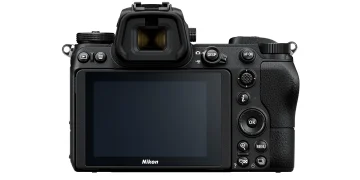
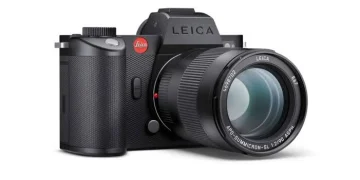
Nikon Z6III is a full-frame hybrid mirrorless camera built for photographers and filmmakers who need speed, strong video tools and a compact Z mount body.
Released in June 2024, the Z6III became one of Nikon’s most important mid-range cameras because it introduced a partially stacked CMOS sensor to the Z6 line. That sensor design helps the camera read data faster than a traditional non-stacked sensor, improving autofocus, video performance, burst shooting and rolling-shutter control.
The camera sits between Nikon’s more accessible full-frame bodies and higher-end models such as the Z8 and Z9. It gives creators 6K RAW recording, 5.4K video, 4K UHD, N-Log, N-RAW, ProRes RAW and fast still-photo performance without moving into a heavier flagship body.
At around $1,996.95 before tax in current retail listings, the Nikon Z6III has become a strong option for hybrid shooters who want serious video performance and full-frame image quality at a more reachable price.
Nikon Z6III Key Specifications
| Feature | Nikon Z6III |
|---|---|
| Camera type | Full-frame hybrid mirrorless camera |
| Release period | June 2024 |
| Sensor format | Full Frame 35mm |
| Sensor size | 35.9 x 23.9 mm |
| Sensor design | 24.5MP partially stacked CMOS |
| Lens mount | Nikon Z mount |
| Processor | EXPEED 7 |
| Base sensitivity for Log | ISO 800 |
| Maximum RAW video | 6K up to 59.94p in N-RAW |
| Main video codecs | N-RAW, ProRes RAW HQ, ProRes HQ, H.265, H.264 |
| Weight | About 670 g body only, around 760 g with battery and card |
| Dimensions | About 139 mm x 102 mm x 74 mm |
| Current listed price | Around $1,996.95 before tax |
The Z6III is not only a stills camera with video added. It is a serious hybrid tool aimed at creators who move between photography, filmmaking, events, documentaries, weddings, travel and commercial content.
Partially Stacked Full-Frame Sensor
The most important hardware feature in the Nikon Z6III is its partially stacked CMOS sensor.
A stacked sensor usually reads data much faster than a conventional sensor. Nikon’s partially stacked design is built to deliver many of those speed benefits while keeping the camera below the cost of fully stacked flagship models.
This faster readout helps reduce rolling shutter, improves electronic-viewfinder performance, supports fast video modes and allows high-speed still shooting.
Why the Sensor Matters
For photographers, the sensor helps with action, wildlife, sport and event shooting.
For filmmakers, the faster readout helps when panning, shooting handheld scenes or recording subjects with quick movement. Rolling shutter is still present, but the Z6III performs far better than many slower full-frame hybrid cameras.
This makes the camera useful for creators who need one body for both stills and video.
Nikon Z6III Video Recording
The Nikon Z6III is one of Nikon’s strongest video-focused hybrid cameras.
It supports 6K RAW recording, 5.4K ProRes and H.265, 4K UHD options, Full HD high-frame-rate modes and multiple codec choices for different workflows.
The camera can record 6K at 6048 x 3402 in N-RAW. It also supports ProRes RAW HQ in 6K at lower frame rates, plus ProRes HQ and H.265 options in 5.4K and 4K.
| Recording Format | Resolution |
| FX 6K N-RAW | 6048 x 3402 |
| FX 6K ProRes RAW | 6048 x 3402 |
| FX 4K N-RAW | 4032 x 2268 |
| FX 4K ProRes RAW | 4032 x 2268 |
| FX 5.4K ProRes | 5376 x 3024 |
| FX 5.4K H.265 | 5376 x 3024 |
| FX 4K UHD ProRes | 3840 x 2160 |
| FX 4K UHD H.265 | 3840 x 2160 |
| FX HD ProRes | 1920 x 1080 |
| FX HD H.265/H.264 | 1920 x 1080 |
| DX 4K N-RAW | 3984 x 2240 |
| DX 4K ProRes RAW | 3984 x 2240 |
| DX 4K UHD H.265/H.264 | 3840 x 2160 |
This gives filmmakers several choices. They can shoot RAW when they want maximum grading flexibility, ProRes when they want an editing-friendly workflow, or H.265 when they need smaller files.
6K N-RAW and ProRes RAW
The Z6III’s 6K RAW modes are a major selling point.
In FX mode, the camera records 6K N-RAW High Quality up to 59.94p. According to the supplied recording data, the bitrate reaches about 3.7 Gb/s at 59.94p and about 1.5 Gb/s at 23.98p.
N-RAW Normal gives users a lighter option, with lower bitrates while keeping 12-bit RAW recording.
ProRes RAW HQ is also available in 6K at frame rates up to 29.97p in the supplied recording list. This is useful for editors working in Apple-friendly post-production workflows.
Why RAW Video Matters
RAW video gives filmmakers more control in post-production.
It allows better adjustment of exposure, white balance, highlight recovery, colour balance and final image style. For music videos, commercials, documentaries and narrative projects, RAW recording can help footage survive heavy grading.
The downside is file size. Users need fast media, powerful editing hardware and enough storage.
Dynamic Range Performance
The supplied lab-style data lists the Nikon Z6III at a maximum of 11.7 stops at SNR=2 in full-frame 4K UHD H.265 at 25fps, ISO 800 and N-Log.
Other tested modes show different results:
| Mode | Resolution | Codec | ISO | Measured Dynamic Range at SNR=2 |
| Full Frame | 6048 x 3402 | N-RAW | ISO 800 | 9.74 stops |
| Full Frame | 5376 x 3024 | ProRes HQ | ISO 800 | 10.7 stops |
| Full Frame | 5376 x 3024 | H.265 | ISO 800 | 11.2 stops |
| Full Frame | 3840 x 2160 | ProRes HQ | ISO 800 | 11.0 stops |
| Full Frame | 3840 x 2160 | H.265 | ISO 800 | 11.7 stops |
These results show that dynamic range depends strongly on codec, resolution, processing and test method.
For real production, the best codec is not always the one with the highest measured number. RAW modes may deliver more grading flexibility, while compressed modes may show cleaner chart results because of internal processing.
Rolling Shutter Performance
The Nikon Z6III performs well in rolling-shutter tests for a full-frame hybrid camera.
The supplied data lists 9.4 ms in full-frame modes, including 6K N-RAW, 5.4K ProRes HQ, 4K ProRes HQ and 4K 60p. In DX crop 4K H.265 at 120p, the camera reaches 6.3 ms.
| Mode | Resolution | Result |
| Full Frame N-RAW | 6048 x 3402 | 9.4 ms |
| Full Frame ProRes HQ/H.265 | 5376 x 3024 | 9.4 ms |
| Full Frame 4K ProRes HQ/H.265 | 3840 x 2160 | 9.4 ms |
| Full Frame 4K 60p | 3840 x 2160 | 9.4 ms |
| DX Crop 4K H.265 120p | 3840 x 2160 | 6.3 ms |
This is one of the benefits of the partially stacked sensor. It helps the Z6III control skew better than many traditional full-frame mirrorless cameras.
What 9.4 ms Means
A 9.4 ms full-frame rolling-shutter result is strong for handheld video, event coverage, documentary shooting and moving subjects.
It does not remove rolling shutter completely, but it makes the camera more reliable when panning or filming action.
For creators who shoot fast-moving scenes, this is one of the Z6III’s biggest practical advantages.
Nikon Z6III Photo Performance
Although the Z6III has strong video features, it remains a powerful stills camera.
Its 24.5MP full-frame sensor gives a useful balance between image quality, speed and file size. The EXPEED 7 processor supports advanced autofocus, faster subject detection and improved burst shooting.
The camera is suitable for:
Weddings
Events
Sports
Wildlife
Portraits
Travel
Documentary work
Commercial content
Hybrid creator work
For many users, 24.5MP is enough resolution for professional photography while keeping files easier to manage than higher-megapixel cameras.
Autofocus and Speed
The Z6III benefits from Nikon’s newer autofocus system and subject-detection technology.
It can recognise several subject types, making it useful for people, animals, vehicles and action scenes. The faster sensor readout and EXPEED 7 processor help the camera track subjects more confidently than earlier Z6 models.
For event shooters and wedding photographers, this is a major upgrade. The camera can handle fast changes, movement and unpredictable subjects better than the Z6II.
Nikon Z Mount and Lens Options
The Nikon Z6III uses the Nikon Z mount.
This gives users access to Nikon’s growing range of Z lenses, including primes, zooms, macro lenses and professional S-line glass. The mount also works well with adapted F mount lenses through Nikon’s FTZ adapter.
For video creators, the Z mount gives flexibility. Users can build a lightweight native-lens kit or adapt cinema-style lenses depending on the production.
Lens Coverage
Because the camera uses a full-frame sensor, FX lenses are ideal for full-frame modes.
DX or Super 35-style lenses can still be useful in crop modes, especially for 4K high-frame-rate recording. Users should always check lens coverage when using adapted lenses or cinema glass.
Body Size and Handling
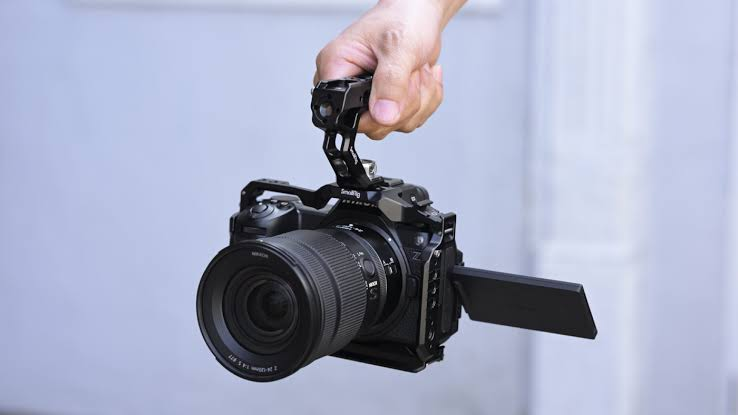
The Nikon Z6III remains compact enough for travel, gimbals and run-and-gun shooting.
The body weighs about 670 g without battery and memory card, and around 760 g when ready to shoot. Its body dimensions are roughly 139 mm wide, 102 mm high and 74 mm deep.
This makes it heavier than some small creator cameras but lighter than many dedicated cinema bodies.
For hybrid shooters, the balance is practical. The camera is small enough for handheld use but still feels strong enough for professional work.
Nikon Z6III Price and Value
The Nikon Z6III is currently listed around $1,996.95 before tax in some retail channels.
That price makes it very competitive against full-frame rivals, especially because it includes 6K RAW video, strong autofocus, fast readout, a high-quality EVF and a professional Z mount ecosystem.
However, buyers should remember that a complete setup costs more than the body alone. Fast CFexpress cards, extra batteries, lenses, cages, microphones, external monitors and storage can raise the total price.
Even so, the Z6III offers strong value for creators who want one camera for both serious photography and serious video.
Nikon Z6III vs Nikon ZR
The Nikon Z6III and Nikon ZR appeal to different users.
The Z6III is a hybrid camera. It is better for creators who need strong still photography and professional video in one body.
The Nikon ZR is more cinema-focused. It brings R3D NE recording, a compact video-first body and RED-inspired workflows.
If you need one camera for photos, weddings, sports, events and video, the Z6III makes more sense. If your work is mainly filmmaking and RAW video workflows, the ZR may be more attractive.
Who Should Buy the Nikon Z6III?
The Nikon Z6III is ideal for hybrid creators who want a full-frame camera with serious video power.
It is a strong option for:
Wedding photographers
Event videographers
YouTube creators
Travel filmmakers
Documentary shooters
Sports photographers
Wildlife photographers
Small production teams
Nikon Z users upgrading from older bodies
It is especially useful for people who do not want to choose between a stills camera and a cinema camera.
Key Takeaways
- Nikon Z6III was released in June 2024.
- It uses a 24.5MP full-frame partially stacked CMOS sensor.
- The sensor size is 35.9 x 23.9 mm.
- The camera uses the Nikon Z mount.
- It supports 6K N-RAW up to 59.94p.
- It also supports ProRes RAW HQ, ProRes HQ, H.265 and H.264.
- N-Log base sensitivity is ISO 800.
- Supplied lab data shows up to 11.7 stops at SNR=2 in 4K H.265.
- Full-frame rolling shutter is listed at 9.4 ms.
- DX crop 4K rolling shutter improves to 6.3 ms.
- The body weighs about 670 g without battery and card.
- Current retail listings place the body around $1,996.95 before tax.
- It is one of Nikon’s strongest hybrid cameras for photo and video creators.
Frequently Asked Questions
What is the Nikon Z6III?
The Nikon Z6III is a full-frame hybrid mirrorless camera designed for photography and video production.
When was the Nikon Z6III released?
The Nikon Z6III was released in June 2024.
What sensor does the Nikon Z6III use?
It uses a 24.5MP full-frame partially stacked CMOS sensor measuring 35.9 x 23.9 mm.
What lens mount does the Nikon Z6III use?
The Nikon Z6III uses the Nikon Z mount.
Does the Nikon Z6III shoot 6K video?
Yes. The Nikon Z6III supports 6K RAW recording, including N-RAW up to 59.94p.
Does the Nikon Z6III support ProRes RAW?
Yes. The camera supports ProRes RAW HQ in selected 6K and 4K recording modes.
What is the Nikon Z6III dynamic range?
The supplied lab data shows a maximum of 11.7 stops at SNR=2 in 4K H.265 at ISO 800 using N-Log.
What is the rolling shutter of the Nikon Z6III?
The supplied data lists 9.4 ms in full-frame modes and 6.3 ms in DX crop 4K H.265 modes.
What is the base ISO for N-Log?
The base sensitivity for N-Log is ISO 800.
How much does the Nikon Z6III cost?
The Nikon Z6III body is currently listed around $1,996.95 before tax in some retail listings.
Conclusion
The Nikon Z6III is one of Nikon’s most important full-frame hybrid cameras.
It brings a partially stacked sensor, fast readout, strong autofocus, 6K RAW video, N-RAW, ProRes RAW, N-Log and competitive rolling-shutter performance into a body that works for both photography and filmmaking.
It is not a dedicated cinema camera like the Nikon ZR, but that is also its strength. The Z6III is built for creators who need one reliable camera for photos, video, travel, weddings, events and content production.
For users who want strong hybrid performance without moving to a larger flagship body, the Nikon Z6III remains one of the most balanced full-frame cameras in Nikon’s Z system.
Read Also: Nikon ZR: Full Specs, Price, Dynamic Range and Cinema Camera Features