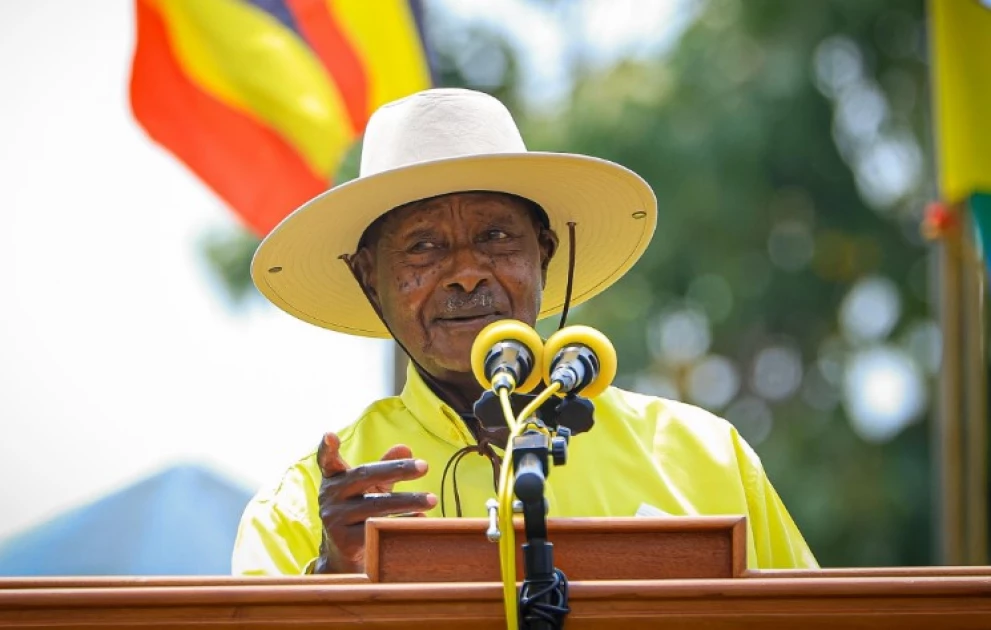
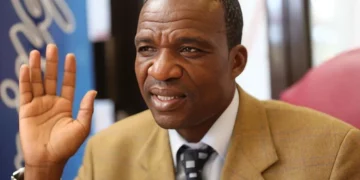
Kampala, Uganda — Ugandans voted on Thursday in a highly charged national election as President Yoweri Museveni said he expected to secure 80% of the vote if the process remains free of manipulation. The Uganda election has drawn intense local and international attention due to a violent campaign period, tight security, and a nationwide internet shutdown.
Speaking to journalists after casting his ballot in western Uganda, Museveni dismissed the likelihood of an upset by his main challenger, opposition figure Bobi Wine, saying his support base remains dominant across the country. The vote is widely viewed as a defining test of Museveni’s grip on power after nearly four decades in office.
The Uganda election comes at a sensitive moment, as speculation grows around eventual succession and concerns linger over political stability in the region. Analysts say authorities are keen to avoid unrest similar to that seen recently in neighbouring East African states, while maintaining firm control over the electoral process.
Voting in Kampala and other urban centres took place under heavy police deployment. However, several polling stations opened late due to failures in biometric voter verification machines, frustrating some voters. Electoral officials acknowledged the delays and said investigations were underway to determine the cause of the technical problems.
Museveni, who has campaigned on a pledge to preserve stability and advance economic development, has framed the election as a choice between continuity and uncertainty. His challenger Bobi Wine, a former pop star whose real name is Robert Kyagulanyi, has focused his campaign on youth unemployment and political reform, appealing strongly to younger voters in a country with one of the world’s youngest populations.
Security concerns have dominated the Uganda election narrative. During the campaign period, clashes between security forces and opposition supporters led to hundreds of arrests and at least one reported death. The government has defended the actions of security agencies, arguing they acted to prevent disorder and enforce public safety laws.
In the days leading up to the vote, authorities imposed a nationwide internet shutdown, citing the need to curb misinformation and prevent election-related violence. The move has drawn criticism from rights groups, who argue it undermines transparency and restricts freedom of expression during a crucial democratic exercise. Many Ugandans turned to alternative offline communication tools to stay connected.
Despite the tension, there were no immediate signs of unrest on voting day. Some voters expressed fatigue with long-serving leaders, while others emphasised the need for stability. First-time voters, in particular, voiced concerns about political succession and the concentration of power within ruling elites.
Polls are scheduled to close at 4:00 p.m. local time, with results expected within 48 hours, as required by law. Alongside the presidential race, voters are also choosing more than 500 members of parliament, making this one of the most consequential elections in Uganda’s recent history.
As vote counting begins, the Uganda election remains under close watch from citizens, regional observers, and the international community, with the outcome set to shape the country’s political and economic direction for years to come.