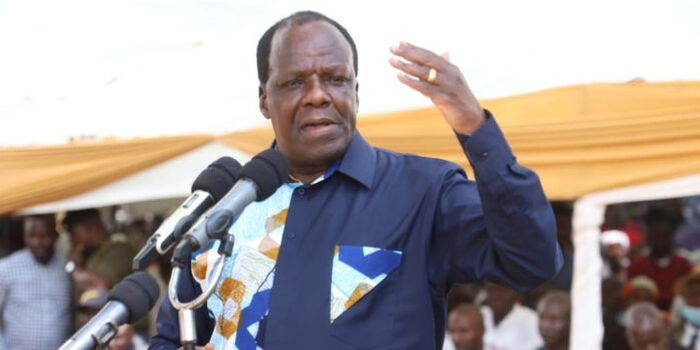
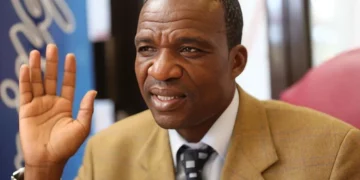
The 1997 general election in Kenya was not just a national contest—it was a fierce regional battle for dominance in Luhya politics. At the center of this clash were two powerful figures: Michael Wamalwa Kijana, leader of FORD-Kenya, and Musalia Mudavadi, the heir to the Mudavadi dynasty and a sitting Cabinet Minister under KANU. The Michael Wamalwa vs. Musalia Mudavadi showdown in 1997 marked a decisive struggle over who would command the political soul of Western Kenya.
Background: Two Titans, Two Visions
- Michael Wamalwa, a polished barrister and articulate statesman, had assumed leadership of FORD-Kenya following the death of Jaramogi Oginga Odinga in 1994. With deep support in Bungoma and growing popularity among the Bukusu, he positioned FORD-Kenya as the main opposition vehicle in Western Kenya.
- Musalia Mudavadi, on the other hand, represented continuity within KANU. As Minister for Supplies and Marketing and son of the late Moses Mudavadi, he had the full backing of President Moi and commanded loyalty in parts of Kakamega and Vihiga.
Their battle was not just about votes—it was about who would lead the Luhya nation into the next political era.
KANU’s Strategy: Contain and Reward
KANU, though weakened nationally, still retained a grip in many Western Kenya constituencies. Moi’s strategy was to bolster Mudavadi’s image and neutralize FORD-Kenya’s influence.
Key rewards included:
- Mudavadi retaining his ministerial post post-election.
- Promotion of loyalists in Kakamega such as Frederick Anangwe, who also secured a ministerial role.
- Use of administrative machinery and campaign funds to protect KANU incumbents.
FORD-Kenya’s Gains in the North
Despite internal rifts, FORD-Kenya performed strongly in the northern parts of Kakamega County, particularly in Bungoma and parts of Trans-Nzoia. Michael Wamalwa’s presence galvanized Bukusu voters, and his presidential campaign—though unsuccessful—amplified his national stature.
In contrast, FORD-Kenya’s performance in central and southern Kakamega and Vihiga was more subdued, largely due to Mudavadi’s stronghold and KANU’s resource advantages.
Parliamentary Scorecard: Mixed Outcomes
The 1997 elections saw a split outcome in Western Kenya:
- KANU won three parliamentary seats in Kakamega, including Sabatia (Mudavadi) and Butere (Anangwe).
- FORD-Kenya secured five seats in the region, showing its expanding base.
- FORD-Asili, led by Martin Shikuku, saw diminished influence and Shikuku lost his parliamentary seat, though he ironically won the presidential vote in Butere.
- Soita Shitanda of Safina emerged as a surprise victor in Malava, signaling that the electorate was open to alternatives beyond the two giants.
This fragmentation of the Luhya vote—with KANU, FORD-Kenya, Safina, and remnants of FORD-Asili competing—highlighted the region’s political fluidity.
Public Sentiment and Political Impact
The Wamalwa-Mudavadi showdown left Western Kenya without a clear kingpin. While Wamalwa had the charisma and growing popularity, Mudavadi had government backing and administrative resources. The rivalry:
- Divided Luhya unity.
- Prevented the region from delivering a united opposition vote.
- Cemented the idea that ethnic kingpins were more important than party platforms.
Though Mudavadi maintained his seat and ministerial role, Wamalwa emerged with enhanced credibility as a national figure and future opposition leader.
Conclusion
The Michael Wamalwa vs. Musalia Mudavadi showdown in 1997 was more than a political rivalry—it was a referendum on the future of Luhya leadership. While neither man could claim absolute victory, their duel reshaped the region’s political landscape. It revealed deep divisions, introduced new players, and set the stage for further realignments that would play out in the 2002 elections and beyond.
Their legacies endure: Wamalwa as the eloquent symbol of opposition hope, and Mudavadi as the steady survivor whose dynasty still influences Kenya’s top leadership today.