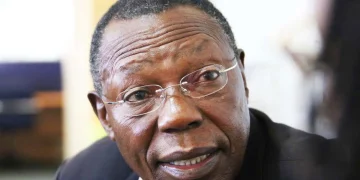
Francis Masakhalia built a reputation as one of Kenya’s most accomplished technocrats, a trajectory that defines the Masakhalia legacy despite his brief tenure as finance minister in 1999. His career spanned decades in public service, rising through the ranks as a policy expert before transitioning into politics.
Masakhalia’s rise reflected a strong foundation in economic planning. Appointed Kenya’s first Chief Economist in 1972 under Jomo Kenyatta, he later became Permanent Secretary for Economic Planning in 1980 during the presidency of Daniel arap Moi.
Masakhalia legacy rooted in technocratic excellence
The Masakhalia legacy is closely tied to his academic and professional background. He studied alongside Barack Obama Sr. at Maseno School, under the leadership of Jaramogi Oginga Odinga.
He was also among beneficiaries of the airlift program initiated by Tom Mboya, which enabled Kenyan students to study in the United States. Masakhalia pursued further studies in Denver, strengthening his expertise in economics.
These early experiences positioned him as a leading figure in Kenya’s economic policy framework.
Setback and political transition
In 1984, Masakhalia’s civil service career was disrupted following allegations of nepotism during his tenure in the Water Development ministry. He was dismissed from government service, a development that could have ended his career.
However, he later worked with international institutions, including roles linked to the United Nations in Addis Ababa and Lesotho. Upon returning to Kenya in 1988, he entered politics and was elected Member of Parliament for Butula.
Short tenure at the Treasury
The Masakhalia legacy includes a brief but notable period as finance minister. He was appointed on February 27, 1999, a role that placed him at the center of Kenya’s economic management.
During his six-month tenure, he introduced austerity measures aimed at controlling public expenditure. These included restrictions on government vehicle use and efforts to limit luxury spending.
However, the period was also marked by economic challenges. The Kenyan shilling weakened, and interest rates increased significantly. Officials attributed these developments to administrative delays, which affected policy implementation.
Leadership challenges and dismissal
Masakhalia’s tenure highlighted the challenges technocrats can face in political office. While he possessed deep technical knowledge, his approach reportedly emphasized expertise over consultation.
In government, leadership requires coordination across institutions and effective communication with stakeholders. Observers note that gaps in these areas contributed to difficulties during high-level engagements, including with international partners.
His removal from the Treasury was abrupt. The announcement was made through a news bulletin, and he was reassigned to the energy ministry.
Lasting contribution to fiscal policy
Despite the short tenure, the Masakhalia legacy includes a significant institutional reform. He is credited with advancing the Medium-Term Expenditure Framework, a budgeting system that continues to guide Kenya’s fiscal planning.
This framework introduced a structured approach to government spending, linking policy priorities to budget allocations over multiple years.
Broader implications
Masakhalia’s career reflects the intersection of technical expertise and political leadership in government. His experience illustrates that policy knowledge alone may not be sufficient in high-level political roles.
The case also highlights the importance of timing, perception, and institutional dynamics in shaping leadership outcomes.
Outlook
The Masakhalia legacy remains a subject of reflection in Kenya’s governance history. His contributions to economic planning and budgeting reforms continue to influence public finance management.
At the same time, his short tenure as finance minister underscores the complexities of transitioning from technocracy to political leadership. His story offers insight into the balance required between expertise and the broader demands of governance.