


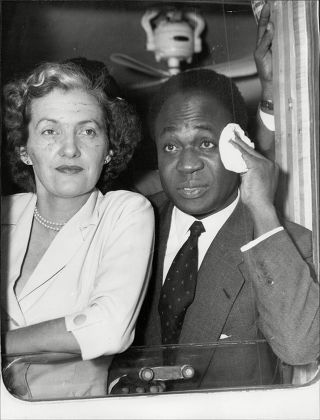
When Kwame Nkrumah, the charismatic founding president of Ghana, was overthrown in a military coup in February 1966, the new rulers wasted no time in discrediting his legacy. Central to this effort was a sweeping investigation into Nkrumah’s personal wealth and financial dealings, led by Lady Justice Annie Ruth Jiagge.
The findings shocked many—or were intended to.
The Commission and Its Turncoat Witnesses
Tasked with uncovering alleged corruption, the Jiagge Commission based its case on documents submitted by defectors from Nkrumah’s administration, including close aides, economic advisers, and ministers. Their statements painted a damning picture: a man who, beneath his Pan-Africanist ideals, had allegedly amassed wealth through kickbacks, political intimidation, and sexual indiscretions.
Among the juiciest revelations were:
- A personal fortune allegedly ranging from $25,000 to $100 million, stashed in banks in Switzerland, Egypt, France, England, Holland, and Germany
- Ownership of real estate in London, apartment blocks, office buildings, and a mansion in Cairo
- Gifts of gold bars to his Egyptian wife and a red Thunderbird convertible for a South African mistress
- Multiple “loans” of $10,000 to women in his social circle
Kickbacks Disguised as Development Contracts
The commission’s report alleged that once Nkrumah’s government funds ran low, he resorted to coercing foreign companies into bribes and kickbacks to fund his Convention People’s Party (CPP) and Pan-African projects. Some major allegations included:
- $3 million from a London firm on a $24 million warship deal
- $1.4 million kickback from a Norwegian company seeking a $7.5 million trawler contract
- A $3 million grain silo project inflated to $114 million, with an $84 million excess redirected to the CPP fund
- A separate silo deal yielding a “donation” of $11 million
- A Greek businessman allegedly pressured into paying $480,000 via Swiss checks and $240,000 in cash
These “donations” reportedly came from a wide spectrum of global firms—from Japanese fishing boat sellers to British television providers, insurance companies, and aircraft financiers.
Luxury Amid Paranoia
Nkrumah’s alleged extravagance was matched only by the paranoia described in the testimonies. According to the probe:
- He ordered a $35,000 armored Mercedes 600, fitted with automatic rifles “capable of pin-point accuracy”
- Flagstaff House (Ghana’s State House) was allegedly bugged with Soviet surveillance equipment
- An underground “war room” complete with bazookas, bottled water, and food crates was constructed under the supervision of Russian experts
Womanising and Political Exploits
Beyond wealth, the inquiry focused on Nkrumah’s alleged womanising, portraying him as obsessed with light-skinned women. His Egyptian wife, Fathia Nkrumah, was supposedly compensated with gold, while his mistresses were treated to loans and lavish gifts.
These claims were used not only to question his personal character but to undermine his image as Africa’s moral and political vanguard.
Propaganda or Proof?
While the commission’s findings were explosive, historians remain divided on their validity. Given the geopolitical climate of the Cold War and Western animosity toward Nkrumah, many suspect the investigation was a deliberate attempt to demonize him.
It’s notable that the commission relied heavily on testimonies from former allies-turned-enemies, many of whom had motives to betray Nkrumah for political survival. Furthermore, the military regime that overthrew him was backed—if not directly supported—by foreign powers wary of his Pan-African and socialist leanings.
Legacy in the Balance
Despite the asset probe’s salacious content, Kwame Nkrumah remains a complex and iconic figure in African history. While questions about his governance, centralization of power, and financial practices remain open, so too does the possibility that the 1966 investigation was more political theatre than forensic audit.
His dream of a united Africa and his role as a liberation icon still resonate across the continent—proof that truth, like legacy, often lives in the grey.




