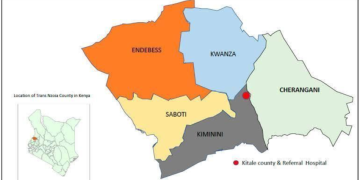
One of the most pressing challenges to agricultural sustainability in Trans Nzoia is Kiminini land fragmentation. Once home to expansive settler farms under the colonial Elgon Club, Kiminini’s fertile lands were later subdivided among African families post-independence. Over the years, inheritance and population pressures have led to continued division of plots into smaller, economically unviable units. This trend has negatively impacted both productivity and long-term investment in agriculture.
Fragmented land holdings make it difficult for farmers to embrace mechanization, practice crop rotation, or produce at scale. The shift from large-scale maize and wheat farming to small, subsistence-style plots has reduced food output, weakened local agribusinesses, and exacerbated poverty. The ripple effects extend beyond productivity—youth disengage from farming, environmental degradation increases due to overuse of limited plots, and food security remains fragile in a region once known as Kenya’s breadbasket.
Land Fragmentation in Numbers
| Period | Typical Land Size Per Household | Impact |
|---|---|---|
| Post-Independence | 5–10 acres | Mechanized farming and surplus sales |
| 2000s | 2–4 acres | Reduced productivity and diversity |
| 2020s | 0.5–1.5 acres | Subsistence farming, minimal surplus |
Source: Household and County Planning Reports (2017)
Key Effects of Land Fragmentation
| Effect | Description |
|---|---|
| Reduced Economies of Scale | Farmers cannot invest in tractors, irrigation, or bulk inputs |
| Limited Crop Diversification | Small plots restrict multi-cropping and innovation |
| Soil Degradation | Over-farming and limited fallow periods lead to nutrient loss |
| Youth Disinterest | Small plots yield low returns, deterring younger generations |
| Conflict Over Boundaries | Fragmented land increases disputes among family members and neighbors |
Pathways to Reverse the Trend
| Solution | Expected Benefit |
|---|---|
| Land Consolidation Initiatives | Pooling plots to enable modern farming practices and shared infrastructure |
| Cooperative Farming Models | Encourages communal investment and increases production scale |
| Land Use Policy Reforms | Introduces zoning, discourages further subdivision, and protects arable land |
| Youth Engagement in Agritech | Makes small plots more productive through smart farming tools |
Conclusion
Kiminini land fragmentation has emerged as a structural barrier to the town’s economic potential and food system resilience. Without urgent policy intervention and innovative land-use strategies, the area risks prolonged food insecurity and rural poverty. By promoting cooperative models and responsible land management, Kiminini can reclaim its agricultural strength and build a path toward rural transformation and prosperity.