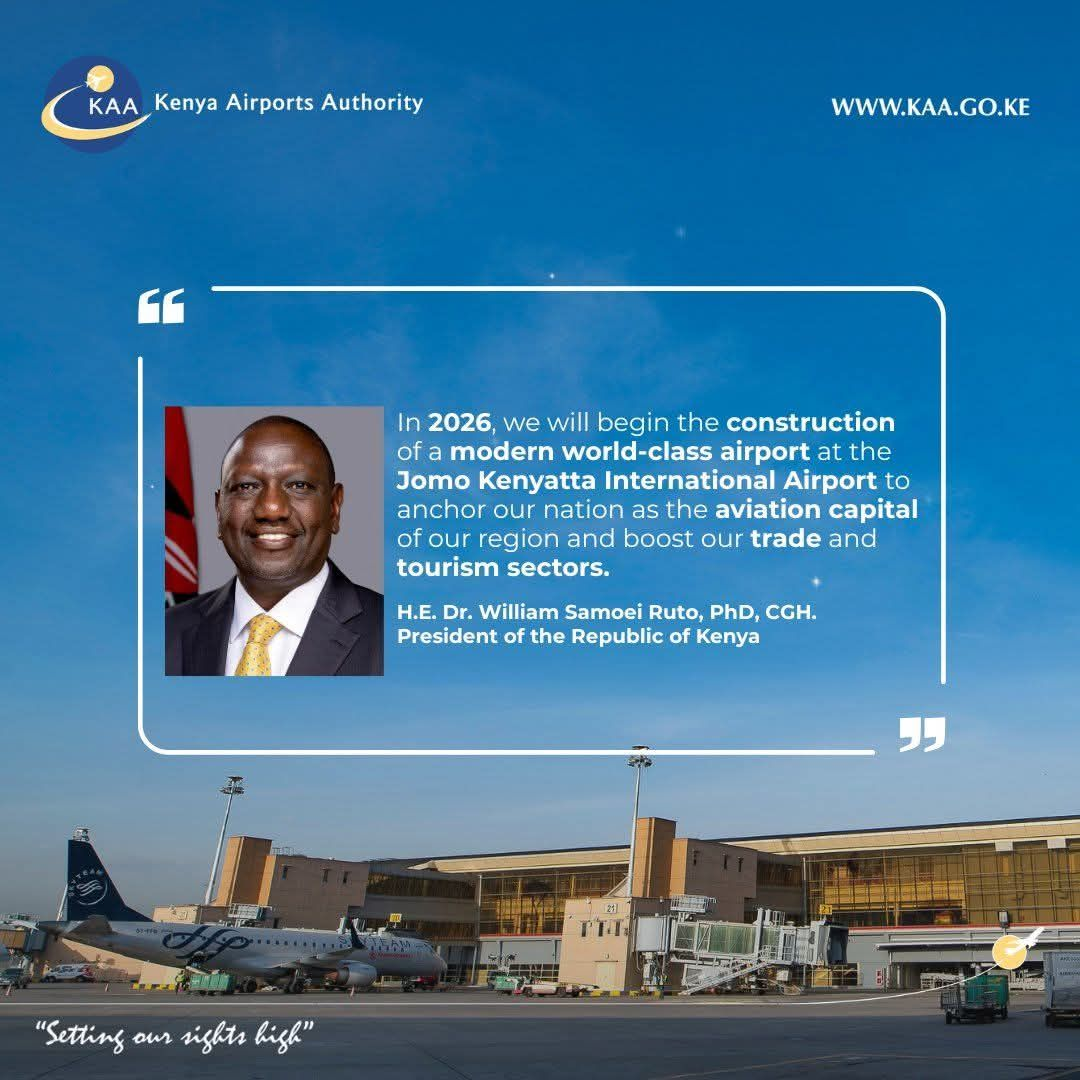
Kenya is set to undergo a monumental infrastructure transformation with the planned construction of a world-class airport at Jomo Kenyatta International Airport (JKIA), Nairobi. In 2026, this project will not only strengthen Kenya’s position as an aviation hub in the region but will also enhance the nation’s trade and tourism sectors. With this move, Kenya is set to reaffirm its strategic role in connecting Africa to the rest of the world.
This new development is part of a broader vision to improve the nation’s infrastructure and increase its competitiveness on the global stage, particularly within the aviation industry. The expansion and modernization of JKIA is expected to catalyze significant economic growth and make Kenya the aviation capital of the region.
Key Features of the Upcoming World-Class Airport
The planned world-class airport at JKIA will boast state-of-the-art facilities designed to cater to modern aviation needs. This development is not just about adding more runways and terminals, but also about improving the overall passenger experience and accommodating future growth in air traffic.
Some key aspects of the new airport will include:
- Modern Terminals: Spacious, technologically advanced terminals designed to handle increased passenger numbers while enhancing comfort and security.
- Upgraded Runways: Longer and more efficient runways to handle larger aircraft and improve overall air traffic capacity.
- Passenger Amenities: World-class amenities including lounges, duty-free shops, restaurants, and more to provide an exceptional travel experience.
- Advanced Technology: Integration of the latest technology to streamline check-ins, enhance security, and provide faster service for travelers.
- Sustainability: Environmentally friendly features, including energy-efficient systems and green infrastructure, to align with global standards for sustainability in airport operations.
Impact on Kenya’s Economy
This project will significantly impact Kenya’s economy, providing a wide range of benefits, including:
- Boosting Trade: The new airport will improve Kenya’s ability to handle international cargo, enhancing the country’s trade links with global markets and attracting more businesses to set up operations in the region.
- Tourism Growth: As a gateway to East Africa, the improved airport will make Kenya an even more attractive destination for tourists, increasing inbound tourism and creating jobs in the hospitality and tourism sectors.
- Job Creation: During and after construction, thousands of jobs will be created in construction, airport operations, customer service, and other related sectors, providing economic benefits to local communities.
- Regional Connectivity: The project is also expected to strengthen Kenya’s position as a regional transportation hub, connecting various African nations to international destinations more efficiently.
The Role of H.E. Dr. William Samoei Ruto
President H.E. Dr. William Samoei Ruto has played a pivotal role in championing this development. His leadership underscores the Kenyan government’s commitment to infrastructure and economic development. The new world-class airport at JKIA is set to cement Kenya’s status as an aviation leader in Africa, aligning with the Kenya Vision 2030 development agenda.
In his statement, President Ruto emphasized how the project would significantly boost both Kenya’s trade and tourism sectors, driving economic prosperity for the nation. His administration has placed a strong focus on modernizing infrastructure, particularly in transport, as a catalyst for broader economic transformation.
Expected Timeline and Future Developments
The construction of the world-class airport will begin in 2026, with completion expected within a few years. During this period, JKIA will undergo significant upgrades, and the surrounding infrastructure, including roads and access routes, will be enhanced to handle the increased capacity.
The project will also focus on improving air traffic management systems, airport security, and passenger processing to ensure a seamless experience for travelers and cargo operators.
Conclusion: A New Era for Kenyan Aviation
Kenya is poised for a transformative leap in its aviation sector with the construction of a world-class airport at Jomo Kenyatta International Airport. This development will not only cement Kenya’s role as the aviation capital of East Africa but will also provide a significant boost to the nation’s trade and tourism sectors.
With President William Ruto’s leadership, this ambitious project is set to position Kenya as a key player in global air travel and an even more attractive destination for international trade and investment. As we move closer to 2026, the KAA (Kenya Airports Authority) is ready to deliver a modern and efficient transport hub that will benefit generations to come.