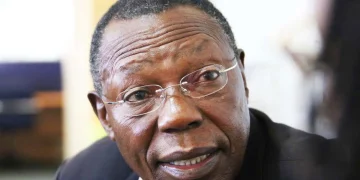
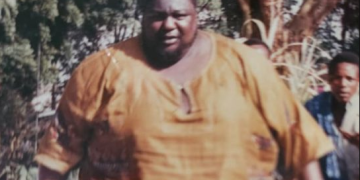
Jean-Bédel Bokassa (born February 22, 1921, Bobangui, French Equatorial Africa [now in the Central African Republic]—died November 3, 1996, Bangui) was a military leader, president (1966–77), and emperor (1976–79) of the Central African Republic. Known internationally as Bokassa I, his rule combined ambitious development projects, authoritarian control, and dramatic displays of power, leaving behind one of the most controversial legacies in modern African history.
Early life and military career
The son of a village headman, Bokassa was educated in mission schools before joining the French colonial army in 1939. He served with distinction in World War II and in the First Indochina War, eventually rising to the rank of captain by 1961. That year, at the request of President David Dacko, he returned to the newly independent Central African Republic to head its national army.
Rise to power
On December 31, 1965, Bokassa staged a military coup, overthrowing Dacko. The following day, January 1, 1966, he declared himself president of the republic. Early in his tenure, he launched Operation Bokassa, a state-driven economic plan designed to modernize agriculture and industry. However, poor management and corruption undermined these efforts. His leadership soon became increasingly autocratic, marked by cabinet reshuffles and concentration of power in the presidency.
Emperor of the Central African Empire
In December 1976, Bokassa proclaimed himself Emperor Bokassa I, transforming the republic into the Central African Empire. His coronation in December 1977, modeled after Napoleon I, cost more than $20 million, a staggering figure for one of the world’s poorest countries. The spectacle, though intended to impress, bankrupted the nation and drew international criticism.
Downfall and trial
By 1979 Bokassa faced allegations of human rights abuses, including his involvement in the massacre of more than 50 schoolchildren. In September 1979, French paratroopers carried out Operation Caban, deposing him and restoring David Dacko to the presidency.
Bokassa lived in exile in Côte d’Ivoire and later France. In 1980 he was sentenced to death in absentia, but in 1986 he returned voluntarily to the Central African Republic. Arrested and tried in 1987, he was found guilty of murder and other crimes, though acquitted of cannibalism charges. His death sentence was commuted to life imprisonment, and he was released in 1993. He was posthumously pardoned in 2010 during the country’s 50th independence anniversary.
Quick Facts
| Attribute | Details |
|---|---|
| Also Known As | Bokassa I |
| Born | February 22, 1921, Bobangui, French Equatorial Africa (now Central African Republic) |
| Died | November 3, 1996, Bangui, C.A.R. (aged 75) |
| Title / Office | President of the Central African Republic (1966–77); Emperor of the Central African Empire (1976–79) |
| Notable For | Military coup (1965), self-coronation (1977), autocratic rule |
| Political Affiliation | None (ruled as military leader) |
| Legacy | Controversial African ruler, posthumously pardoned (2010) |