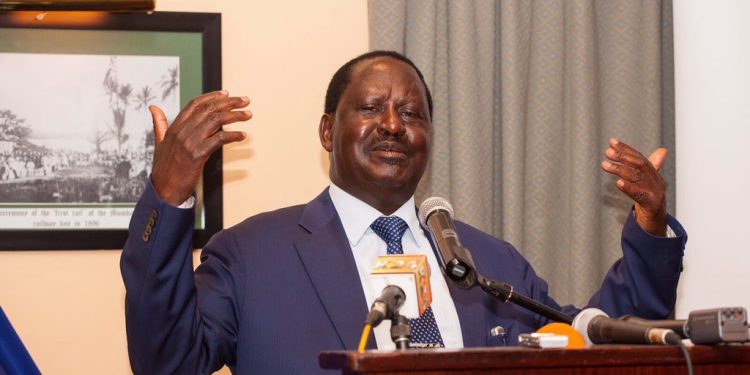
In October 1991, Raila Amolo Odinga, a prominent Kenyan politician, businessman, and scientist, publicly expressed grave fears for his life. According to a report by Amnesty International, Raila told journalists that plainclothes police had burst into his office, harassed him, and issued threats. An armed gang had reportedly banged on his door, shouting insults, while anonymous callers made repeated death threats. Earlier that year, unidentified gunmen allegedly opened fire on his car while he was driving home.
The chilling details emerged at a time when Kenya was gripped by political repression under President Daniel arap Moi’s one-party rule. Raila Odinga, the son of Kenya’s first Vice President Jaramogi Oginga Odinga, had become one of the most outspoken government critics. His advocacy for multiparty democracy and human rights made him a target of state persecution.
The Amnesty report highlighted that Raila Odinga had spent seven of the previous eight years in detention without trial under Kenya’s notorious Public Security Regulations. He was repeatedly arrested for his alleged links to underground pro-democracy movements and detained in harsh conditions at Naivasha Prison.
In early June 1991, Amnesty International issued an urgent appeal for his release when he fell seriously ill in prison. Though eventually freed on June 21, 1991, Raila was denied permission to seek medical treatment abroad for a suspected heart condition, despite recommendations from his doctor. His wife, Ida Odinga, later faced a travel ban while attempting to visit Germany with their three children—one of whom was to pursue studies there.
The report painted a grim picture of Kenya’s human rights climate at the time, documenting how leading opposition figures were systematically silenced, detained, or exiled. Raila Odinga’s courage in speaking out despite intimidation made him a symbol of resistance against autocracy.
These struggles laid the foundation for his later political prominence. The events of 1991 were not just a personal ordeal—they marked a turning point in Kenya’s democratic awakening. Raila’s survival and continued activism eventually contributed to the reintroduction of multiparty democracy in 1992, reshaping the country’s political landscape forever.