For millions of Kenyans, the passing of Raila Amolo Odinga still feels unreal — a moment too heavy to process, too painful to accept. Among the many voices that have echoed across the country, one stands out for its raw honesty and emotional depth — that of Mukiri Mwika, who gave words to the disbelief that many feel.
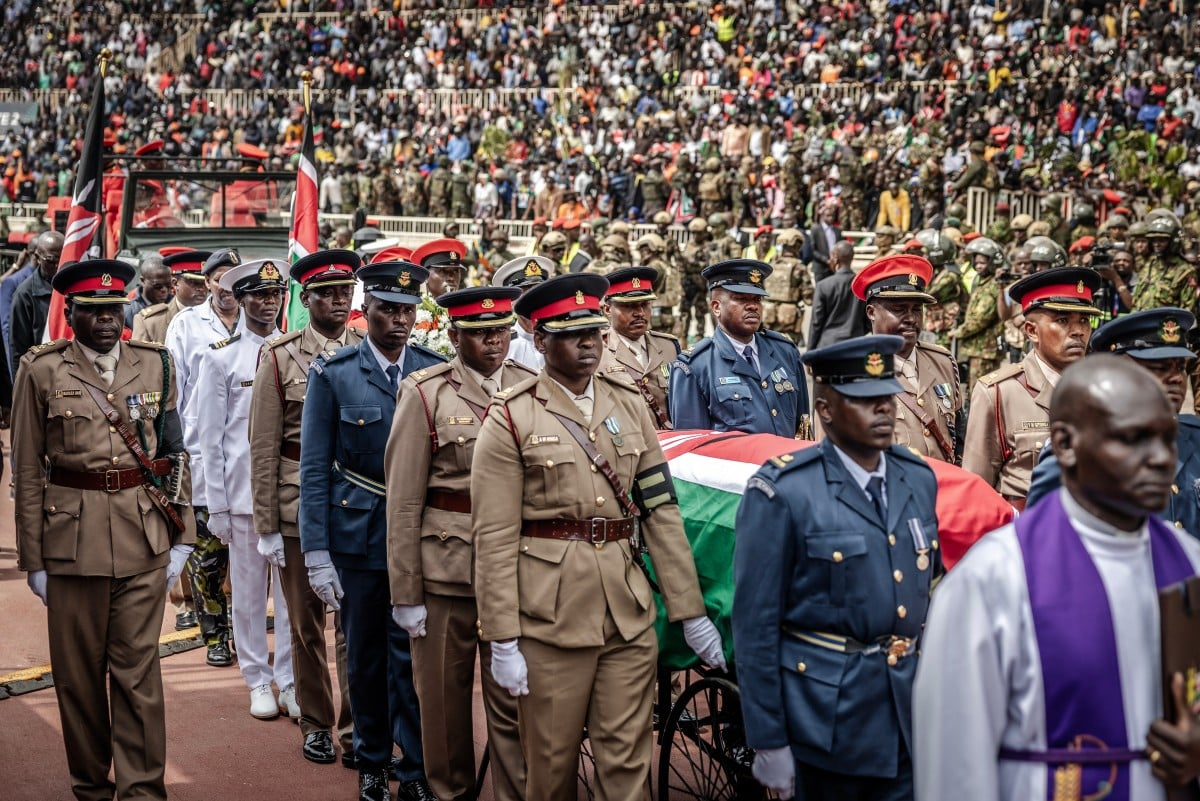
To Mwika, Raila Odinga’s death feels like a dream — something suspended between reality and disbelief. She describes the surreal experience of seeing his body lying in state at Parliament Buildings, yet still struggling to accept that the man who once filled stadiums with song, hope, and courage now lies lifeless. In her words, Raila’s absence feels like “a movie that refuses to end,” a moment that replays in the nation’s collective conscience.

Her reflections mirror the grief of millions. “How can a force like Raila just disappear?” she asks, echoing the confusion shared by countless Kenyans who grew up with his voice on the airwaves, his image on posters, and his name at the center of every political transformation. Raila Odinga wasn’t merely a politician — he was a symbol of resilience, a man whose defiance carried the dreams of the downtrodden and the disenfranchised.
Mwika’s sentiments capture a nation’s pain. The disbelief isn’t just about death; it’s about losing a man who seemed larger than life, a constant presence in Kenya’s democratic journey. Raila’s leadership had an almost spiritual rhythm — he was there during times of struggle, triumph, and reform. From the streets of Kisumu to the steps of Parliament, his legacy was woven into Kenya’s identity.
For Mwika, as for many others, the shock lies not just in his passing but in its suddenness. Raila had recently appeared on television, calm and confident as ever, discussing national unity and peace. Then, without warning, he was gone. It’s this abrupt silence that haunts her thoughts — a silence that feels unnatural for a man whose life was defined by his voice.
Her reflections also carry empathy for the Odinga family. “It must be hardest for his loved ones,” she says softly, recognizing the private grief behind the public mourning. Ida Odinga, Raila’s steadfast wife, has stood beside him for decades — through detentions, political storms, and national victories. Mwika’s words acknowledge that beyond the leader lies a husband, a father, a man deeply loved by those closest to him.
In many ways, Mwika’s reflection transcends personal expression. It becomes a collective national eulogy — one that bridges the gap between personal loss and public mourning. Her disbelief, her questions, and her grief are not hers alone; they belong to every Kenyan who ever believed in Raila Odinga’s dream of a better nation.
And yet, amid the sorrow, there is reverence. Mwika’s tone reminds the nation that Raila Odinga’s story does not end in death. His ideals — of justice, freedom, and equality — remain alive in the people he inspired. “It’s hard to accept,” she says, “but perhaps his spirit lives on in every Kenyan who refuses to give up on this country.”