


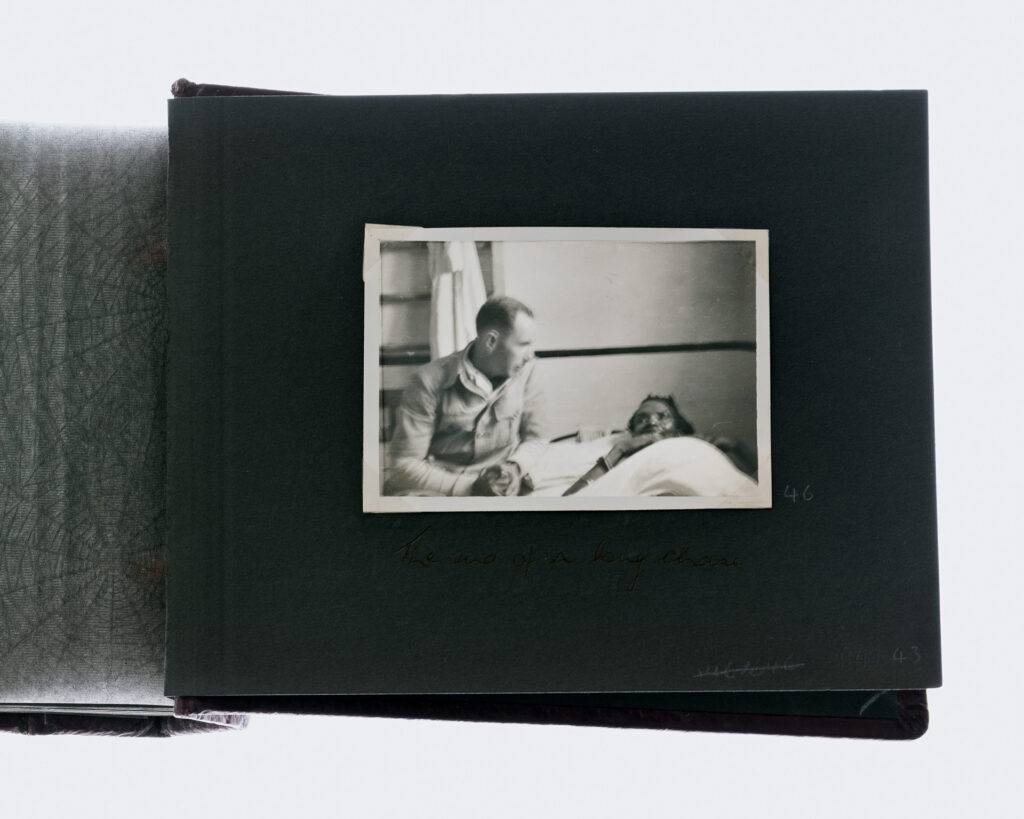
On October 21, 1956, British colonial officer Ian Stuart McWalter Henderson met Dedan Kimathi, the legendary Mau Mau leader, in hospital shortly after his capture. Kimathi, who had been shot and wounded by a colonial patrol in Nyeri Forest, lay under heavy guard when Henderson arrived. The meeting marked the end of Kenya’s most symbolic resistance leader’s freedom — and the beginning of a tragic final chapter in the Mau Mau rebellion.
Ian Henderson, a Scottish-born officer raised among the Kikuyu, had dedicated years to tracking down Kimathi. His pursuit of the rebel general was relentless and ruthless, part of the broader campaign of mass detentions, torture, and executions that defined Britain’s violent suppression of the Mau Mau uprising.
Henderson’s meeting with Kimathi that day symbolized the collision of two worlds — the empire that sought to preserve white supremacy and the movement that demanded Kenyan self-rule.
Henderson: From Kenya’s “Hero” to the “Butcher of Bahrain”
Born in Aberdeenshire, Scotland, in 1927, Henderson grew up in Kenya, where he joined the Colonial Police Service in the 1950s. He became one of Britain’s most decorated officers during the Mau Mau Emergency, receiving multiple honours:
- The George Medal (1954) and Bar to the George Medal (1955) for his role in suppressing the rebellion.
- The King’s Police and Fire Services Medal (1953) for “bravery in the field.”
Henderson’s reputation as a fierce colonial enforcer grew after the arrest of Kimathi — a feat he immortalized in his book The Hunt for Kimathi (also published as Man Hunt in Kenya). British generals credited him with “doing more than any other man to end the Emergency.”
But behind the medals and titles lay a legacy of brutality. Henderson was known for murder, torture, and inhumane interrogation techniques against Mau Mau detainees — acts that later drew comparisons to the war crimes of apartheid South Africa.
After Kenya’s independence in 1963, Henderson was declared persona non grata and deported, a rare rebuke to a former colonial officer. Yet he soon found new work in another repressive regime.
In 1966, Henderson became head of the General Directorate for State Security Investigations in Bahrain, where he served for more than three decades. His role during the 1990s uprising in Bahrain earned him a chilling nickname — “The Butcher of Bahrain.” Human rights groups such as Amnesty International and Human Rights Watch documented systematic torture under his command, including electric shocks, beatings, and forced confessions.
Despite a British investigation in 2000, no charges were ever filed. Henderson denied all wrongdoing until his death in 2013, aged 86.
The Legacy of a Colonial Enforcer
The 1956 hospital encounter between Ian Henderson and Dedan Kimathi has come to represent the brutal paradox of colonial Kenya — a regime claiming law and order while waging war through terror.
Kimathi, wounded but defiant, reportedly refused to cooperate with British officers even as he lay bleeding. For the Mau Mau, his capture was a painful loss; for the British, it was a propaganda victory.
Yet history has judged the two men differently. Kimathi became a symbol of Kenya’s freedom and sacrifice, his name immortalized in streets, statues, and national memory. Henderson, meanwhile, is remembered as a man of empire, whose career was defined by repression — first in Kenya’s forests, then in Bahrain’s prisons.
When Henderson died in April 2013, his passing barely stirred emotion in Kenya. To many, he represented the face of a colonial machine that sought to break a people’s will — and failed.
His life remains a reminder that while empires rise and fall, their violence echoes through generations.




