


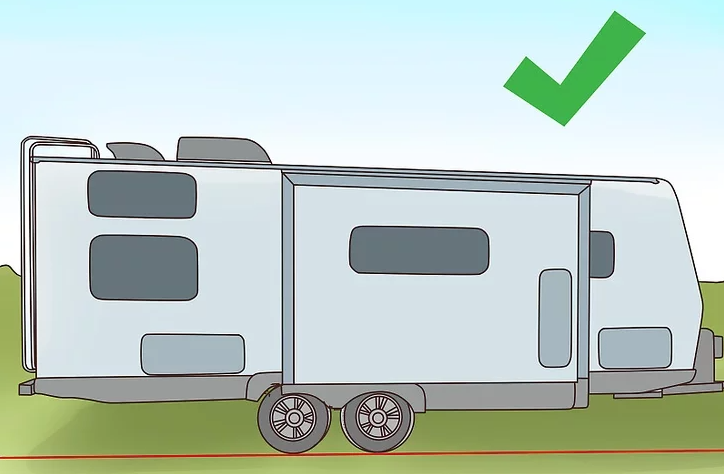
When you park at a campsite or driveway, learning how to level a camper is essential for safety, comfort, and appliance performance. A level camper prevents rocking, uneven sleeping surfaces, and ensures that systems like gas refrigerators work properly. The process requires only a level, some sturdy blocks or wood pieces, and a bit of patience. With the right tools and these easy steps, you can set up your camper securely on any terrain.
Guide Table: How to Level a Camper
| Step | Task | Description |
|---|---|---|
| 1. Find a Flat Spot | Choose a suitable parking area. | Select level ground before making adjustments. |
| 2. Level Side-to-Side | Use leveling blocks under tires. | Place blocks beneath the low side and drive up slowly. |
| 3. Level Front-to-Back | Adjust the tongue jack. | Raise or lower the front until the camper is fully level. |
| 4. Stabilize the Camper | Set stabilizing jacks. | Place wood under jacks for extra support and balance. |
Leveling from Side to Side
Start by finding a spot that’s as flat as possible. Uneven surfaces make it difficult to stabilize your camper later. Once parked, use a bubble or surface level placed in the doorway to determine which side is lower.
Position leveling blocks or sturdy 2×10 wooden boards beneath the lower-side tires. Slowly drive your camper onto the blocks, checking the level until both sides are even. If needed, adjust or add layers. Always make sure the entire tire rests securely on the blocks to prevent wear or damage. Once level, insert wheel chocks behind and in front of the tires to prevent rolling.
Leveling from Front to Back and Stabilizing
After the camper is even side-to-side, adjust its front-to-back balance using the tongue jack. Place a few wood scraps or a dock pad under the jack for support, then unhook the camper from your tow vehicle. Position the level front-to-back and crank the tongue jack up or down until balanced.
Next, lower the stabilizing jacks located at each corner. These jacks don’t level the camper but prevent movement once it’s balanced. Place wooden pads beneath each stabilizer for extra grip and protection. Bring the jacks down until they rest firmly but not excessively tight on the supports.
Tips
- Use free scrap wood from lumber yards for blocks.
- Always level side-to-side before front-to-back.
- Check your level each time you move to a new site.
- Avoid using stabilizers to lift the camper — they’re for balance only.
Warnings
- Never skip wheel chocks; rolling can damage your trailer and tow hitch.
- Avoid parking on steep slopes that exceed the leveling capacity.
- Replace cracked or worn wooden blocks immediately.
By taking a few minutes to properly level a camper, you’ll ensure safe, stable camping conditions and protect your equipment. A well-leveled camper means better sleep, functioning appliances, and peace of mind wherever you park.


