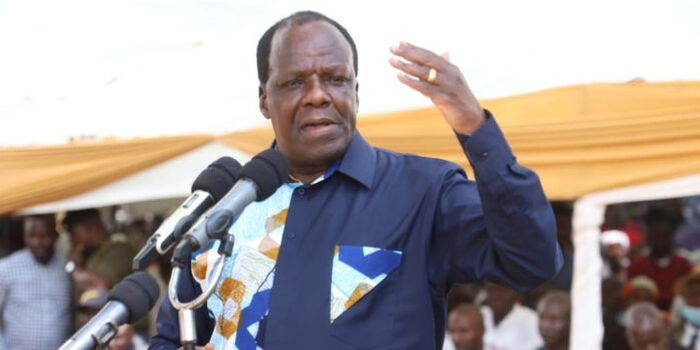
Deputy National Assembly Speaker Gladys Boss has strongly rejected claims linking President William Ruto to the 2007 Kiambaa church attack, describing such assertions as unfair, careless, and politically driven. Her remarks come amid renewed public debate following comments made by Kajiado North MP Onesmus Ngogoyo during a televised panel discussion.
Speaking on Citizen TV, Boss cautioned against drawing conclusions without evidence, especially on matters tied to one of Kenya’s most painful episodes of post-election violence. She stressed that linking the president to the Kiambaa tragedy solely because he was a Member of Parliament at the time distorts facts and undermines the rule of law.
The discussion followed Ngogoyo’s remarks on the DayBreak show, where he referenced the 2007 Kiambaa church attack while commenting on a recent incident at ACK Witima church in Nyeri County. His comparison sparked backlash, prompting Boss to respond publicly.
Gladys Boss Rejects Ruto Kiambaa Attack Claims
Boss faulted Ngogoyo for drawing parallels between the two incidents and for directly implicating the president. She argued that such statements ignore established investigative processes and risk inflaming political tensions.
“It has become fashionable and gives people bonga points to accuse the President, but that is very unfair and very careless,” Boss said. She insisted that accusations of this magnitude should be handled through proper institutions rather than political debate shows.
She reminded Kenyans that the 2010 Constitution created independent bodies tasked with handling such cases. These include the Independent Policing Oversight Authority, the Internal Affairs Unit of the National Police Service, and the Ministry of Interior. According to Boss, these agencies are already investigating the recent Nyeri church incident.
Institutions, Not Politics, Should Handle Investigations
Boss urged leaders to allow investigations to run their course instead of politicising sensitive tragedies. She noted that the Interior Cabinet Secretary and the Inspector General of Police have already addressed the matter, reinforcing the need for patience and respect for due process.
“We have institutions in this country. Let us allow investigations to be completed,” she said, warning that premature accusations can mislead the public and erode trust in state systems.
Addressing the Ruto Kiambaa attack narrative directly, Boss dismissed claims that the president bore responsibility for the 2007 tragedy. She clarified that Ruto was not present at the Kiambaa church during the attack.
“At that time, he was at KICC defending the vote count for Raila Odinga,” she said, adding that equating political office with culpability sets a dangerous precedent.
Reference to Post-Election Violence Records
Drawing from her experience in drafting Kenya’s reparations framework, Boss said there is clear documentation of victims of the 2007-2008 post-election violence. She explained that records compiled by the Kenya National Human Rights Commission list those who were killed, displaced, or lost property.
“I interacted with the commission when preparing the reparations bill. That information was formally presented in 2018,” she said. Boss urged leaders to familiarise themselves with these records before making public accusations.
She stressed that revisiting painful national tragedies requires accuracy and sensitivity, not political point-scoring.
Rising Political Tension in Churches
Boss’s remarks come against the backdrop of growing concern over rising political tension in churches. Recent incidents have seen leaders clash verbally during worship services, raising fears about the politicisation of religious spaces.
President Ruto has previously warned against using churches as platforms for political confrontation or violence. Boss echoed this position, saying places of worship must remain peaceful and respected.
She also criticised leaders who have vowed not to report incidents to the police, arguing that such actions undermine the rule of law. According to her, leadership demands resilience and accountability through legal channels.
ICC Case and Historical Context
The Kiambaa church attack remains one of the most harrowing events of the 2007 post-election violence, during which dozens of people were burned alive while seeking refuge. The violence later led to charges against Ruto at the International Criminal Court.
The ICC case was dismissed in 2016 due to insufficient evidence, although the court declined to formally acquit him. Boss’s comments seek to separate historical legal outcomes from present-day political rhetoric.
As debate over the Ruto Kiambaa attack claims continues, her intervention highlights the tension between political discourse and factual accountability in Kenya’s evolving democratic space.