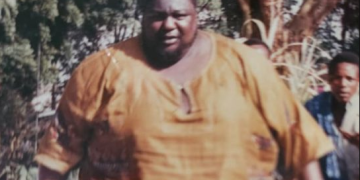
Fundi Konde (24 August 1924 – 29 June 2000) was a legendary Kenyan musician, widely recognized as East Africa’s first electric guitarist. His career spanned over four decades, blending Swahili lyrics with regional rhythms and Congolese rumba influences. Known for timeless hits such as Mama Sowera, Majengo Siendi Tena, Kipenzi Waniua Ua, and Jambo Sigara, Konde remains one of the founding figures of modern Kenyan popular music.

Early Life
Fundi Konde was born on 24 August 1924 in Mwabayanyundo village, Kilifi District, on Kenya’s coast. He belonged to the Giriama community, one of the Mijikenda ethnic groups of coastal Kenya. His musical upbringing was rooted in traditional rhythms and storytelling, which later influenced his Swahili songwriting style.
Fundi Konde was a pioneering Kenyan musician, guitarist, composer, and performer widely regarded as one of the founding figures of modern East African popular music. Born on August 24, 1924, in Mwabayanyundo village in Kilifi District, he emerged from the Giriama community and became one of the earliest musicians in the region to popularize the electric guitar in mainstream African music.
Fundi Konde rose to prominence during World War II when he performed for East African troops stationed in South Asia. After returning to Kenya, he became one of the country’s earliest recording artists, blending Swahili lyrics with local coastal rhythms and Congolese rumba influences that were rapidly spreading across East Africa at the time. His music helped shape the foundation of Kenya’s urban sound during the colonial and early independence eras.
Among his most celebrated songs were “Mama Sowera,” “Majengo Siendi Tena,” “Kipenzi Waniua Ua,” and “Jambo Sigara,” tracks that earned him popularity across Kenya and the wider East African region. His style combined storytelling, dance rhythms, and socially relatable themes, making his music influential among both rural and urban audiences.
Although he stepped away from active performance in 1963, Fundi Konde later returned to music in the early 1980s, focusing on singing, songwriting, and music production. His legacy remains significant in Kenya’s cultural and musical history, particularly for pioneering electric guitar music and helping establish the modern Swahili popular music tradition.
He passed away on June 29, 2000, at his home in Kibera, Nairobi.
Music Career
Konde’s professional journey began during World War II, when he performed for East African troops in South Asia. It was during this time that he honed his skills and experimented with the electric guitar, an instrument rarely used in East Africa at the time.
After returning to Kenya, he became one of the first recorded artists in East Africa. His music fused Swahili poetry with rumba and coastal rhythms, creating a fresh sound that appealed across generations.
Some of his most celebrated songs include:
- Mama Sowera
- Majengo Siendi Tena
- Kipenzi Waniua Ua
- Jambo Sigara
Konde remained an active force in the Kenyan music scene until 1963, after which he briefly retired. In the early 1980s, he made a successful comeback, this time focusing on singing, composing, and producing music.
Legacy and Influence
Fundi Konde remains one of the foundational figures of Kenyan contemporary music, yet his story also exposes the complicated reality of East Africa’s early entertainment industry where documentation was weak, collaborations were blurred, and many pioneers never fully received recognition for their contributions. The debates surrounding ownership of legendary songs such as Malaika reflect how difficult it can be to trace the true origins of East Africa’s musical heritage.
While Fadhili William is widely credited as the first artist to record “Malaika” in 1960 with the Jambo Boys, Tanzanian songwriter Adam Salim is often acknowledged as the original composer of the song in 1945. Salim’s personal heartbreak after losing Halima Ramadhani Maruwa to a wealthier suitor closely mirrors the emotional lyrics that made the song timeless across generations. Over time, the song evolved through reinterpretations by artists such as Miriam Makeba, whose international fame elevated “Malaika” onto the global stage alongside performers like Harry Belafonte and Boney M..
The famous “Pesa zasumbua roho yangu” line associated with the song was reportedly added accidentally by Tom Mboya when he hurriedly wrote lyrics for Miriam Makeba before her Kenyan performance. The line itself originated from another Fadhili William composition, showing how East African music often evolved collectively through performance, improvisation, and oral transmission rather than strict authorship documentation.
Similar disputes surrounded Fundi Konde’s celebrated composition “Ajali Haikingiki,” whose authorship has also been contested by musicians such as Paul Mwachupa and Henry Timothy Mwanyae. Yet these rivalries also reveal how closely connected Kenya’s pioneering musicians were, often collaborating, mentoring each other, and shaping the same musical spaces even while competing for recognition.
Despite these debates, Fundi Konde’s legacy as a pioneer remains firmly established. He is widely regarded as the first East African musician to commercially record music using an electric guitar after acquiring the instrument while serving in the King’s African Rifles entertainment unit during World War II. During his deployment in South Asia, his unit reportedly staged hundreds of performances and recorded songs in Calcutta, exposing him to international musical influences that would later shape Kenya’s soundscape.
Back in Kenya, Fundi Konde fused Swahili storytelling traditions with Cuban rumba, chacha, and bolero influences that had roots in African diasporic resistance music in the Caribbean. Songs such as “Majengo Siendi Tena,” “Kipenzi Waniua Ua,” “Tausi Ndege Wangu,” and especially “Ajali Haikingiki” demonstrated both his lyrical storytelling and technical musicianship. In “Ajali Haikingiki,” he narrated a tragic ferry accident at the Likoni Channel, preserving a painful moment of coastal history through music long before formal archives documented it properly.
His musical education also reflected a scholarly approach rarely appreciated enough in modern discussions of African music history. Fundi Konde learned to read music and play the flute while attending Catholic school in Waa before later mastering the electric guitar and eventually working as a sound engineer. His life illustrated a dedication to musical craftsmanship that many believe defined the golden generation of East African musicians.
The broader story of Fundi Konde, Fadhili William, Paul Mwachupa, Grant Charo, Lucas Tututu, and their contemporaries highlights how Kenyan music evolved through cultural exchange, colonial-era military movement, coastal Swahili traditions, and African diasporic influences from Cuba and beyond. Their work laid the foundation for modern Kenyan popular music while preserving history, emotion, and identity through song.
Today, Fundi Konde’s influence continues to resonate not only because of his pioneering electric guitar work, but because he represented a generation that treated music as both art and historical memory — a standard many believe contemporary musicians should strive to uphold.
Fundi Konde is celebrated as a pioneer of East African popular music. His role as the first electric guitarist in the region earned him a place in African music history. His songs—built on Swahili storytelling traditions—captured themes of love, urban struggles, and social life in mid-20th century Kenya.
Many of his recordings influenced later generations of Kenyan and East African artists, particularly in the development of benga, taarab fusion, and coastal pop styles.
Death
Fundi Konde passed away on 29 June 2000 at his home in Kibera, Nairobi, at the age of 75. His passing marked the end of an era, but his music continues to be remembered as a cornerstone of Kenyan cultural heritage.
Conclusion
The Fundi Konde biography highlights the life of a trailblazer who changed the course of Kenyan music. By blending Swahili lyrics with the then-revolutionary electric guitar, Konde set the stage for future generations of East African musicians. Today, his songs remain a testament to his innovation and artistry.
Daily Nation, July 1, 2000: Musician dies at 76
Read Also: Daniel arap Moi Biography, Presidency, Family and Political Career