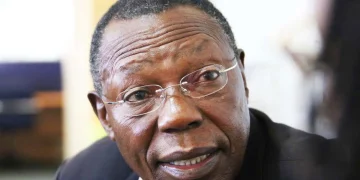
Fakhruddin Ali Ahmed was born on May 13, 1905, in Delhi, India, into a family from Assam. His father, an army doctor, instilled in him discipline and service to society. Ahmed attended St. Stephen’s College, Delhi University, before traveling to England. At St Catharine’s College, University of Cambridge, he studied history, graduating in 1927. He was later admitted to the Inner Temple, London, as a barrister.
On returning to India in 1928, Ahmed practiced law at the Lahore High Court, marking the start of a career that soon intertwined with politics and India’s independence struggle.
Role in the Independence Movement
Ahmed joined the Indian National Congress (INC) in 1931, aligning himself with Mahatma Gandhi’s movement for freedom. He was elected to the Assam Legislative Assembly in 1935 and served as the province’s finance and revenue minister in 1938. His bold taxation reforms included a 50 percent land revenue remission for farmers and the introduction of agricultural income tax, measures that enhanced Assam’s finances and supported rural communities.
In 1939, he resigned in protest after the British viceroy unilaterally involved India in World War II. Inspired by Gandhi, he joined the satyagraha campaign in 1940 and was jailed for nearly a year. Again in 1942, he was arrested for his role in the Quit India Movement and spent more than three years in prison.
After India’s independence in 1947, he served as advocate general of Assam until 1951, bridging the transition from colonial rule to self-governance.
Political Career
Ahmed’s career after independence was closely tied to the Congress Party. He entered the Rajya Sabha in the early 1950s, later returning to state politics as a legislator in Assam in 1957 and again in 1962. In 1966, he rejoined the Rajya Sabha and entered Prime Minister Indira Gandhi’s cabinet.
He held multiple portfolios:
- Minister of Irrigation and Power
- Minister of Education
- Minister of Industrial Development (1967–70)
- Minister of Food and Agriculture (1970–74)
These posts allowed him to influence policy on infrastructure, education, and India’s agricultural modernization.
Presidency (1974–1977)
In 1974, Ahmed was elected as the fifth president of India, becoming only the second Muslim president after Zakir Husain. His presidency is remembered most for its controversial role during the Emergency (1975–77).
On June 25, 1975, at the recommendation of Indira Gandhi, Ahmed proclaimed:
“A grave emergency exists whereby the security of India is threatened by internal disturbances.”
This act triggered one of India’s most turbulent political phases. During the Emergency:
- Opposition leaders were jailed.
- Civil liberties were suspended.
- The press was censored.
- Mass sterilization campaigns, spearheaded by Sanjay Gandhi, were carried out.
Ahmed also signed the 39th Constitutional Amendment (1975), which shielded the prime minister’s election from judicial scrutiny, further strengthening executive authority.
Alongside politics, Ahmed was a sports enthusiast. He revived the Shillong Golf Club, supported cricket, football, and tennis, and introduced the President’s Polo Cup (1975).
Death and Legacy
On February 11, 1977, Fakhruddin Ali Ahmed died of a heart attack in New Delhi at the age of 71, just weeks before the Emergency ended. His death marked the first time a sitting Indian president had died in office.
His legacy remains controversial:
- To admirers, he was a freedom fighter, lawyer, and loyal Congress leader who rose through merit and service.
- To critics, his unquestioning support of Indira Gandhi during the Emergency undermined democracy and tarnished the presidency.
Nevertheless, his career reflects the complex balance of loyalty, law, and politics in India’s post-independence history.