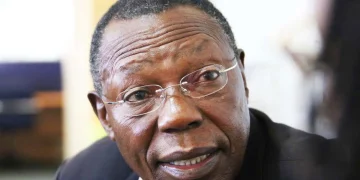
Iajuddin Ahmed was born on February 1, 1931, in Nayagaon, Munshiganj district, then part of British India (now Bangladesh). Coming from a modest background, he pursued higher education with distinction. After completing his master’s degree in soil science at Dhaka University in 1954, he went to the United States for advanced studies. He earned a second master’s degree in 1958 and a Ph.D. in 1962 in soil science from the University of Wisconsin–Madison.
His academic training shaped his career as both a scientist and educator, and he would later be recognized as one of Bangladesh’s leading specialists in soil science.
Academic Career
Upon returning home, Ahmed joined Dhaka University as an assistant professor in the Department of Soil Science. His career advanced steadily: he became a full professor in 1973. Over the decades, he held a range of leadership positions, including:
- Chair of the Department of Soil Science (1968–69, 1976–79)
- Provost of Salimullah Muslim Hall (1975–83)
- Dean of the Faculty of Biological Sciences (1989–91)
Ahmed was also deeply involved in academic governance. He chaired the University Grants Commission (1995–99), influencing higher education policy, and in 2002, shortly before his presidency, became vice-chancellor of the State University of Bangladesh.
Married to Anwara Begum, a zoologist, he had three children, balancing public service with family life.
Entry into Public Service
Beyond academia, Ahmed served in several national roles. In 1991, he was appointed adviser to the caretaker government in the Ministry of Food and Culture, gaining early experience in governance. From 1991 to 1993, he chaired the Public Service Commission, overseeing recruitment and reforms in public administration.
These positions enhanced his reputation as a technocrat—an academic-turned-administrator whose impartial credentials later made him an acceptable candidate for the presidency.
Presidency of Bangladesh (2002–2009)
In September 2002, the Election Commission of Bangladesh declared Iajuddin Ahmed president after the nomination papers of rival candidates were invalidated. He became the 17th president of Bangladesh, a largely ceremonial position under the constitution.
Caretaker Government Role
His presidency took a dramatic turn in October 2006, when he assumed the additional responsibility of heading the caretaker government. The move was meant to prepare for general elections scheduled for January 2007. However, allegations of flawed voter rolls and mass protests led to widespread political violence.
In January 2007, amid escalating unrest, Ahmed declared a state of emergency, canceled the elections, and eventually transferred power to a new caretaker administration led by Fakhruddin Ahmed. The episode marked one of the most turbulent moments in Bangladesh’s democratic history.
Extended Tenure
Although his term was due to end in September 2007, constitutional provisions required him to remain in office until a successor was chosen. Thus, Ahmed continued as president until February 2009, when Zillur Rahman was elected.
Death and Legacy
After leaving office, Ahmed lived quietly, though his years in power continued to be debated. On December 10, 2012, he died in Bangkok, Thailand, following complications from heart surgery.
Iajuddin Ahmed’s biography illustrates the unusual journey of a scholar-turned-president who bridged academia and politics. Admired for his academic contributions, he remains a controversial figure for his role during the 2006–07 caretaker government crisis. To some, he represented a stabilizing technocrat; to others, his presidency symbolized the fragility of Bangladesh’s democratic institutions.