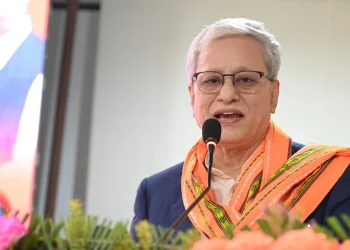
Most remember Dr. Jerome Okech Aliker as a successful dental surgeon in Nairobi, where he operated a clinic on Wabera Street for nearly three decades. Fewer know of his pivotal role in one of the most significant diplomatic negotiations of the post-Cold War era—the resolution of Libya’s Lockerbie bombing standoff with the West.
From his early days as Mwai Kibaki’s neighbour in Hurlingham and later in Muthaiga, to walking the corridors of the White House, Dr. Aliker’s life was anything but ordinary. In the 1990s, he exchanged his dental chair for diplomacy when President Yoweri Museveni appointed him Minister of State for Foreign Affairs.
From Muthaiga to Tripoli: The Dentist Who Became a Diplomatic Bridge
Dr. Aliker left Nairobi in 1996 to return to Uganda and serve under Museveni. His charm, discretion, and elite network quickly made him a trusted envoy for sensitive assignments. One such mission involved the notorious Lockerbie bombing—the 1988 terrorist attack that killed 270 people over Scotland and left Muammar Gaddafi’s Libya globally ostracized.
When Gaddafi turned to Museveni, then Chairman of the Organisation of African Unity (OAU), for help in reopening channels with the West, Museveni turned to Aliker.
“Museveni had no connection with the Americans,” Aliker recalled in an interview. “He asked me to go plead with the Americans.”
To Aliker’s surprise, a call to his Washington contact led to a meeting with CIA officials, who approved transferring the trial from the U.S. to the UK.
“They said, ‘This time we are not going to shoot the messenger. We would have liked to shoot the sender.’”
The Mission to Gaddafi’s Tent
With the Americans on board, Museveni flew to Tripoli—accompanied by Aliker—to deliver the message personally. Inside Gaddafi’s infamous desert tent, an extraordinary dialogue unfolded between the Libyan strongman, the Ugandan president, and his trusted envoy.
“Suddenly, Gaddafi could speak English,” Aliker quipped.
When pressed to comply with Western demands, Gaddafi responded bluntly:
- Terrorism? “I denounce it – they tried to kill me, I killed them.”
- WMDs? “I don’t have any, just a missile for my neighbors.”
- Compensation? “We will pay.”
But when asked to accept responsibility, Gaddafi hesitated. Aliker would make three more trips between Tripoli and Washington, trying to close the final gap.
Condoleezza Rice, George W. Bush, and the “Cowboy” Warning
On a separate trip to Washington, Aliker was introduced by Museveni to President George W. Bush, who jokingly told him:
“You go tell that cowboy to behave.”
Later, Condoleezza Rice laid out specific U.S. demands:
- Publicly denounce terrorism
- Reject weapons of mass destruction
- Accept responsibility for Lockerbie
- Pay $10 million per victim in compensation
While Gaddafi agreed to most, he avoided direct admission of guilt. Eventually, when the Hague court convicted one Libyan, he declared:
“He is a Libyan. We cannot abandon him.”
This was taken as de facto acceptance of responsibility, and Libya began the process of reintegration.
A Legacy of Quiet Diplomacy
Throughout the process, Aliker’s contact in Tripoli was Moussa Koussa, Gaddafi’s top intelligence officer, who later defected just before Gaddafi’s fall.
“I was shown the cheque: $10 million per person,” Aliker said, confirming the depth of Libya’s financial commitment.
His multiple trips between Kampala, Tripoli, and Washington helped defuse one of the most contentious global standoffs of the 1990s. Without formal instructions, armed only with trust and intellect, Dr. Jerome Aliker became a symbol of African diplomacy at its finest.
Conclusion: The Gentle Powerbroker
Dr. Jerome Aliker passed away as one of Uganda’s most respected public servants. His journey from Nairobi’s dental scene to negotiating with the CIA, Gaddafi, and the U.S. President shows that diplomacy is often shaped not by career bureaucrats, but by quiet, trusted emissaries who command respect from both sides.
He lived history—and helped shape it—one conversation at a time.