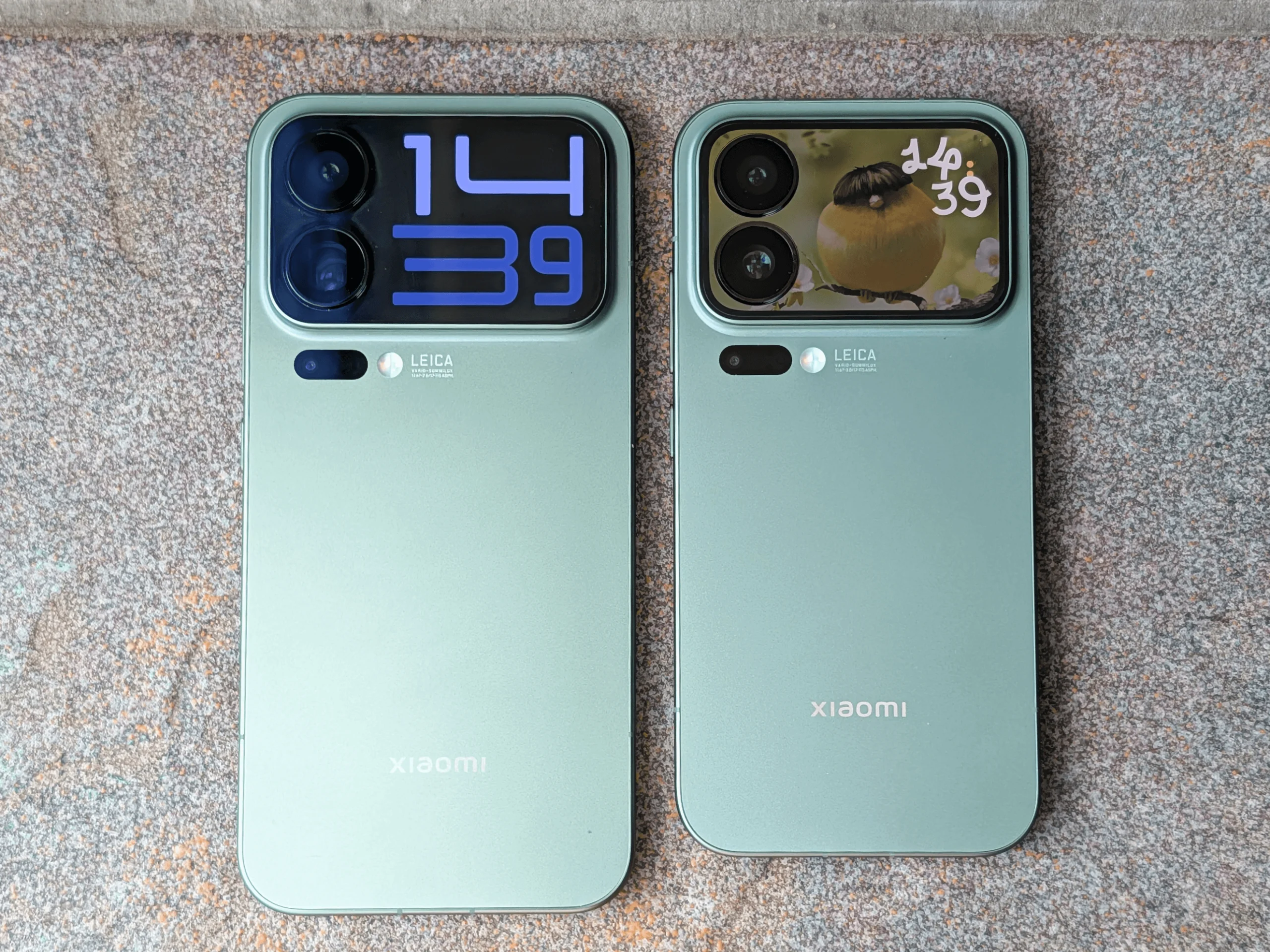
The Xiaomi 17 Pro Max arrives with a different kind of flagship pitch. Xiaomi is not just chasing bigger numbers this year. It is also trying to stand out in a crowded premium segment with a secondary rear display, a larger 7500mAh battery, and a hardware package that aims to compete directly with Samsung, Apple, vivo, and Oppo. That makes this phone easier to notice than most flagships before you even get to performance or camera tests.
What matters more, though, is whether the concept works in practice. The Xiaomi 17 Pro Max clearly gets many fundamentals right. Its battery life is excellent, charging remains unusually fast for a battery this large, and both displays are strong. At the same time, the camera system looks more conservative than the rest of the hardware, and the Chinese ROM on the reviewed unit carries usability caveats for buyers outside China. So this is not a simple flagship review. It is a review of a phone with real strengths and very specific compromises.
Specifications Table
| Category | Details |
|---|---|
| Display | 6.9-inch LTPO AMOLED, 1200 x 2608, 120Hz, plus 2.9-inch rear LTPO OLED |
| Chipset | Qualcomm Snapdragon 8 Elite Gen 5, 3nm |
| RAM & Storage | 12GB/512GB, 16GB/512GB, 16GB/1TB, UFS 4.1 |
| Rear Camera | 50MP main, 50MP 5x telephoto, 50MP ultrawide |
| Front Camera | 50MP autofocus |
| Battery | 7500mAh |
| Charging | 100W wired, 100W USB PD+PPS, 50W wireless, 22.5W reverse wireless |
| OS | Android 16, HyperOS 3 |
| Build | Dragon Crystal Glass 3 front, fiberglass back, aluminum frame, IP68 |
| Connectivity | 5G, Wi-Fi 7, Bluetooth 5.4, NFC, infrared, UWB |
Design and Build Quality
The Xiaomi 17 Pro Max is large, and there is no realistic way around that. A 6.9-inch phone with a 7500mAh battery, wireless charging hardware, and a second rear display is never going to feel compact. At 219g and 8mm thick, however, it is not as unwieldy as the spec sheet suggests. Xiaomi has at least kept the thickness under control, which matters because this could easily have become a brick.
Build quality is clearly premium. The front uses Xiaomi’s Dragon Crystal Glass 3, the back is fiberglass, and the frame is aluminum. The materials feel solid, and the phone looks more refined than gimmicky despite the rear screen. The camera island is large, but the design integrates it more cleanly than expected. The rear display is the centerpiece, yet it does not make the phone look chaotic. Instead, it gives the phone a distinct identity in a segment where many devices now blur together.
Ergonomically, the phone is less convincing. The flat matte sides and frosted surfaces look good and resist fingerprints, but they also make the device slippery. One-handed use is difficult, and the width is noticeable in daily handling. That said, Xiaomi deserves some credit for keeping the weight distribution reasonable. The phone feels heavy, but not badly balanced.
Compared with the Xiaomi 15 Pro, this device is effectively the spiritual replacement rather than a direct size match. It is larger and more experimental. Whether that is an improvement depends on what you want. The ultrasonic fingerprint scanner is one of the cleaner upgrades. It is fast, reliable, and works even with the screen off. That improves everyday usability more than the rear display does.
Display Performance
The Xiaomi 17 Pro Max has two LTPO OLED displays, and that is the feature most likely to define the phone. The main panel is a 6.9-inch AMOLED with 120Hz refresh rate, broad HDR support, and high peak brightness. The rear screen is a 2.9-inch LTPO OLED with essentially the same feature set, only in a much smaller format. On paper, that is overkill. In practice, it means Xiaomi did not treat the second screen as a token addition.
Brightness is good rather than class-leading. In auto mode, both screens rise to just over 1000 nits on a larger white area and beyond 3500 nits on a smaller window. That is enough for confident outdoor use and solid HDR playback. The main display is not the brightest among direct rivals, but it is still comfortably usable in harsh light. Color and contrast are what you would expect at this level. Blacks are deep, HDR content looks punchy, and the panel feels modern rather than compromised.
Refresh rate behavior is well handled. The system can drop to 1Hz when idle and ramps back to 120Hz across the interface, including Chrome and YouTube browsing. That is good implementation. Some flagship phones still behave oddly in basic apps, so it is worth noting when a device gets this right. Once video starts playing, the display matches the frame rate correctly. That helps with smoothness and efficiency.
The rear display is more useful than expected, but it still depends too much on software support. It works well for notifications, timers, caller ID, Spotify playback, and especially as a camera viewfinder. Beyond that, app integration remains limited, particularly on the China ROM. So while the Xiaomi 17 Pro Max rear screen is not a gimmick, it is also not yet central to the ownership experience for every user.
Performance and Benchmarks
The Xiaomi 17 Pro Max uses Qualcomm’s Snapdragon 8 Elite Gen 5 with two Oryon V3 Phoenix L cores at 4.6GHz, six Phoenix M cores at 3.62GHz, and the Adreno 840 GPU. It is paired with UFS 4.1 storage and starts at 512GB, which is generous. On paper, this is unquestionably flagship hardware. In practice, the phone performs well, but not as well as its chipset suggests it should.
Benchmark results show strong numbers, though they also reveal a pattern. The phone is fast enough to outrun older Snapdragon 8 Elite devices, but it lags behind some other Snapdragon 8 Elite Gen 5 phones in GPU-heavy and combined tests. That suggests Xiaomi is tuning the phone conservatively or struggling to fully sustain the chip’s potential in this chassis. Either way, it means the Xiaomi 17 Pro Max is not the performance leader its hardware might imply.
Real-world performance
In daily use, the phone should feel extremely quick. App launches are instant, large games load fast, multitasking is easy, and the high baseline storage removes any sense of bottleneck. HyperOS 3 also appears smooth in motion, which helps the phone feel fast in a way benchmark charts cannot fully capture.
Gaming stability is solid, but this is not a gaming-first device. It has the raw power for demanding titles, yet Xiaomi is clearly balancing output against heat and battery life. Most buyers will never feel limited. Power users, however, may notice that the phone is not pushing as hard as the RedMagic-style devices built around the same chip.
Thermal performance
Thermals are a real part of the story. The sourced stress results show CPU performance dropping to around half of theoretical peak after less than ten minutes, while GPU stability lands around 60%. That is not disastrous for a flagship, but it is not impressive either. The phone does not collapse, yet it does not fully exploit the silicon under sustained load.
That matters because Xiaomi is selling a premium device with top-tier internals. Buyers are entitled to expect better sustained behavior than this. In normal use, the issue is minor. In longer gaming sessions or heavier processing workloads, it becomes easier to see where the limits are.
Camera Performance
The Xiaomi 17 Pro Max camera system is good, but it is also the clearest reminder that Xiaomi is saving its very best imaging hardware for the Ultra line. All four cameras are 50MP, and the setup looks balanced on paper. The problem is that only some parts of it feel truly flagship-grade in practice.
Main camera analysis
The main camera uses the Light Fusion 950L sensor at 1/1.28-inch behind a 23mm f/1.7 lens with OIS and dual-pixel autofocus. In daylight, it performs very well. Images are sharp, detailed, and clean, with wide dynamic range and dependable 2x crop zoom. Portrait rendering is also strong, with good subject separation and pleasant skin tones. This is the most trustworthy camera on the phone.
There are processing quirks, though. Contrast can look a little flat in tricky light, and reds, sometimes greens too, are pushed harder than they should be. That gives the camera a recognizable look, but not always an accurate one. HDR is good overall, yet it does not always look as natural as the best rivals.
Low-light performance
At night, the main camera remains strong. Exposure is well judged, noise is well controlled, and the phone preserves highlights and shadow detail effectively. The 2x crop from the main camera also holds up surprisingly well. For most users, low-light main camera output will feel confidently flagship-grade.
The other cameras are less convincing. The 5x telephoto struggles more than expected. Daylight shots are often softer or blurrier than they should be, with OIS not always doing enough to stabilize output. At night, the telephoto remains usable, but not sharp. It can deliver decent dynamic range and clean-looking files, yet detail does not hold up under inspection. That is a problem because telephoto quality is a major reason people shop in this price bracket.
The ultrawide is competent by day, but less compelling than expected. Its field of view is narrower than some rivals, dynamic range is decent, and sharpness is acceptable. In low light, though, it falls off quickly. Fine detail drops, sharpness weakens, and the output no longer feels competitive with the better flagships.
Video performance
Video from the main camera is strong. Daylight and low-light footage both show good detail, broad dynamic range, and low visible noise. The phone also supports advanced recording options such as HDR10+, Dolby Vision HDR, and 10-bit Log, which adds real value for more serious shooters.
Stabilization, however, is not the best in class. There is still minor shakiness in 1x and 2x clips. The 5x camera records usable video, but it is softer than it should be and autofocus is not especially reliable. The ultrawide produces decent daylight footage, yet low-light ultrawide video is weak. So the overall picture is clear: the Xiaomi 17 Pro Max records good video from its main camera, but the supporting cameras do not consistently match that standard.
Battery and Charging
Battery life is one of the Xiaomi 17 Pro Max’s strongest assets. The 7500mAh cell delivers an Active Use Score of 20 hours 50 minutes, which puts it among the better recent flagships and only slightly behind the Oppo Find X9 Pro in the cited comparisons. The most impressive sub-scores are browsing and video playback, which suggests the efficiency tuning is doing real work beyond just relying on raw battery size.
In real-world terms, this is an easy all-day phone for heavy users and likely a two-day phone for moderate ones. That matters more than benchmark leadership. Premium phones often talk about endurance improvements without changing the actual ownership experience. Here, the ownership experience does change. You spend less time worrying about the battery.
Charging is also excellent. The 100W HyperCharge system fills the phone in about 39 minutes despite the very large battery. More importantly, the sourced testing shows that a proper 100W USB PD+PPS charger comes surprisingly close, reaching full in about 48 minutes. That is unusually practical. It means you are not locked into Xiaomi’s ecosystem for good charging performance.
Heat management during charging appears sensible based on the measured power curve, with power tapering gradually rather than spiking irresponsibly. Battery care features are also present, including the option to disable fast charging and set an 80% cap. That adds some longevity value for owners planning to keep the phone for years.
Software and User Experience
The reviewed phone runs HyperOS 3 on Android 16, but this is a China ROM unit, and that distinction matters. HyperOS itself appears fast and visually polished. Xiaomi’s animation work is cleaner than before, and the interface is more cohesive than older MIUI-era software. Features like Super Island, broader AI tools, and stronger cross-device connectivity show that Xiaomi is trying to make the software feel more premium and more interconnected.
The problem is regional usability. The Chinese ROM supports only Chinese and English, and several Google-dependent functions are either limited or absent. There is no proper Android Auto, Quick Share support is incomplete, Google Discover is missing, and some Google features do not behave as they would on a global phone. You can install Play Store and many Google apps, but you still do not get a fully westernized Android experience. That matters a lot for an imported phone.
Update expectations are also less explicit than they would be on a global release, though the likely assumption is four major Android upgrades and six years of security patches based on prior Xiaomi flagships. That is decent, but still an inference rather than a clearly stated policy for this Chinese unit.
In short, the software is smooth and usable, but buyers need to separate HyperOS quality from China ROM practicality. They are not the same thing.
Connectivity and Extras
The Xiaomi 17 Pro Max is well equipped on connectivity. You get 5G, Wi-Fi 7, Bluetooth 5.4, NFC, infrared, and UWB. UWB is still relatively uncommon outside the very top tier, so its presence helps justify the flagship price. The ultrasonic fingerprint reader is another clear plus and works reliably.
There are, however, some omissions. Most notably, there is no eSIM support on this reviewed Chinese model. For frequent travelers or users who rely on flexible carrier switching, that is a real drawback. Since this is a China-only unit for now, it is possible the global version would differ, but right now the lack of eSIM is part of the experience.
The rear display also counts as an extra, and in the right use cases it is genuinely useful. As a camera viewfinder, it adds real functional value. Outside that, it still feels like an interesting extra rather than a necessity.
Audio and Multimedia
Speaker quality is very good. Loudness is only average on paper at -26.1 LUFS, but the quality is the more important point here. The sourced analysis describes the sound as clean, bass-rich, and unusually full for a phone, with crisp vocals that compare well even against the iPhone 17 Pro Max. That is high praise, and it makes the Xiaomi 17 Pro Max one of the better multimedia phones in its class.
That strong speaker tuning combines well with the main display. HDR support is broad, the panel is bright enough, and the 120Hz refresh implementation is good. The rear display adds some novelty, but the primary multimedia experience still comes from the main screen and strong stereo speakers.
Competition and Market Position
The Xiaomi 17 Pro Max sits in an awkward but interesting position. It is not yet a global flagship, and that alone changes how it should be judged. Against Samsung’s Galaxy S25 Ultra or Apple’s iPhone 17 Pro Max, it stands out with its second display, faster charging, stronger battery life, and broader experimentation. Against the iPhone especially, it cannot fully match still image and video quality according to the sourced comparison.
Against Chinese rivals, the picture becomes tougher. The Oppo Find X9 Pro offers even better endurance, while the vivo X300 Pro and Oppo Find X9 Pro appear to have more capable zoom hardware and, overall, stronger camera systems. That matters because Xiaomi is clearly leaving room above this phone for the future Ultra model.
So the Xiaomi 17 Pro Max is best understood as a feature-rich all-round flagship rather than a category leader. It offers strong value if battery life, charging, media quality, and distinctive hardware matter more to you than having the best camera system available.
Verdict
The Xiaomi 17 Pro Max is a good flagship with one memorable idea and several very practical strengths. The rear display is more useful than expected. Battery life is excellent. Charging is fast with both proprietary and USB PD chargers. The speakers are among the best in the class, and the main camera is dependable.
Its weaknesses are concentrated rather than scattered. The telephoto camera is a disappointment for this level. The ultrawide is merely decent. Sustained performance is not as strong as the chipset implies. And the Chinese ROM brings friction for buyers outside China.
That leaves the phone in an interesting place. It is easy to admire and reasonably easy to like, but it is harder to recommend blindly to camera-focused buyers.
Why This Phone Matters in Africa
The Xiaomi 17 Pro Max matters in African markets for practical reasons. A 7500mAh battery and fast charging directly address real usage patterns in places where people rely heavily on mobile data, spend long hours away from charging points, or face inconsistent power access. Endurance is not a luxury feature in those conditions. It is a core value feature.
Network flexibility is also important, and this is where the missing eSIM support weakens the package slightly. Still, Wi-Fi 7, strong 5G support, NFC, and UWB keep the rest of the connectivity stack modern. For many buyers, the larger concern would be software practicality if the device remains a China-only import.
Repair and resale value are more mixed. Xiaomi generally has stronger recognition and repair support than smaller enthusiast brands, which helps. However, resale on imported China-ROM flagships can be less predictable than on global Samsung or Apple models. That means the Xiaomi 17 Pro Max should hold interest among enthusiasts, but not necessarily enjoy the strongest mainstream resale strength.
Final Thoughts
The Xiaomi 17 Pro Max is for buyers who want a premium flagship with exceptional battery life, fast charging, strong speakers, and something visually different from the usual premium slab. It also makes sense for people who will genuinely use the rear display as a camera viewfinder, because that is where the concept feels most valuable.
It is less ideal for buyers who want the best zoom photography, fully polished global software behavior, or the most consistent sustained performance. Long term, the phone should age well in battery and general speed, but its China-ROM limitations and middling secondary camera performance make its longevity less straightforward than the raw hardware suggests.
The Review
Xiaomi 17 Pro Max
The Xiaomi 17 Pro Max is a well-rounded flagship phone without many weak points, if at all. It has the latest and greatest chipset, a high-end display, an excellent build, a huge battery, snappy charging, amazing speakers and dependable camera hardware. The secondary display is a nice touch, as it makes the Pro Max stand out, but, most importantly, it makes the selfie-taking experience with the rear cameras so much more flexible.
PROS
- Symmetrical and appealing design, great build.
- Solid LTPO OLED display, two at that.
- The secondary display is not a gimmick.
- Outstanding battery life.
- UWB support.
- Impressively fast charging, even with a third-party PD charger.
- Great-sounding loudspeakers
CONS
- China-only phone (for now).
- The camera system is uninspiring, especially the 5x telephoto.
- The phone struggles to utilize the SD 8 Elite Gen 5's full potential.
 Xiaomi