


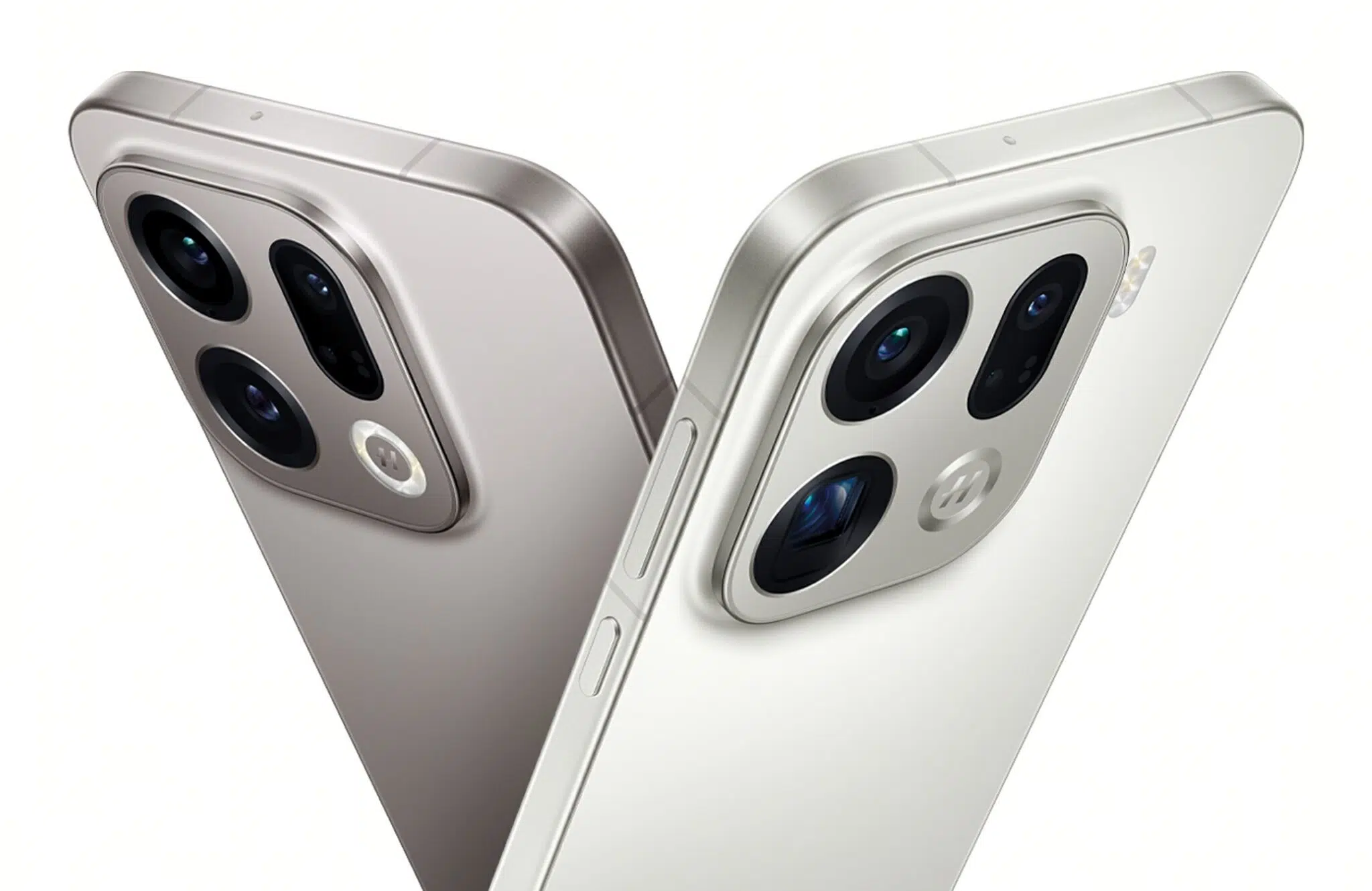
The Oppo Find X9 Pro arrives in a flagship market that has become crowded with big batteries, brighter screens, and increasingly ambitious zoom cameras. Oppo’s answer is not to chase every headline at once. Instead, it leans hard into two areas that matter in daily use: battery life and telephoto versatility. This generation replaces the dual-tele approach with one large 200MP periscope, adds optional extender hardware for serious reach, and pairs that with a 7500mAh battery in a body that is still manageable by flagship standards.
What makes the phone more interesting is that it does not look like a compromise device. The Oppo Find X9 Pro also brings a refined 6.78-inch LTPO panel, a stronger selfie camera, a newer main sensor, eSIM support on global units, and five promised Android upgrades. There are some limitations, though. Sustained performance is not best in class, gaming frame rate behavior remains conservative, and some camera modes are better than others. So this is a serious flagship, but not an effortless one.
Specifications Table
| Category | Details |
|---|---|
| Display | 6.78-inch LTPO AMOLED, 1272 x 2772, 120Hz, HDR10+, Dolby Vision |
| Chipset | MediaTek Dimensity 9500, 3nm |
| RAM & Storage | 256GB/12GB, 512GB/12GB, 512GB/16GB, 1TB/16GB, UFS 4.1 |
| Rear Camera | 50MP main, 200MP 3x telephoto, 50MP ultrawide |
| Front Camera | 50MP autofocus |
| Battery | 7500mAh |
| Charging | 80W wired, 55W USB PD, 50W wireless, 10W reverse wireless |
| OS | Android 16, ColorOS 16 |
| Build | Gorilla Glass front and back, aluminum frame, IP68/IP69 |
| Connectivity | 5G, eSIM, Wi-Fi 7, Bluetooth 6.0, NFC, infrared |
Design and Build Quality
The Find X9 Pro marks a clear design break from the previous generation. Oppo has moved the cameras to the top-left corner and flattened both the front and rear panels. That makes the phone look more conventional at first glance, though the camera island still gives it strong visual identity. It is boxier than before, and that changes the in-hand feel immediately. If you are coming from curved flagships, the edges will feel sharper and more deliberate.
Material quality is excellent. The phone uses glass on both sides and an aluminum frame, with IP68 and IP69 certification. It feels dense and expensive, but not clumsy. At 224g, it is still a heavy device, though Oppo has done well to stop that weight from turning into awkwardness. It is notable that the phone carries such a large battery without becoming truly unwieldy. That is one of the more impressive engineering choices here.
Ergonomically, the flat shape has pros and cons. It is easier to lift from a table, and it should work better with glass screen protectors. On the other hand, the feel is less organic than on older curved Find models. Oppo also adds more hardware controls than usual. There is the Snap key on the left, plus the Quick button on the right. The latter is pressure-sensitive rather than fully mechanical, which makes it useful, though not quite as tactile as a real shutter key. Still, if you use the camera often, these controls add value rather than clutter.
Display Performance
The Oppo Find X9 Pro display is not radically different from the previous model, but it remains very good. It is a 6.78-inch LTPO OLED with 120Hz refresh rate, 2160Hz PWM dimming, and support for HDR10+, Dolby Vision, and Android Ultra HDR. Resolution is slightly unusual at 1272 x 2772, though in practice that changes nothing. Sharpness is high, contrast is excellent, and it looks every bit like a premium flagship panel.
Brightness is strong in real use, though the full story depends on context. Manual brightness reaches about 800 nits, while auto mode in normal bright conditions gets just under 1200 nits. However, Oppo’s gallery app can push brightness much higher, with measured output around 1803 nits on the same pattern. That matters because it means HDR photos and video content look more convincing than browser measurements alone suggest. Outdoor usability is therefore solid, especially for media.
Refresh rate behavior is well implemented. The panel can step anywhere from 1Hz to 120Hz, and the switching logic responds to both user interaction and content. That part works as expected. The disappointing part is gaming. Oppo still appears to cap many games at 60Hz and 60fps, which undercuts the value of having a high-end LTPO panel and powerful silicon. So while the Oppo Find X9 Pro screen is technically excellent, it is not fully exploited in gaming scenarios.
Performance and Benchmarks
The Find X9 Pro runs on MediaTek’s Dimensity 9500, with one C1-Ultra core at 4.21GHz, three C1-Premium cores, four C1-Pro cores, and the Arm G1-Ultra GPU. In day-to-day terms, this is absolutely flagship hardware. App launches are fast, general system navigation is smooth, and storage performance from UFS 4.1 keeps everything feeling immediate. On paper, the chip promises strong gains over the previous generation. In practice, it improves, though not always dramatically.
Benchmark performance is good rather than dominant. CPU scores move forward in a clear way, and ray tracing performance looks especially respectable. Standard GPU numbers, however, are not class-leading. That by itself would not be a problem if the phone sustained its output better.
Real-world performance
In normal use, the phone feels properly high-end. ColorOS 16 is quick, animations are clean, and heavy multitasking does not expose obvious slowdowns. The 16GB RAM and UFS 4.1 storage on the reviewed global model should be more than enough for long-term use. This is not a phone that feels compromised in routine operation.
Gaming is more complicated. The hardware is strong enough, but Oppo’s traditional reluctance to allow high-refresh gaming gets in the way. That means the phone is powerful, but not especially eager to show it. Buyers looking for a gaming flagship will notice that.
Thermal performance
Sustained performance is one of the clearer weaknesses. Under maximum CPU load, the phone reportedly drops to just under half of its initial output fairly quickly, then continues to fall after about 25 minutes. GPU stress results are not especially exciting either. Surface temperatures reach around 50°C on the back near the chipset area. That is warm, though not unbearable in the part of the phone you would normally hold.
So the phone is fast enough, but it is not tuned for prolonged peak performance. For camera use, social apps, browsing, and productivity, that is not a big issue. For sustained gaming or repeated heavy workloads, it matters more.
Camera Performance
The Oppo Find X9 Pro camera system is the main reason to buy this phone. Oppo has simplified the zoom setup, but in a smart way. Instead of two smaller telephotos, it now uses one larger 200MP 70mm periscope with a bright f/2.1 lens, strong close-focus ability, and compatibility with an optional teleconverter kit. The main camera is upgraded too, and the selfie camera finally gets autofocus and higher resolution. This is not just a spec refresh. It is a meaningful rethink.
Main camera analysis
The main camera uses a 50MP Sony LYT-828, 1/1.28-inch in size, behind a 23mm f/1.5 lens with OIS and laser autofocus. In daylight, results are excellent. Dynamic range is wide, contrast is balanced, color has enough pop without looking crude, and fine detail is crisp. Portraits are especially strong, with good skin tones and convincing edge detection. The 50MP high-resolution mode is also more useful here than on many rivals, though it still makes the most sense for deliberate shooting rather than routine use.
The 2x crop from the main camera is decent in daylight, though not flawless. Fine textures can smear in certain scenes, especially patterned surfaces or architecture. For casual use it is perfectly acceptable. Under closer scrutiny, it is less impressive than the native 1x output.
Low-light performance
At night, the main camera remains top-tier at 1x. Exposures are strong, highlights stay under control, white balance is usually accurate, and detail remains natural. However, the 2x crop mode is much weaker after dark. The source material is unusually blunt about this, describing those shots as soft or blotchy with only the occasional good image. That is an important caveat, because many buyers now expect crop zoom to remain usable in all conditions. Here, it does not always.
The telephoto camera is the standout in both day and low light. Its 12MP 3x shots look superb in daylight, with excellent detail, wide dynamic range, and pleasing color. Portraits at 3x are especially strong because 70mm is a flattering focal length for people. Low-light 3x output is also impressive, with strong sharpness and wide tonal range, though warm scenes can sometimes look too saturated and white balance can occasionally drift. Even so, this is one of the better telephoto implementations in the segment.
Video performance
Video support is broad, with 4K up to 120fps, 10-bit capture, Dolby Vision, and Log modes. In practical terms, the camera system is strongest at its native focal lengths. The main and telephoto cameras are clearly the stars. The main weakness comes at 2x video, which the source notes is not very convincing. That fits the still photo story as well. Native cameras are strong. Crop modes are less so.
Stabilization is solid on the main camera and reliable enough on the telephoto for routine use. The optional teleconverter is a real bonus for enthusiasts. At its native 10x level, image quality is described as excellent, clearly ahead of what the bare phone can do at the same zoom. Even in low light, the teleconverter produces cleaner and sharper 10x results than the phone alone. The catch is that the accessory is expensive, adds bulk, blocks other cameras when mounted, and is implemented as its own camera mode rather than a seamless toggle. So the hardware is genuinely useful, but the overall kit still feels a bit clumsy.
Battery and Charging
Battery life is one of the Find X9 Pro’s strongest achievements. The 7500mAh silicon-carbon battery delivers an Active Use Score of 21 hours 57 minutes, which is among the best results in the cited comparisons. Browsing and video playback are particularly strong, and gaming endurance is near the top as well. The only weaker area is call time, which appears to be a Dimensity 9500 trait rather than a specific Oppo failure. In most real-world mixed use, though, the phone should be extremely hard to drain in a day.
That matters because the phone achieves this without becoming absurdly thick or heavy. There are bigger phones, but not many this well-balanced carrying a battery this large. This is one of the clearest value points of the device.
Charging is good, though not spectacular by Chinese flagship standards. With an 80W SuperVOOC charger, the phone goes from near-empty to full in about 1 hour 7 minutes. USB PD takes around 1 hour 20 minutes. More importantly, the 15-minute and 30-minute checkpoints are nearly identical between proprietary and PD charging. That means you do not lose much by using a quality universal charger instead of Oppo’s own brick. That is a very practical advantage.
Wireless charging is listed at up to 50W, but generic Qi2 charging appears far slower in practice. There are also sensible battery health tools, including adaptive charging, a charge limit setting, and the option to disable rapid charging for lower heat.
Software and User Experience
ColorOS 16 on Android 16 is polished and familiar. Oppo has not reinvented it, but it has refined it in small ways. The system supports five OS upgrades and six years of security patches, which is strong enough to give the phone a credible long-term case. That matters at this price.
The interface remains fluid, highly customizable, and full of AI features. Some of those are useful, such as on-screen translation, AI editing tools, or search inside supported apps. Others feel more like ecosystem padding. The overall result is still good. ColorOS remains one of the more mature Android skins, and the global release removes much of the friction that can affect imported Chinese flagships.
There are still small quirks. Some design ideas lean heavily on current iOS trends, and the camera accessory integration is not as seamless as it should be. But the day-to-day software experience is one of the safer parts of this phone.
Connectivity and Extras
The Oppo Find X9 Pro is well equipped. You get 5G, eSIM, Wi-Fi 7, Bluetooth 6.0, NFC, infrared, and an ultrasonic fingerprint reader. On the 1TB model, there is even satellite connectivity support. That is a serious flagship connectivity package.
Biometrics are strong. The ultrasonic fingerprint scanner is fast and reliable, though like most sensors of this type it may be less happy with thicker glass protectors. Oppo’s extra controls also count as real extras rather than gimmicks. The Snap key and Quick button are genuinely useful if you use the camera often.
The missing piece is not connectivity. It is gaming freedom. The hardware is there, but the software does not always let the device stretch its legs.
Audio and Multimedia
Speaker performance is decent, though not among the best in the class. The Find X9 Pro earns a “Good” loudness rating rather than “Very Good,” and the tuning is described as more neutral than the previous model. That helps avoid harshness, but it also means the speakers sound less lively than the better implementations from Apple or Samsung. Bass is also not particularly strong.
For multimedia more broadly, the phone still does well. The large OLED panel is bright, HDR support is broad, and Dolby Vision playback works as expected on Netflix. That makes the Find X9 Pro a good streaming device, even if the speakers alone do not elevate it above the best rivals.
Competition and Market Position
The Find X9 Pro sits in a premium bracket where the competition is unusually strong. Its most direct rival is the vivo X300 Pro, which offers a very similar philosophy and may still have a slight edge in zoom. The Oppo counters with better battery life, especially in markets where vivo ships reduced-capacity variants. That makes the choice between them surprisingly close.
The Xiaomi 17 Pro Max offers its own appeal with the rear display and strong battery life, but it appears to fall short in camera consistency and has less clear global availability. The OnePlus 15 is another close relation, but with less ambitious cameras and a lower likely price. Samsung’s Galaxy S25 Ultra remains the broader all-round alternative, especially for buyers who care about ecosystem, stylus support, or resale.
That leaves the Oppo Find X9 Pro in a strong position. It is not the cheapest flagship and not the gaming-focused one. It is the camera-first, battery-heavy, globally polished one.
Verdict
The Oppo Find X9 Pro gets most of the important things right. Battery life is exceptional. The main and telephoto cameras are genuinely strong. The display is excellent, the software is mature, and the phone avoids feeling like a brick despite its huge battery.
Its flaws are not hard to find, but they are specific. Sustained performance is only average for the class. Gaming frame rates remain oddly limited. The 2x crop modes are weaker than they should be, especially in low light. The teleconverter is a real advantage for enthusiasts, but it is also costly and inelegant.
Even so, as an overall flagship cameraphone, this is one of the easier premium Android phones to recommend.
Why This Phone Matters in Africa
The Find X9 Pro makes practical sense in African markets because its strongest feature is also one of the most useful: battery life. A 7500mAh battery matters in places where users rely heavily on mobile data, spend long hours away from charging points, or deal with inconsistent power access. This is the kind of phone that can remove battery anxiety for heavy users.
Network flexibility also matters. eSIM support, dual-SIM convenience, 5G, strong Wi-Fi, and broad connectivity make the phone viable for travelers, professionals, and users who switch networks often. Fast enough charging over standard USB PD is another advantage, since it reduces dependence on one proprietary adapter ecosystem.
Repairability and resale are more mixed. Oppo has a stronger presence than some niche Chinese brands, which helps. However, resale still tends to favor Samsung and Apple in many African markets. The Find X9 Pro should hold value reasonably well among Android enthusiasts, though probably not at class-leading levels.
Final Thoughts
The Oppo Find X9 Pro is best for buyers who want a serious Android cameraphone with excellent endurance and polished software. It suits users who care about portraits, telephoto flexibility, close-up shooting, and long battery life more than they care about peak gaming behavior.
It is less ideal for buyers who want sustained top-end gaming performance, perfect crop zoom behavior, or the lowest-cost route into a flagship. Long term, the phone looks strong. The battery is large, software support is solid, and the core camera hardware should age well. The optional teleconverter also gives enthusiasts room to grow into the system rather than out of it.
The Review
Oppo Find X9 Pro
The Find X9 Pro is almost too good to be true. What were its key drawing factors on paper - the battery and the camera system - turned out just as great in practice. The phone has unmatched endurance with the screen on (and it's a super nice screen to begin with, but that's hardly a standout observation at this level), and manages to do it without looking or feeling like a brick. It also charges reasonably fast for what's more like a powerbank-sized capacity - hardly any complaints there either.Oppo's continued reliance on Mediatek chips for the Find Pros has proven successful over the years, we reckon, and the Find X9 Pro performs to the expected high standard - in benchmarks and in subjective feel. With the usual caveat that prolonged loads will cause it to throttle, of course, though you probably wouldn't stress it all too much, because of a long-standing ColorOS aversion to high-refresh rate gaming - at least here in our experience. We'd argue that a cameraphone of this caliber doesn't need to be an all-out gaming phone too.
PROS
- Bright high-res OLED display, Dolby Vision capable too.
- Class-leading battery life inside a package that's no bigger than the competition.
- Good charging speed for the capacity.
- Mediatek SoC is very powerful overall.
- Thoroughly capable camera system, standout telephoto closeups.
- Optional telephoto extender makes the camera even more versatile.
CONS
- Gaming comes with frame rate limitations.
- Heavy throttling under continued load.
- 2x videos are not too hot; 2x zoom photos in the dark are meh.
- Minor white balance inconsistencies in low light.
- Teleconverter Kit is expensive in the EU; and also missing some of the camera accessories (magnetic grip and a magnetic camera light).
Review Breakdown
-
Our Rating
 OPPO
OPPO


