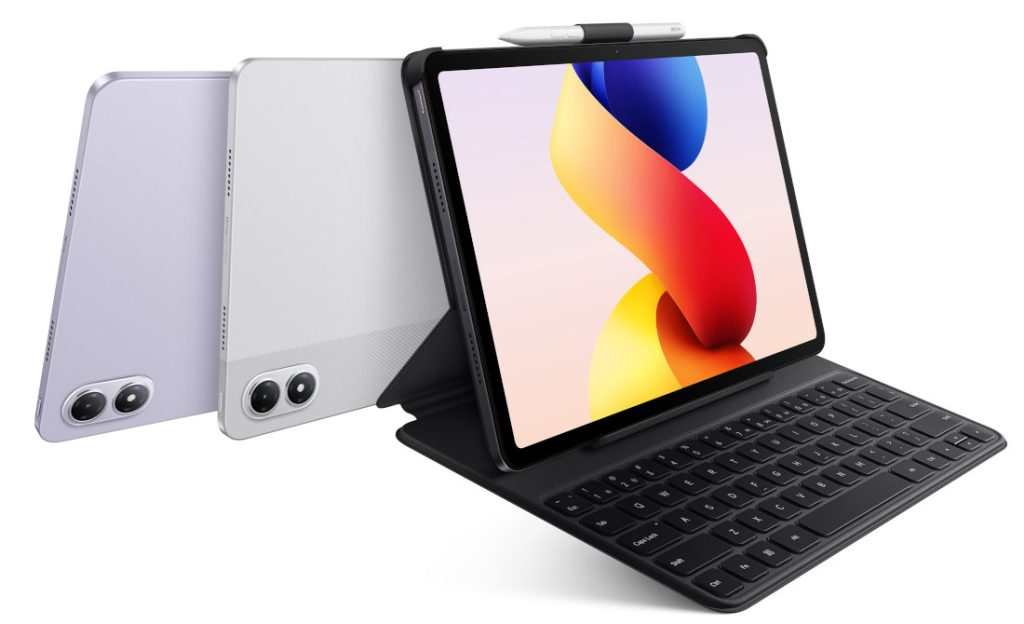
The Xiaomi Redmi Pad 2 Pro enters a crowded tablet market with a simple pitch: give buyers a large screen, long battery life, usable performance, and decent accessories without pushing the price into flagship territory. That approach is not new, but Xiaomi has tightened it here with a 12.1-inch 120Hz display, a 12,000mAh battery, quad speakers, and support for a keyboard and stylus. On paper, it reads like a practical tablet rather than an aspirational one, and that is exactly why it matters.
What makes the tablet more interesting is that it does not feel stripped down in the areas that affect daily use most. The Xiaomi Redmi Pad 2 Pro keeps the aluminum build, adds a larger battery than the previous model, includes microSD expansion and a 3.5mm jack, and runs a tablet-friendly version of HyperOS 2. Its weaknesses are also easy to spot. Charging is slow for such a large battery, the display loses contrast at angles on the matte version, and the cameras are basic. Still, for a budget tablet, the priorities mostly look right.
Specifications Table
| Category | Details |
|---|---|
| Display | 12.1-inch IPS LCD, 2560 x 1600, 120Hz, Dolby Vision, optional matte glass |
| Chipset | Snapdragon 7s Gen 4 |
| RAM & Storage | 6GB/128GB or 8GB/256GB, UFS 2.2, microSD slot |
| Rear Camera | 8MP autofocus with LED flash |
| Front Camera | 8MP fixed focus |
| Battery | 12,000mAh |
| Charging | 33W wired, 27W reverse wired |
| OS | Android 15, HyperOS 2 |
| Build | Glass front, aluminum frame, aluminum back |
| Connectivity | Wi-Fi 6, Bluetooth 5.4, aptX HD, aptX Adaptive, 3.5mm jack |
Design and Build Quality
The Redmi Pad 2 Pro follows Xiaomi’s familiar tablet design language. It is a flat, metal-bodied slate with clean lines and a simple rear camera island. That is not especially original, but it works. The tablet looks tidy, feels solid, and does not give away its mid-range price too easily. The aluminum unibody also helps it feel more expensive than many plastic rivals.
At 610g, the tablet is heavier than the previous Redmi Pad Pro, and that increase comes mostly from the larger battery. You do notice the added weight during long reading sessions or when holding it one-handed in portrait orientation. However, for a 12.1-inch tablet, it remains manageable. In landscape use, which is how most buyers will watch videos, browse, type, or game, the size and weight make much more sense.
The matte glass version is the more interesting option. It improves smudge resistance and cuts reflections noticeably, which is useful for reading, note-taking, and outdoor use. The trade-off is grip. With matte glass on the front and smooth metal around the body, the tablet becomes quite slippery. That makes a case or keyboard cover more than just an accessory. It becomes part of the ownership experience.
Compared with the previous Redmi Pad Pro, the overall shape has not changed much. What has changed is the battery size and the accessory story. Xiaomi still treats this as a flexible budget productivity tablet, which is why stylus and keyboard support matter more here than on cheaper media-first tablets.
Display Performance
The Xiaomi Redmi Pad 2 Pro display is one of the main reasons to consider the device. It is a 12.1-inch IPS LCD with 2560 x 1600 resolution, 120Hz refresh rate, Dolby Vision support, and optional matte glass. At this price, that is a respectable combination. Sharpness is good enough for reading, split-screen work, and video, and the screen size gives the tablet enough room to feel useful beyond casual media consumption.
Brightness is decent, though not exceptional. Measured output sits at about 472 nits manually and 547 nits in auto mode, which is enough for indoor use and passable outdoors, especially with the matte finish reducing reflections. However, this is still an LCD panel, and it does not compete with brighter OLED tablets for punch or deep contrast. It gets the job done, but it does not try to impress beyond its segment.
Color tuning appears solid head-on, but the matte version has a weakness. Contrast shifts noticeably when viewed from an angle, which can make the screen look uneven off-axis. That matters more on a tablet than on a phone because tablets are often propped up on stands, shared with others, or viewed from variable positions on a desk or lap. If you use the tablet mostly straight on, it is fine. If you care about wide viewing consistency, it is harder to ignore.
Refresh rate behavior is well handled. The panel supports multiple steps, including 30Hz, 48Hz, 50Hz, 60Hz, 90Hz, and 120Hz. Auto mode prefers 90Hz in many system apps, while 120Hz mode pushes the screen higher where possible. That is sensible tuning for battery life. Dolby Vision support on Netflix is a plus, though the lack of HDR10 support means no HDR playback on YouTube.
Performance and Benchmarks
The Redmi Pad 2 Pro uses Qualcomm’s Snapdragon 7s Gen 4, paired with LPDDR4X RAM and UFS 2.2 storage. This is mid-range silicon, and Xiaomi does not pretend otherwise. The tablet is not built to challenge premium tablets on raw speed. Instead, it aims for a level of performance that is strong enough for streaming, note-taking, multitasking, office work, and moderate gaming without obvious frustration. On that front, it succeeds.
Benchmark numbers show a noticeable step forward over the older Redmi Pad Pro with Snapdragon 7s Gen 2, especially in GPU output. The gains are not transformative, but they are real. Compared with Snapdragon 7s Gen 3 phones, the advantage is much smaller, which suggests this chip is more of an efficiency and refinement update than a leap. That is acceptable in a €300-class tablet.
Real-world performance
In everyday use, the tablet should feel comfortably quick for its target audience. App launching, browsing with several tabs open, split-screen work, media playback, and cloud-based productivity apps should all be well within its comfort zone. It is also helped by the 120Hz panel, which makes the interface feel more responsive than the raw processor class might suggest.
Gaming stability should be decent too, especially for lighter or moderately demanding titles. This is not a flagship gaming tablet, but it has enough GPU headroom for the sort of gaming most budget tablet buyers actually do.
Thermal performance
Thermal behavior is a genuine strength. The sourced stress results show the CPU retaining over 95% of peak performance and the GPU over 99%, which is unusually strong. That means Xiaomi has not chased benchmark spikes at the expense of sustained behavior. It also means the tablet should feel more predictable over longer workloads, whether that is a long gaming session, video export, or extended multitasking.
Camera Performance
Camera quality is not a selling point here, and Xiaomi clearly knows that. The Xiaomi Redmi Pad 2 Pro uses an 8MP rear autofocus camera with flash and an 8MP front fixed-focus camera. This is the kind of setup you expect on a budget tablet meant primarily for home use, schoolwork, and media, not photography.
Main camera analysis
The rear camera is serviceable for document capture, QR scanning, and occasional reference shots. It is soft and noisy even in daylight, which limits any broader usefulness. That is not really a failure. It is simply the reality of tablet cameras in this class. The important point is that autofocus is present, which makes it more useful for scanning and casual admin tasks than a fixed-focus module would be.
Low-light performance
Low-light stills are weak, as expected. Detail falls away quickly, noise becomes more obvious, and the small sensor has little headroom to recover scenes with mixed lighting. Buyers should treat the rear camera as functional rather than creative.
Video performance
Video recording tops out at 1080p30 from both cameras. The rear camera benefits from strong electronic stabilization, which is useful for quick handheld clips or classroom-style recording. The front camera is acceptable for video calls, though fixed focus limits sharpness unless you are relatively close to the device. In practice, the front camera is good enough for meetings and chats, but not much more.
Battery and Charging
Battery life is one of the tablet’s strongest arguments. The 12,000mAh battery delivers an Active Use Score of 12 hours 55 minutes, which is very good for a large tablet. The tablet also posts strong numbers across web use, video, and gaming. That matters because a big battery only becomes useful when the rest of the hardware is efficient enough to benefit from it, and that seems to be the case here.
In real-world terms, the Redmi Pad 2 Pro should comfortably handle a full day of mixed use and then some. For students, families, and casual users, it is the sort of tablet you can leave on a table for days and still find ready to use. That kind of low-stress battery behavior is one of the best reasons to buy a tablet in this class.
Charging is much less impressive. The tablet supports 33W wired charging, but because the battery is so large, refill times are slow. Thirty minutes gets you only about 20%, and a full charge takes roughly three hours. That is the main practical compromise of the whole device. Xiaomi gives you a large battery, but not the charging system to make topping it up especially convenient.
Reverse wired charging at up to 27W is a nice extra. It effectively lets the tablet act as a power bank for your phone or accessories. That will not matter every day, but it is one of those features that becomes genuinely useful when traveling.
Software and User Experience
HyperOS 2 on Android 15 is a good fit for this tablet. Xiaomi has not turned it into a full desktop-style environment, but it offers enough tablet-aware features to make the device feel more than just a stretched phone. Split screen, pop-up windows, optimized task switching, and large-screen app behavior all help the tablet feel purposeful.
There is no Workstation mode here, which keeps the software below Xiaomi’s more ambitious tablets in productivity terms. Even so, the basics are present and well integrated. If your expectations are web work, note-taking, content consumption, messaging, and occasional document handling, HyperOS 2 should be more than enough.
The Xiaomi ecosystem features also add value. Interconnectivity with Xiaomi phones, shared clipboard support, app continuation, notification mirroring, and mobile data sharing all make more sense on a tablet than on many other device categories. If you already use a Xiaomi phone, the software value increases noticeably.
Connectivity and Extras
The Xiaomi Redmi Pad 2 Pro does well on essentials. You get Wi-Fi 6, Bluetooth 5.4, microSD expansion, and a 3.5mm headphone jack. Those last two still matter a lot on budget tablets because many users treat them as long-term family devices, offline media machines, or student tools. In that context, expandable storage and wired audio are more useful than more premium features like ultra-fast wireless connectivity.
The major omission is cellular connectivity. There is no LTE or 5G version, which limits the tablet’s flexibility on the go. For many users, that is not a deal-breaker because phones can provide hotspots. Still, for a device that clearly wants to support light productivity and travel use, it is the most obvious missing feature.
Stylus and keyboard support are also central to the value story. The Smart Pen and keyboard cover are optional, but they make the tablet more versatile. The problem is that the keyboard still has no touchpad and no backlight, which limits how far it can go as a laptop replacement.
Audio and Multimedia
Media is where the tablet makes an immediate case for itself. The quad-speaker setup with Dolby Atmos is one of its strongest features, and the sourced testing rates loudness as Very Good. More importantly, the sound quality itself is said to be very good, with strong vocals and enough low-end presence to make streaming, music, and casual gaming enjoyable.
That pairs well with the large 12.1-inch display. Even though the panel is not OLED, the screen size, 120Hz support, Dolby Vision compatibility, and strong speakers create a convincing entertainment package. The 200% and 300% volume boost options are best ignored for serious listening, but the standard output appears well judged.
Competition and Market Position
The Redmi Pad 2 Pro sits in a useful part of the market. It is not trying to compete with premium tablets like the Galaxy Tab S11 Ultra or iPad Pro on display technology or processing power. Instead, it is going after buyers who want as much screen, battery, and functionality as possible around the €300 mark.
Its closest internal rival is the older Redmi Pad Pro. The new model offers better battery life, a faster chip, and better sustained performance, though it also charges slowly and does not radically improve the overall display experience. Against tablets like the Honor Pad X9, Xiaomi offers a sharper screen, more power, and better ecosystem depth. Against more premium tablets such as Samsung’s large Galaxy Tab models, it loses on display quality and performance but wins heavily on affordability.
In value terms, the Xiaomi Redmi Pad 2 Pro is positioned well. It gives up a few nice-to-have features, but it keeps most of the things buyers in this segment actually use.
Verdict
The Redmi Pad 2 Pro is a well-judged budget tablet. It has a large, sharp screen, very good speakers, strong battery life, dependable mid-range performance, and a metal build that feels more premium than the price suggests. Xiaomi also deserves credit for keeping microSD expansion, a headphone jack, and solid accessory support.
Its weaknesses are clear too. Charging is slow, the matte display version has limited viewing angles, the cameras are basic, and the keyboard accessory still lacks a touchpad. None of those issues ruin the tablet, but they keep it firmly in the value category rather than the aspirational one.
Why This Phone Matters in Africa
The Redmi Pad 2 Pro matters in African markets because it solves practical needs at a reasonable price. A large battery matters in places where charging access may not always be convenient, and a big screen is useful for education, entertainment, reading, remote work, and family sharing. Many households want one affordable shared device rather than several premium personal ones. This tablet fits that use case well.
Pricing sensitivity is especially important here. Buyers often need value first, not luxury features. The Redmi Pad 2 Pro leans into that with storage expansion, a headphone jack, strong media performance, and enough power for school, office, and streaming tasks.
Battery reliability is another plus, and repair or resale prospects should be better than on more niche brands because Xiaomi has broader recognition in many African markets. The lack of cellular support hurts somewhat, but for users who already rely on smartphone hotspots, it may not be decisive.
Final Thoughts
The Xiaomi Redmi Pad 2 Pro is best for buyers who want a large-screen tablet for streaming, reading, note-taking, light work, and casual gaming without spending flagship money. It also makes sense for students, families, and Xiaomi phone users who will benefit from the broader ecosystem features.
Buyers who want a laptop-style tablet experience, faster charging, better cameras, or a stronger display for off-angle viewing should probably look higher up the market. The long-term outlook is still good. The chip is efficient, thermal stability is excellent, the battery is large, and the overall hardware should age well for the price.
The Review
Xiaomi Redmi Pad 2 Pro review
The Redmi Pad 2 Pro is easy to recommend if you are looking for a tablet on a budget. It has a large screen with Dolby Vision and four big loudspeakers with Dolby Atmos. Then there is the capable chip and a massive battery. And let's not forget the feature-rich Hyper OS 2, especially if you already have a Xiaomi phone.
PROS
- All-metal unibody.
- Large screen, 1B colors, 120Hz, Dolby Vision.
- Powerful speakers.
- Good performance, excellent thermal stability.
- Great battery life.
- Feature-rich UI.
- Affordable, excellent optional accessories.
- microSD, 3.5mm audio jack.
CONS
- Notable contrast shift when viewing the screen at an angle.
- Slow charging.
- Not even basic ingress protection.
- Keyboard cover lacks a trackpad.
 Xiaomi