People rarely make spending decisions using logic alone.
A purchase may appear to be about price, quality and necessity. Beneath the surface, it may also be influenced by stress, excitement, identity, convenience, social pressure, scarcity and the desire for immediate satisfaction.
This helps explain why someone can create a sensible budget in the morning and break it that evening.
It also explains why a product can feel essential inside a shop or shopping app, then unnecessary a few days later.
Modern businesses understand these patterns. Retailers, payment providers, social platforms and advertisers design purchasing environments to make spending quick, emotionally appealing and easy to repeat.
Features such as one-click checkout, saved cards, personalised recommendations, limited-time offers and buy-now-pay-later financing reduce the time between wanting an item and paying for it.
The Consumer Financial Protection Bureau defines an impulse purchase as buying something without planning it beforehand and notes that it can cause people to spend more than they can afford.
The goal of understanding the psychology of spending is not to feel guilty about every purchase. Money exists partly to support comfort, enjoyment and meaningful experiences.
The goal is to recognise the forces influencing financial decisions so that spending reflects genuine priorities rather than temporary emotions or carefully engineered pressure.
What is the psychology of spending?
The psychology of spending examines how thoughts, emotions, habits and social environments affect the way people use money.
Traditional financial advice often assumes that consumers compare options carefully and choose whatever provides the greatest value.
Real behaviour is more complicated.
A person may:
- Buy something because it is discounted.
- Spend after a difficult day.
- Upgrade a product to impress others.
- Continue a subscription because cancelling feels inconvenient.
- Choose a smaller instalment instead of considering the total cost.
- Purchase quickly because stock appears limited.
- Spend a windfall differently from ordinary salary.
- Keep paying for something because money has already been invested in it.
These decisions are not always irrational. People have limited time and attention, so mental shortcuts help them function.
Problems arise when those shortcuts repeatedly conflict with financial goals.
Understanding spending behaviour begins with a simple principle:
A purchase is not only an exchange of money for a product. It can also be an attempt to change a feeling, communicate an identity or reduce immediate discomfort.
Emotional spending
Emotional spending occurs when feelings strongly influence a purchase.
Common triggers include:
- Stress.
- Boredom.
- Sadness.
- Loneliness.
- Excitement.
- Anger.
- Celebration.
- Insecurity.
- Frustration.
- Fear of missing out.
Someone experiencing stress may shop for distraction. A person who feels unsuccessful may buy something associated with status. Another may celebrate good news with a purchase that exceeds the available budget.
The product provides more than practical utility. It creates anticipation, novelty or a temporary sense of control.
That relief may be genuine, but it is often brief.
Once the emotional effect fades, the financial cost remains. This can create a cycle:
- An uncomfortable emotion appears.
- Shopping provides temporary relief.
- The purchase creates debt or regret.
- Financial stress increases.
- More spending is used to escape the new stress.
Stopping this cycle requires identifying the emotional trigger, not merely creating a stricter spreadsheet.
A budget cannot solve emotional spending when the person does not recognise what the purchase is being used to achieve.
Why buying something can feel rewarding
Anticipation is an important part of shopping.
The excitement may begin before the item is owned. Searching, comparing and imagining how life will improve can provide mental stimulation.
The pleasure can be strongest during:
- Discovering the product.
- Adding it to a basket.
- Receiving an order confirmation.
- Waiting for delivery.
- Opening the package.
After the product becomes familiar, the excitement may decline.
This helps explain why repeated shopping can become more attractive than owning what was purchased. The customer may begin seeking the next moment of anticipation.
Retail apps encourage this pattern through:
- Notifications.
- Personalised recommendations.
- Countdown timers.
- New product alerts.
- Loyalty points.
- Daily offers.
- Abandoned-cart messages.
The easiest way to reduce this influence is to create distance between the desire and the transaction.
Deleting an item from a basket is easier before payment than managing an unwanted purchase afterward.
Instant gratification
Humans often value immediate rewards more strongly than future benefits.
This tendency can make spending today feel more attractive than saving for a goal several years away.
A new phone provides an immediate emotional and practical reward. A retirement contribution may provide no visible benefit for decades.
The future version of oneself can feel almost like another person.
As a result, people may repeatedly choose:
- A purchase today over savings tomorrow.
- A smaller immediate reward over a larger future reward.
- A convenient payment over a lower total cost.
- Lifestyle upgrades over long-term security.
This does not mean people are incapable of planning.
It means future goals must be made emotionally meaningful and easy to act on.
Automatic saving can help because it moves money before repeated decisions are required. Naming savings accounts according to goals can also make the future benefit more visible.
“Emergency fund” may feel more meaningful than “account 2.”
“Home deposit” may be more motivating than “general savings.”
Impulse buying
An impulse purchase is made without prior planning.
Impulse spending often occurs when three conditions meet:
- The product creates an immediate desire.
- Payment is easy.
- There is little time for reflection.
Retail environments are designed to produce these conditions.
Physical stores place small products near checkouts. Online shops display related items immediately before payment. Apps send personalised offers based on previous browsing.
An impulse purchase is not automatically harmful.
Buying a snack unexpectedly may have little effect on a stable budget. The concern is repeated impulse spending that prevents saving, creates debt or hides emotional distress.
Common signs include:
- Frequently buying items that remain unused.
- Feeling urgency that disappears after the purchase.
- Hiding purchases from family members.
- Shopping whenever stressed or bored.
- Repeatedly returning products.
- Carrying credit-card debt for non-essential spending.
- Being unable to explain where monthly income went.
The CFPB reports that consumers have viewed timely spending-feedback tools as potentially useful for controlling impulse spending and making budgeting easier.
Awareness is often the first effective intervention.
The pain of paying
Spending creates a psychological cost sometimes described as the pain of paying.
The strength of this feeling depends partly on how visible and immediate the payment is.
Paying with physical cash can make the loss easier to notice. The buyer sees the money leave and knows how much remains.
Digital payments can feel less noticeable.
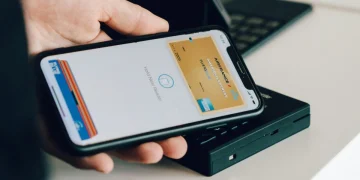
A card tap, phone payment or one-click purchase separates the product from the physical experience of giving up money.
This convenience is valuable, but it can weaken spending awareness.
The payment may not feel fully real until:
- The bank balance is checked.
- The card statement arrives.
- Several instalments overlap.
- A bill cannot be paid.
- A savings goal is missed.
Modern payment methods are not inherently harmful. The problem appears when convenience removes so much friction that reflection disappears.
A useful system restores visibility without abandoning technology.
Transaction alerts, weekly account reviews and category limits can make digital spending feel more concrete.
Credit cards and spending behaviour
Credit cards allow a person to receive a product immediately while postponing payment.
When the balance is repaid in full, this can provide convenience and consumer protection.
When the balance is carried, the purchase becomes more expensive through interest.
Credit also changes the psychology of the transaction. The customer does not feel the full reduction in available cash at the moment of purchase.
Rewards can add another incentive.
Federal Reserve research found that reward cards can encourage greater spending and leave less financially attentive consumers with higher unpaid balances. The researchers concluded that sophisticated users were more likely to benefit while less sophisticated users were more likely to incur costs.
This does not mean rewards cards are harmful to everyone.
A person who pays the full statement balance and does not increase spending may receive genuine value.
The danger is allowing points or cash back to justify a purchase that would not otherwise have been made.
Receiving 2% back does not create savings when spending increased by 20%.
Buy now, pay later and mental separation
Buy-now-pay-later services divide a purchase into smaller payments.
A $400 product may feel expensive. Four payments of $100 can feel more manageable, even though the customer is still committing to the same total purchase price.
This is known as partitioning or mental separation of cost.
The smaller amount becomes the focus, while the total obligation receives less attention.
The arrangement may be affordable when planned carefully. Problems arise when several instalment plans overlap.
A customer may remember each individual payment but underestimate the total amount leaving the account every month.
The Federal Trade Commission warns that buy-now-pay-later plans can involve late, transaction or rescheduling fees and may affect credit when providers report missed payments.
The American Psychological Association reported in 2026 that buy-now-pay-later financing can bypass cognitive and physical barriers that would otherwise slow impulse purchases.
The safest question is not:
“Can I afford the instalment?”
It is:
“Would I buy this today if I had to pay the total amount?”
Social comparison
People evaluate their financial success partly by comparing themselves with others.
Social media has made this comparison constant.
Users see homes, travel, clothing, restaurants and technology displayed without seeing:
- Debt.
- Family assistance.
- Business sponsorship.
- Financial stress.
- Failed purchases.
- Savings sacrificed.
- The years of work behind the result.
This creates a distorted reference point.
Someone with a stable financial life may feel unsuccessful because another person appears to be progressing faster.
Spending then becomes a way to reduce the perceived gap.
Examples include:
- Upgrading a vehicle for social status.
- Buying fashionable products to fit into a group.
- Choosing expensive experiences mainly for photographs.
- Moving into housing that strains the budget.
- Purchasing the latest device to avoid feeling behind.
Social comparison is not always harmful. It can inspire ambition or introduce people to useful products.
The problem is comparing personal finances with someone else’s public presentation.
A better comparison is internal:
- Is debt falling?
- Are savings increasing?
- Is spending aligned with personal goals?
- Is financial stress improving?
- Is the household more secure than last year?
Identity and symbolic spending
Products often communicate identity.
People do not buy only transportation, clothing or food. They may also buy symbols of:
- Success.
- Intelligence.
- Taste.
- Independence.
- Belonging.
- Professionalism.
- Creativity.
- Health.
- Environmental responsibility.
Marketing frequently connects a product with the person the customer hopes to become.
A computer may be presented as a symbol of creativity. A vehicle may represent achievement. A watch may represent authority. A course may represent future success.
The product can have genuine value while also serving an identity function.
Problems begin when identity is repeatedly purchased rather than developed.
Buying exercise clothing is easier than exercising. Purchasing business tools is easier than building a business. Buying books is easier than reading them.
A useful question is:
“Am I purchasing the activity, or only the image of the person who performs it?”
Lifestyle inflation
Lifestyle inflation occurs when spending rises as income increases.
Some increase is reasonable.
Higher income can support safer housing, better nutrition, education, healthcare and meaningful experiences.
Lifestyle inflation becomes harmful when every salary increase is immediately absorbed by:
- A more expensive home.
- A larger vehicle payment.
- Frequent dining.
- Premium subscriptions.
- Luxury upgrades.
- More expensive social expectations.
The person earns more but remains unable to save.
This creates a high-cost lifestyle that depends on continued income growth.
A worker may appear wealthy while having:
- Little emergency savings.
- Large debt.
- High fixed expenses.
- No retirement plan.
- Limited ability to change jobs.
One effective approach is to decide in advance how future income increases will be divided.
For example, part can improve current life, part can increase savings and part can reduce debt.
This allows progress without requiring permanent deprivation.
Mental accounting
People often divide money into mental categories.
They may treat:
- Salary as serious money.
- A tax refund as bonus money.
- Rewards points as free money.
- A gift as spending money.
- Investment gains as less valuable than wages.
Economically, a dollar has the same purchasing power regardless of where it came from.
Psychologically, people often spend windfalls more freely than income earned through regular work.
This can explain why a large bonus disappears quickly even when ordinary monthly spending is carefully controlled.
Mental accounting can also be useful.
Separating money into categories such as bills, savings and discretionary spending can protect important goals.
The aim is to use mental categories deliberately rather than allowing the source of money to determine whether it is spent carelessly.
A windfall should be included in the financial plan before it enters the account.
The anchoring effect
Anchoring occurs when the first number presented influences later judgment.
A retailer may display:
- Original price: $200
- Sale price: $120
The customer compares $120 with $200 and perceives an $80 saving.
However, the more important comparison is between $120 and the product’s genuine value.
The original price may not reflect what customers normally pay.
Anchoring appears in:
- Discounts.
- Subscription plans.
- Property listings.
- Salary negotiations.
- Restaurant menus.
- Product bundles.
- Suggested donations.
A premium option can also make the middle option appear reasonable.
For example:
- Basic: $15
- Standard: $35
- Premium: $80
The $80 option may anchor the customer’s expectations, making $35 feel inexpensive.
The best defence is to decide what the product is worth before examining promotional pricing.
A discount does not save money when the purchase was unnecessary.
Scarcity and urgency
“Only two left.”
“Sale ends in ten minutes.”
“Twenty people are viewing this.”
These messages create urgency.
Scarcity can be genuine. Tickets, hotel rooms and limited inventory can sell out.
It can also be exaggerated or repeatedly reset.
Urgency reduces the time available for:
- Price comparison.
- Reading reviews.
- Checking the budget.
- Considering alternatives.
- Recognising emotional motivation.
Consumers may focus more on avoiding loss than on evaluating the purchase.
This is related to loss aversion: losing an opportunity can feel more painful than the benefit of keeping the money.
A practical rule is to distrust any purchase that becomes attractive mainly because time is running out.
A genuinely useful product should remain useful after a cooling-off period.
The sunk-cost effect
A sunk cost is money or time that has already been spent and cannot be recovered.
People may continue spending because they do not want the earlier investment to feel wasted.
Examples include:
- Repairing an unreliable vehicle repeatedly.
- Continuing a course that provides little value.
- Keeping a failing business project alive.
- Paying for unused services because setup was expensive.
- Remaining in an unsuitable membership contract.
The correct question is not:
“How much have I already spent?”
It is:
“From today onward, does continuing provide more value than stopping?”
Past costs should inform learning, but they should not automatically control future decisions.
Ending an unproductive expense can be financially responsible even when the earlier purchase was a mistake.
Subscription psychology
Subscriptions convert one decision into repeated payments.
The customer actively decides to join but may not actively decide to continue each month.
Businesses benefit from inertia.
Cancellation may require:
- Finding account settings.
- Remembering a password.
- Contacting support.
- Losing stored content.
- Giving up accumulated rewards.
- Accepting repeated retention offers.
Each obstacle creates friction.
Small subscriptions can appear harmless individually. Together they can consume a large share of monthly income.
Subscription reviews should include:
- Streaming services.
- Software.
- Cloud storage.
- News publications.
- Gaming.
- Fitness memberships.
- Delivery services.
- Educational platforms.
- Premium app features.
The best question is not whether the service has ever been useful.
It is whether its current value justifies its next payment.
The endowment effect
People often value something more once they own it.
Free trials use this tendency by allowing users to experience a product before payment begins.
After personalising an account, saving content or including the service in a routine, cancellation can feel like losing something.
This can happen even when the customer would not purchase the service again at its current price.
Retail return policies can produce a similar effect. Once an item enters the home, ownership makes it harder to return.
A practical response is to treat the end of a free trial as a new purchase decision.
Ask:
“Knowing what I know now, would I deliberately pay for this today?”
Decision fatigue
Self-control becomes harder after making many decisions.
A person may make sensible choices throughout a demanding day and then order expensive food or shop impulsively at night.
This is not necessarily a character failure. Mental energy is limited.
Financial systems should therefore reduce unnecessary decision-making.
Helpful systems include:
- Automatic saving.
- Standard grocery lists.
- Planned meal options.
- Predefined discretionary limits.
- Subscription review dates.
- A fixed waiting period for large purchases.
- Separate spending and bills accounts.
Good money management relies less on constant willpower and more on designing an environment where responsible choices are easier.
Scarcity and financial stress
A shortage of money can consume attention.
Someone worried about rent, food or debt may focus heavily on immediate problems and have less mental capacity for long-term planning.
This can lead to choices that solve today’s crisis but increase tomorrow’s cost, such as:
- Paying one bill while allowing another to incur a penalty.
- Using high-cost borrowing.
- Buying lower-quality products that require frequent replacement.
- Missing discounts that require larger upfront payments.
- Delaying maintenance until repairs become more expensive.
Financial stress should not be mistaken for a lack of intelligence.
Short-term decisions may be rational responses to limited options.
The most effective solutions may involve increasing stability, simplifying bills, building small emergency reserves and seeking legitimate assistance—not merely telling someone to exercise more discipline.
Spending and happiness
Not all spending produces the same emotional value.
Spending can support wellbeing when it:
- Meets essential needs.
- Saves meaningful time.
- Supports relationships.
- Creates memorable experiences.
- Improves health or safety.
- Reduces persistent stress.
- Reflects deeply held values.
The American Psychological Association notes that consumer researchers examine which forms of spending are more likely to contribute to happiness and wellbeing.
Expensive spending is not automatically more satisfying.
A low-cost activity with close friends may provide more lasting value than a luxury purchase made for social approval.
The purpose of a spending plan is therefore not to remove enjoyment.
It is to direct money toward what produces the greatest genuine benefit.
How advertising influences spending
Advertising rarely sells only product features.
It often sells an expected emotional outcome.
Advertisements may suggest that a purchase will create:
- Confidence.
- Popularity.
- Romance.
- Success.
- Security.
- Freedom.
- Adventure.
- Social acceptance.
Personalised advertising strengthens this effect by using information about interests, searches and previous behaviour.
The message reaches consumers when they are already likely to respond.
Influencer marketing can make advertising appear like advice from a friend. The commercial relationship may be disclosed, but the emotional connection can still make the recommendation feel personal.
Consumers should ask:
- Who benefits financially from this message?
- Is the problem real or being created by the advertisement?
- Would I want the product without the social proof?
- Is the claim supported?
- Is the total price clear?
The FTC’s rule on unfair or deceptive fees prohibits certain practices that hide or misrepresent total prices, reflecting wider regulatory concern about pricing that makes offers appear cheaper than they are.
Practical ways to control unnecessary spending
Track spending without judgment
Review transactions and classify them accurately.
The purpose is to identify patterns, not create shame.
Look for:
- Emotional triggers.
- Frequent small purchases.
- Unused subscriptions.
- Expensive convenience spending.
- Repeated fees.
- Shopping linked to particular days or moods.
Create a waiting period
Use a 24-hour waiting period for non-essential purchases and a longer period for expensive items.
The delay allows temporary urgency to fade.
Remove saved payment information
Entering payment details manually adds useful friction.
Unsubscribe from marketing
Reduce promotional emails, app notifications and sale alerts.
Use a shopping list
A list turns the purchase into a planned task rather than an open-ended search.
Calculate the cost in working time
Divide the total price by after-tax hourly income.
A $300 purchase may feel different when understood as 20 hours of work.
Compare with a financial goal
Ask what the same amount could contribute toward:
- Emergency savings.
- Debt repayment.
- Education.
- Travel.
- Retirement.
- A home deposit.
Create guilt-free spending money
A realistic budget should include an amount that can be spent freely.
Excessive restriction can produce frustration and eventual overspending.
Use account alerts
Notifications can restore visibility to digital spending.
Review subscriptions regularly
Schedule a monthly or quarterly review rather than relying on memory.
Building a healthier spending system
A healthy system should answer four questions:
- What must be paid?
- What should be saved?
- What can be spent freely?
- What requires additional consideration?
Start with income after taxes and required deductions.
Then prioritise:
- Housing.
- Food.
- Utilities.
- Transport.
- Insurance.
- Required debt payments.
- Emergency savings.
- Long-term goals.
The remaining amount can support flexible spending.
The CFPB advises that budgeting begins with a realistic understanding of income and where money is going, particularly when trying to control debt or build savings.
The budget should reflect actual behaviour.
A plan that allows no entertainment, gifts or convenience spending may look excellent on paper but fail in practice.
Sustainable financial discipline is not perfect restriction. It is controlled flexibility.
What to do after an overspending mistake
One spending mistake does not destroy a financial plan.
The worst response is often shame followed by avoidance.
Instead:
- Review what happened.
- Identify the trigger.
- Return or cancel the purchase where appropriate.
- Adjust the next few weeks of discretionary spending.
- Avoid missing essential bills.
- Change the environment that made the purchase easy.
- Resume saving as soon as possible.
Do not attempt to punish overspending through extreme deprivation.
That can create another cycle of restriction and rebound spending.
The goal is to learn from the decision and reduce the chance of repetition.
When spending becomes a serious problem
Professional support may be appropriate when spending:
- Creates repeated unmanageable debt.
- Is hidden from family members.
- Causes serious relationship conflict.
- Interferes with essential expenses.
- Feels uncontrollable.
- Is used constantly to regulate difficult emotions.
- Continues despite severe consequences.
Financial counselling may help with budgeting and debt.
Mental-health support may help when spending is closely connected to emotional distress or compulsive behaviour.
Consumers seeking debt assistance should be cautious of companies promising fast or guaranteed solutions. The FTC recommends verifying organisations carefully and warns that reputable credit counselling services should provide clear information about services and fees.
Common misconceptions about spending
“People overspend because they are irresponsible”
Spending behaviour can be influenced by stress, scarcity, habits, advertising, payment design and social pressure.
Personal responsibility matters, but the environment also matters.
“A strict budget fixes everything”
A budget helps only when it addresses real behaviour and emotional triggers.
“Discounted means affordable”
A reduced price is still an expense.
“Small purchases do not matter”
One small purchase may not matter. A repeated pattern can.
“Cash is always better than cards”
Cash can increase spending awareness, but different tools work for different people.
“Rewards equal savings”
Rewards are valuable only when they do not cause additional spending or interest.
“Buying something will create motivation”
A product may support action, but it cannot replace it.
“More income will solve overspending”
Without behavioural change, spending can rise alongside income.
Future outlook
Spending will become increasingly frictionless.
Biometric payments, embedded finance, personalised offers and automated credit decisions will reduce the steps between desire and purchase.
The Federal Reserve reported in 2026 that credit-card issuers increasingly use automated systems to analyse spending and borrowing behaviour, including decisions about raising credit limits.
Artificial intelligence may help consumers by:
- Categorising transactions.
- Predicting upcoming bills.
- Identifying unusual spending.
- Recommending savings.
- Detecting unused subscriptions.
- Warning when spending exceeds normal patterns.
The same technology can also be used to improve advertising, pricing and product recommendations.
Consumers may therefore receive better financial tools and more persuasive purchasing pressure at the same time.
The long-term advantage will belong to people who create deliberate friction, protect their attention and connect everyday spending with meaningful goals.
Conclusion
Spending is not controlled by mathematics alone.
People buy things because they need them, enjoy them, identify with them or hope they will change how life feels.
Emotions, habits, convenience, social comparison and marketing all influence financial decisions.
Modern payment systems make purchasing easier than ever. Credit cards, digital wallets and instalment services can reduce the immediate pain of paying, while algorithms present products at moments when consumers are most likely to respond.
The solution is not to eliminate spending or feel guilty about enjoyment.
It is to spend deliberately.
A strong system includes:
- Clear financial goals.
- Automatic saving.
- Realistic discretionary money.
- Spending alerts.
- Waiting periods.
- Regular account reviews.
- Fewer marketing triggers.
- Honest awareness of emotional patterns.
The best purchase is not always the cheapest one.
It is the purchase that provides genuine value without damaging more important priorities.
Once someone understands the psychology of spending, money decisions become less about resisting every temptation and more about creating an environment where thoughtful choices are easier.
Disclaimer: This article provides general financial education and does not constitute personalised financial, psychological, medical, legal or debt advice. Individuals experiencing unmanageable debt or compulsive spending should consider contacting an appropriately qualified financial counsellor or healthcare professional.
Sources consulted
- Consumer Financial Protection Bureau — Financial Habits and Norms
https://www.consumerfinance.gov/consumer-tools/educator-tools/youth-financial-education/learn/financial-habits-norms/ - Consumer Financial Protection Bureau — Financial Terms Glossary
https://www.consumerfinance.gov/consumer-tools/educator-tools/youth-financial-education/glossary/ - Consumer Financial Protection Bureau — Consumer Insights on Managing Spending
https://www.consumerfinance.gov/data-research/research-reports/consumer-insights-managing-spending/ - Consumer Financial Protection Bureau — Budgeting: How to Create a Budget and Stick With It
https://www.consumerfinance.gov/archive/blog/budgeting-how-to-create-a-budget-and-stick-with-it/ - Consumer Financial Protection Bureau — Financial Well-Being
https://www.consumerfinance.gov/consumer-tools/financial-well-being/ - American Psychological Association — What Guides Our Buying Behaviors?
https://www.apa.org/news/podcasts/speaking-of-psychology/buying-behaviors - American Psychological Association — The Goods on Consumer Behavior
https://www.apa.org/monitor/2021/06/feature-consumer-behavior - American Psychological Association — Buy Now, Pay Later: A Growing Financial Stressor
https://www.apa.org/monitor/2026/04-05/financially-stressed-digitally-tempted - Federal Reserve — Who Pays for Your Rewards? Redistribution in the Credit Card Market
https://www.federalreserve.gov/econres/feds/who-pays-for-your-rewards-redistribution-in-the-credit-card-market.htm - Federal Reserve — Credit Card Profitability
https://www.federalreserve.gov/econres/notes/feds-notes/credit-card-profitability-20220909.html - Federal Reserve — More Credit, More Debt: New Evidence on Automated Credit Decisions
https://www.federalreserve.gov/econres/notes/feds-notes/more-credit-more-debt-new-evidence-on-automated-credit-decisions-20260116.html - Federal Trade Commission — Buy Now, Pay Later
https://consumer.ftc.gov/articles/buy-now-pay-later-rent-own-lease-own-and-layaway - Federal Trade Commission — How to Get Out of Debt
https://consumer.ftc.gov/articles/how-get-out-debt - Federal Trade Commission — Rule on Unfair or Deceptive Fees
https://www.ftc.gov/business-guidance/resources/rule-unfair-or-deceptive-fees-frequently-asked-questions
Read Also: Mortgage vs Rent: Which Saves More Money in the Long Run?