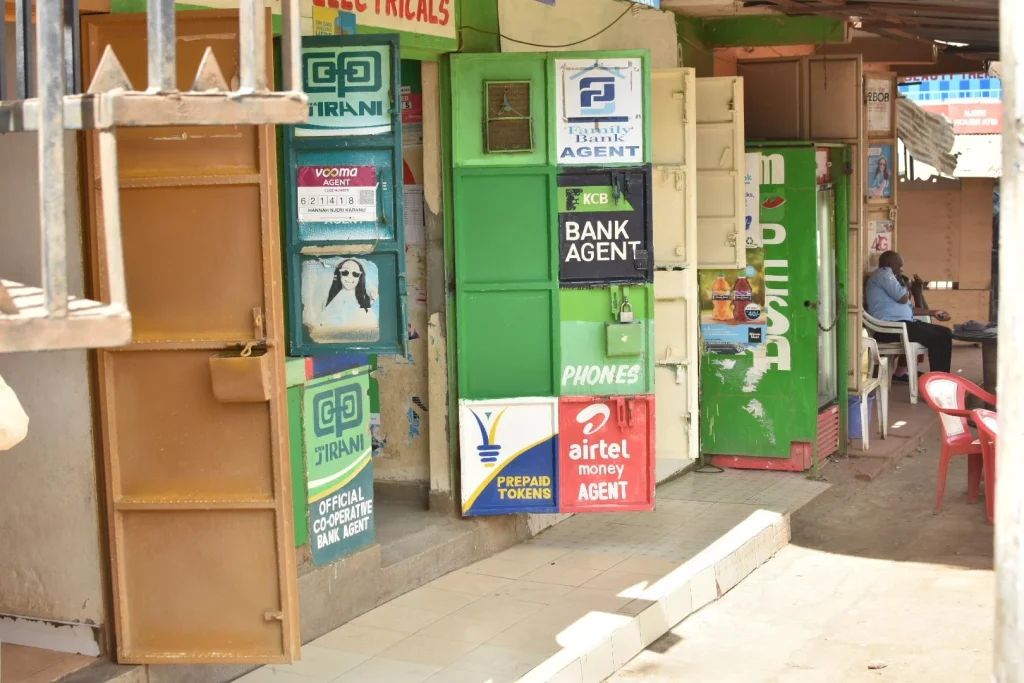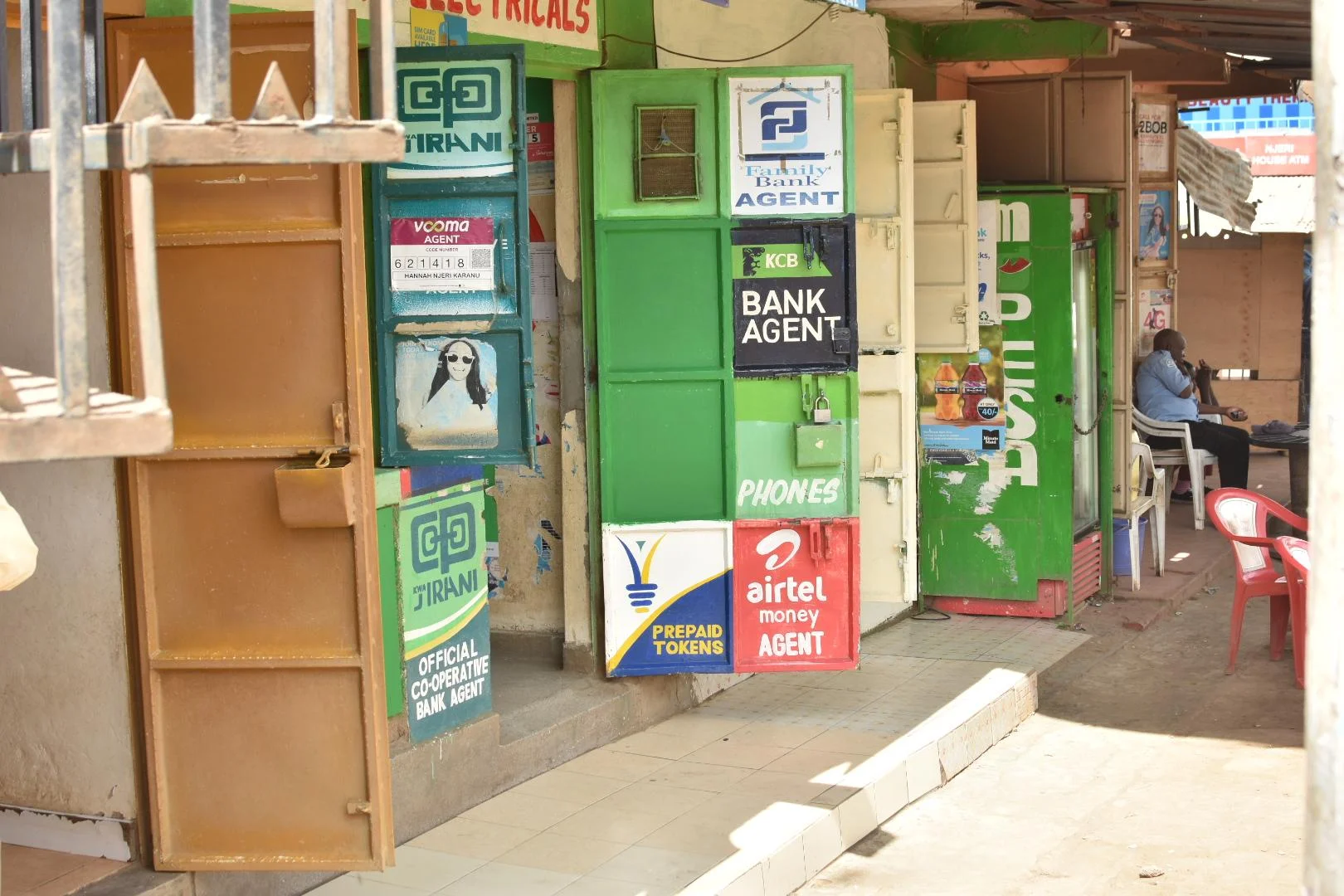
Mobile money agents in Kenya have grown past 600,000, underlining how deeply cash-in and cash-out networks remain embedded in the country’s digital finance system.
The latest sector data shows that registered mobile money agents rose to 602,470, up from 501,399 in the previous quarter. That represents growth of 20.2% in just three months, adding more than 101,000 agents to a network that already reaches major towns, trading centres, estates and remote villages.
The expansion comes as Kenya’s mobile money subscriptions continue to rise. Active mobile money subscriptions increased to 53.4 million in the third quarter of the 2025/2026 financial year, pushing mobile money penetration to 100.1%.
The numbers show that mobile money is no longer only a payment method. It is one of Kenya’s most important financial access channels. Agents have become the physical layer of a digital economy, helping users turn cash into mobile wallet value and mobile wallet value back into cash.
Safaricom’s M-PESA remains the largest mobile money platform in the country. The company has reported a large national agent network, while Airtel Money has also been expanding aggressively as it tries to grow its share of Kenya’s mobile financial services market.
The growth of agents shows that even as Kenya becomes more digital, cash has not disappeared. Instead, agents have become the bridge between traditional cash usage and digital financial services.
Why Mobile Money Agents Still Matter
Mobile money agents remain important because Kenya’s digital economy still depends on cash at many points.
A person may receive money digitally but need to withdraw cash to pay for transport, casual labour, school needs, groceries or local services. Another person may earn income in cash but need to deposit it into a mobile wallet to send money, pay bills, buy airtime or transact online.
Agents make that movement possible.
They perform basic but essential services. They register users, help with deposits, handle withdrawals, support merchant payments, assist customers who struggle with phone menus, and provide local access to financial services where banks are limited or far away.
This is why agent networks are especially important outside major urban centres. A bank branch may be far from a rural customer, but a mobile money agent can be located at a shop, kiosk, petrol station, pharmacy, supermarket or trading centre.
The agent model has helped Kenya build one of the world’s most widely used mobile money ecosystems. It works because it combines digital convenience with human presence.
Mobile money may be digital, but its success in Kenya has always depended on physical access points.
M-PESA Remains the Largest Agent Network
M-PESA is still the centre of Kenya’s mobile money ecosystem.
Safaricom has the largest mobile money subscription base and the most established national agent network. Its agents are visible across nearly every part of Kenya, from urban commercial streets to small rural markets.
This scale gives M-PESA a powerful advantage. A user is more likely to rely on a mobile money platform if they know they can deposit or withdraw cash nearby. Merchants are also more likely to accept a service if customers already use it widely.
The agent network therefore reinforces M-PESA’s dominance. The more agents M-PESA has, the easier it becomes for users to keep using the service. The more users M-PESA has, the more attractive it becomes for agents and merchants.
That network effect is difficult for competitors to challenge.
However, a large agent network also creates responsibilities. Agents must have enough float, follow compliance rules, serve customers fairly and protect users from fraud. As mobile money grows, agent quality becomes just as important as agent numbers.
Airtel Money’s Agent Expansion Is Becoming More Important
Airtel Money remains much smaller than M-PESA, but its agent expansion is becoming more important for competition.
Airtel has been trying to grow its mobile money business through pricing, partnerships, wallet activity and a larger agent footprint. A broader agent network helps Airtel reduce one of the biggest barriers to mobile money competition: access.
Users may like cheaper transaction fees, but they also need places to deposit and withdraw cash. Without agents, a mobile wallet can feel incomplete. This is why Airtel’s push to expand its agent network matters.
More Airtel Money agents could help the company reach cost-sensitive users, especially those who already use Airtel for voice or data. It could also support merchant payments, bank transfers and wallet services.
Still, Airtel faces a difficult challenge. M-PESA has been in the market since 2007 and has built strong habits among users, merchants and agents. Competing against that scale requires more than adding agents. Airtel must also build trust, reliability, liquidity and everyday use cases.
The growth of Kenya’s total agent network suggests there is still room for competition, but the gap remains large.
From 307 Agents to a National Financial Network
Kenya’s mobile money agent story has grown dramatically since the early days of M-PESA.
When mobile money began, the agent network was small. In 2007, M-PESA had only a few hundred agents. By the end of 2008, the number had grown into the thousands. Today, Kenya’s total mobile money agent network has crossed 600,000.
This growth tells a bigger story about financial inclusion. Before mobile money, many Kenyans relied on informal methods to move money. Sending cash across long distances was slow, risky and expensive. Bank branches were not always accessible, especially in rural areas.
Mobile money changed that by placing financial services close to where people live and work. Agents turned ordinary shops into financial access points.
Over time, the agent network expanded beyond simple deposits and withdrawals. It became part of bill payments, business collections, bank linkages, merchant payments, government services, savings, credit and remittances.
The result is a financial system where the phone handles the transaction, but the agent still provides the local access point.
Agents Are the Cash Engine Behind Digital Wallets
Kenya is often described as a digital payments leader, but the system still depends heavily on cash movement.
Agents are the cash engine behind digital wallets. They hold physical cash and electronic float. When a customer deposits money, the agent receives cash and transfers digital value. When a customer withdraws, the agent gives cash and receives digital value.
This simple mechanism is what makes mobile money practical.
Without enough agents, users would struggle to convert between cash and wallet balances. That would reduce trust in the system. A mobile wallet is only useful if users believe they can access their money when needed.
Agent liquidity is therefore critical. An agent who lacks cash cannot process withdrawals. An agent who lacks float cannot process deposits. Customers may then move to another agent or another service.
As the number of mobile money subscriptions grows, the need for reliable agents also grows. Kenya’s latest agent expansion reflects that demand.
Mobile Money Subscriptions Rise to 53.4 Million
Kenya added more than two million mobile money subscriptions during the quarter under review. Subscriptions rose from about 51.36 million to 53.4 million, representing a 3.92% quarterly increase.
This pushed mobile money penetration to 100.1%. The figure means active mobile money subscriptions now roughly match or exceed the estimated population base used in the sector statistics.
The figure does not mean every Kenyan has an active mobile money account. Some users have more than one SIM card or more than one mobile money wallet. Others may use different services for different purposes.
Even so, the milestone is important. It shows that mobile money has become a near-universal part of Kenya’s communications and financial infrastructure.
Mobile money is now used for person-to-person transfers, merchant payments, utility bills, school fees, savings, loans, remittances, transport, government services and business transactions.
The expansion of agents is both a cause and result of this growth. More agents make mobile money easier to use. More users create demand for more agents.
Why Penetration Above 100% Matters
Mobile money penetration above 100% shows how deeply the service has entered Kenyan life.
In many countries, financial access is measured through bank accounts. In Kenya, mobile wallets are just as important, and in many cases more accessible. A user may not have a traditional bank account but still use mobile money daily.
This has changed the structure of financial inclusion. The mobile phone has become a wallet, payment tool, savings gateway, credit channel and business account for millions of people.
However, penetration above 100% also shows that the market is maturing. Growth may increasingly come from deeper usage rather than simply adding new users. Operators will need customers to transact more often, use more services and keep more value within mobile wallets.
This is why agents remain important. They support high-frequency use by making cash movement easy. But future growth may also depend on more digital-only transactions, merchant acceptance and lower transaction costs.
The next phase of Kenya’s mobile money market will not only be about how many people have accounts. It will be about how much value those accounts create.
The Banking Sector Has Not Disappeared
Mobile money has changed Kenyan finance, but it has not killed banks.
Instead, banks and mobile money platforms now operate in a connected system. Customers move money between bank accounts and mobile wallets. Businesses receive payments through mobile money and settle funds into bank accounts. Lenders use mobile data and transaction history to support digital credit.
Banks still matter for larger savings, loans, mortgages, corporate accounts, trade finance and regulated financial products. Mobile money dominates everyday payments and small-value transactions.
Agents sit between these worlds. Some mobile money agents also serve as banking agents. Some shops handle both wallet and bank-related transactions. This overlap has helped expand financial access without requiring traditional bank branches everywhere.
The real story is not that the phone ate the bank. It is that the phone changed what banking access looks like.
Kenya’s financial system is now hybrid. It is digital, agent-based, bank-linked and mobile-first.
The Government’s Proposed Tax Changes Could Raise Costs
The growth of mobile money agents is happening at a time when the cost of digital payments is under policy scrutiny.
The Finance Bill 2026 has proposed changes that could affect mobile money and payment platform fees. Industry submissions have warned that adding VAT to payment service fees on top of existing excise duty could raise the effective tax burden on mobile money transfer fees to about 33.4%.
This is an important distinction. The concern is not that the full transaction amount would be taxed at 33.4%. The concern is about the taxes applied to transaction fees charged by payment service providers.
If the proposal is passed and operators pass costs to users, mobile money transactions could become more expensive. That would affect millions of Kenyans who use mobile money for daily payments and transfers.
Higher transaction costs could also affect agents. If customers transact less because fees rise, agents may see lower activity. Small businesses that rely on mobile payments could also feel the impact.
Kenya must balance revenue collection with digital finance growth. Mobile money has supported financial inclusion because it is accessible and relatively convenient. If it becomes too expensive, some users may reduce usage or return to cash.
What Agent Growth Means for Businesses
The growth of mobile money agents has major implications for businesses.
First, it expands customer access. A business that accepts mobile money benefits when customers can easily deposit cash into wallets nearby.
Second, it supports informal and small businesses. Many small traders depend on mobile money for supplier payments, customer receipts and working capital movement.
Third, it increases trust in digital payments. Customers are more willing to hold money in mobile wallets if they know they can withdraw when needed.
Fourth, it creates employment and income opportunities. Mobile money agency work supports shop owners, attendants and local entrepreneurs who earn commissions from transactions.
Fifth, it strengthens rural commerce. In areas where bank branches are limited, mobile money agents provide essential transaction services that help local economies function.
However, agent growth must be matched with quality. Too many poorly capitalized agents can create problems if they lack liquidity. Customers need agents who can reliably serve them.
What Regulators Should Watch
As Kenya’s mobile money agent network grows, regulators will need to watch several issues.
The first is consumer protection. Customers must be protected from fraud, mistaken transactions, overcharging and agent misconduct.
The second is agent liquidity. A large number of agents is useful only if they can handle deposits and withdrawals reliably.
The third is competition. M-PESA remains dominant, and regulators may continue watching whether competitors have fair access to customers, agents and interoperability.
The fourth is transaction costs. Higher taxes or fees could hurt low-income users and reduce digital payment activity.
The fifth is anti-money laundering compliance. As agent networks grow, operators must ensure transactions remain traceable and suspicious activity is properly monitored.
The sixth is service quality in rural areas. Agent expansion should not only concentrate in busy towns. Financial inclusion depends on reaching underserved communities.
Kenya’s mobile money market is now too important to be treated as a normal telecom add-on. It is national financial infrastructure.
Why the Agent Network Is Still Growing
The agent network is growing because demand is still strong.
Even with smartphones, apps, bank integrations and merchant tills, many users still need cash-in and cash-out services. Kenya is digital, but it is not cashless. Households, workers, traders and rural communities still use cash daily.
Agents also support confidence. A user may be willing to receive money digitally because they know an agent nearby can turn it into cash. That confidence drives adoption.
Operators also need agents to compete. Safaricom must maintain its network to protect M-PESA’s dominance. Airtel must expand its agent base to make Airtel Money more useful. Smaller providers need physical access points to remain relevant.
The result is continued agent growth even in a market that already looks mature.
This shows that mobile money’s future in Kenya will not be purely app-based. Apps matter, but agents still matter too.
Conclusion
Kenya’s mobile money agent network has crossed 600,000, rising to 602,470 from 501,399 in one quarter. The 20.2% jump shows that agents remain central to the country’s digital finance ecosystem, even as mobile money subscriptions climb to 53.4 million and penetration reaches 100.1%.
M-PESA remains the dominant platform, supported by Safaricom’s large agent network and deep customer base. Airtel Money is also expanding its agent footprint as it tries to compete more aggressively in mobile financial services.
The agent network is important because it bridges the gap between cash and digital wallets. It supports deposits, withdrawals, account access, merchant payments and financial inclusion in places where bank branches are limited.
But the growth also comes with challenges. Regulators must watch transaction costs, consumer protection, agent liquidity and competition. The proposed Finance Bill 2026 changes could make mobile money fees more expensive if passed, raising concerns about affordability for everyday users.
Kenya’s mobile money story is no longer only about phones. It is about a national financial infrastructure built from SIM cards, wallets, shops, agents, banks and regulators. The country may be moving deeper into digital finance, but the agent at the corner shop remains one of the most important parts of the system.