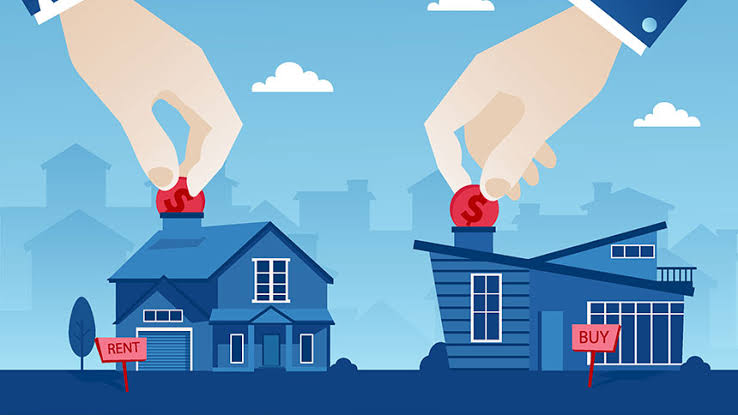
Is it financially smarter to pay a mortgage or continue renting?
The traditional answer is that renting wastes money while buying builds wealth. That statement is appealing, but it is incomplete.
Rent pays for the right to live in a property without taking responsibility for its full purchase price, long-term maintenance or market value. A mortgage helps someone acquire an asset, but mortgage payments include interest, and ownership creates additional expenses that renters do not pay directly.
The correct comparison is not simply:
Monthly rent versus monthly mortgage payment
A proper comparison must include:
- Down payment.
- Mortgage interest.
- Closing costs.
- Property taxes.
- Homeowners insurance.
- Mortgage insurance.
- Repairs and maintenance.
- Association charges.
- Selling expenses.
- Rent increases.
- Investment returns.
- Home-price changes.
- Length of occupancy.
- Personal flexibility.
Buying can save more money when someone stays in the property long enough, purchases at a reasonable price and controls ongoing expenses.
Renting can save more when the person may move soon, local home prices are extremely high, mortgage rates are expensive or the buyer would need to use nearly all available savings.
Neither choice automatically produces the best result.
The most financially responsible decision is the one based on total costs, realistic assumptions and the household’s actual plans.
What renting means financially
Renting gives a tenant the right to occupy a home for a specified period under a lease or rental agreement.
The tenant normally pays:
- Monthly rent.
- A security deposit.
- Application or screening fees where permitted.
- Renters insurance.
- Utilities not included in the lease.
- Moving expenses.
- Possible parking, pet or amenity charges.
The landlord generally remains responsible for the property’s ownership costs, structural repairs and major maintenance, subject to the lease and local law.
Rent does not purchase ownership in the property. However, that does not make rent financially meaningless.
Rent buys housing, flexibility and the transfer of certain property risks to the owner.
A tenant does not normally receive a separate invoice for a new roof, broken heating system or decline in the property’s market value. Those risks are generally carried by the landlord, although landlords may attempt to recover rising expenses through future rent.
Renting can therefore be understood as purchasing a housing service rather than purchasing an asset.
What buying with a mortgage means
A mortgage is a secured loan used to purchase property.
The borrower agrees to repay the lender over an established term. The home acts as collateral, meaning the lender can take legal action against the property if the borrower does not repay the debt according to the agreement.
The Consumer Financial Protection Bureau defines a mortgage as an agreement that gives the lender the right to take the property if the borrower fails to repay the amount borrowed plus interest.
A mortgage payment may include:
- Principal.
- Interest.
- Property taxes.
- Homeowners insurance.
- Mortgage insurance.
- Association charges in some arrangements.
Only the principal portion directly reduces the loan balance and increases the borrower’s ownership stake.
Interest is the cost of borrowing. Taxes, insurance and association fees pay for other obligations. They do not become home equity.
This is why it is incorrect to say that every dollar of a mortgage payment is saved or invested.
The biggest mistake in rent-versus-buy comparisons
Many comparisons place a $2,000 rent payment beside a $2,000 mortgage payment and conclude that buying is better because the homeowner builds equity.
The figures are not equivalent.
The mortgage payment may exclude:
- Property tax.
- Homeowners insurance.
- Maintenance.
- Major repairs.
- Association fees.
- Closing costs.
- Mortgage insurance.
- Selling costs.
The renter’s payment may already reflect many property costs because the landlord pays them from the rent received.
A homeowner may also need tens of thousands of dollars in upfront cash.
A complete comparison should therefore ask:
What is the total unrecoverable cost of each option?
For renters, the largest unrecoverable cost is rent.
For owners, unrecoverable costs include mortgage interest, insurance, property taxes, maintenance, transaction fees and some opportunity costs.
Principal repayment is different because it converts cash into home equity, provided the property retains sufficient value.
Understanding the down payment
The down payment is the portion of the purchase price paid upfront rather than financed through the mortgage.
For a $400,000 property:
- A 5% down payment is $20,000.
- A 10% down payment is $40,000.
- A 20% down payment is $80,000.
A larger down payment may reduce:
- The amount borrowed.
- Monthly mortgage payments.
- Total interest.
- Mortgage-insurance costs.
- The risk of owing more than the home is worth.
However, using too much cash can create another problem.
A buyer who puts nearly every available dollar into the property may have nothing left for:
- Emergencies.
- Repairs.
- Moving.
- Furniture.
- Insurance deductibles.
- Job loss.
- Legal or tax expenses.
The down payment is not necessarily an expense in the same way as rent. It becomes part of the buyer’s equity.
However, it has an opportunity cost because that money could have remained in savings or been invested elsewhere.
Closing costs make short-term ownership expensive
Buying a home involves expenses beyond the down payment.
The CFPB states that closing costs commonly range from 2% to 5% of the purchase price, excluding the down payment, although actual costs depend on the location, loan and transaction.
Closing costs may include:
- Loan origination charges.
- Appraisal.
- Credit checks.
- Legal services.
- Title services.
- Title insurance.
- Recording fees.
- Government charges.
- Property inspections.
- Prepaid interest.
- Initial insurance payments.
- Initial property-tax payments.
The CFPB identifies appraisal charges, title insurance, government taxes and prepaid property expenses among common closing costs.
A 3% closing cost on a $400,000 property equals $12,000.
If the buyer moves after one or two years, there may not have been enough time for mortgage principal repayment or property appreciation to recover the upfront cost.
This is one reason renting can save more money for people who expect to relocate relatively soon.
Mortgage interest can exceed the purchase price
A long-term mortgage spreads repayment over many years, making the monthly amount more manageable.
The trade-off is interest.
Consider a simplified $320,000 mortgage with a 30-year term and a fixed annual interest rate of 6.5%.
The principal-and-interest payment would be approximately $2,023 per month.
Over 30 years, total principal-and-interest payments would be roughly $728,000. Approximately $408,000 of that amount would be interest.
The borrower still owns the home after repaying the mortgage, but the total financing cost is substantial.
A mortgage does not mean paying the purchase price gradually without extra cost. It means paying for the home and paying the lender for providing the money.
The exact figures depend on the rate, term, fees and repayment pattern.
Mortgage amortization explained
Mortgage payments are generally divided between principal and interest.
During the early years of a standard fixed-rate mortgage, a larger share of each payment usually goes toward interest because the loan balance is still high.
As the balance falls, more of the payment goes toward principal.
Using the simplified $320,000 mortgage at 6.5%:
- The first monthly payment is approximately $2,023.
- Roughly $1,733 of the first payment is interest.
- Only about $290 reduces principal.
The exact figures change each month.
This means a homeowner who sells during the early years may discover that the loan balance has not fallen as quickly as expected.
The person was building equity, but at a slower rate than the full mortgage payment suggested.
Property taxes continue after the mortgage ends
Property tax is an ongoing ownership expense.
It may be collected directly by the local authority or included in the mortgage payment through an escrow arrangement.
The CFPB notes that property taxes and homeowners insurance are costs of ownership rather than borrowing, even though lenders often bundle them into the monthly payment.
Property taxes can rise when:
- Tax rates change.
- The property is reassessed.
- The home is improved.
- Local budgets increase.
- Tax relief expires.
Paying off the mortgage does not eliminate property tax.
A homeowner who says, “My housing will be free after 30 years,” is overlooking taxes, insurance, repairs and utilities.
Ownership can significantly reduce housing expenses after the mortgage is cleared, but it does not make housing costless.
Homeowners insurance and renters insurance
A mortgage lender normally requires homeowners insurance because the property secures the loan.
Homeowners insurance may cover certain losses involving:
- Fire.
- Storm damage.
- Theft.
- Liability.
- Other covered events.
Coverage has limits, exclusions and deductibles. Floods, earthquakes and other risks may require separate policies.
Premiums can rise after regional disasters, construction-cost increases or changes in insurer risk assessments.
Renters insurance is generally less expensive because it covers the tenant’s belongings and liability rather than the entire building.
A renter should not assume the landlord’s policy protects personal possessions. It normally protects the landlord’s property interests.
Both options therefore involve insurance, but homeownership usually carries the larger cost.
Mortgage insurance
A buyer who makes a small down payment may need mortgage insurance or a similar credit-protection product.
Mortgage insurance protects the lender against some losses if the borrower defaults. It does not primarily protect the homeowner.
Depending on the loan and jurisdiction, mortgage insurance may involve:
- An upfront premium.
- A monthly premium.
- An annual charge.
- Cancellation rules.
- Coverage lasting for part or all of the loan term.
Mortgage insurance can help a household purchase sooner with a smaller down payment.
However, it increases the cost of ownership and should be included in any comparison with rent.
A buyer should understand when and whether the charge can be removed.
Maintenance is not optional
Renters usually contact the landlord when an essential system fails.
Homeowners must arrange and fund the repair.
Common ownership expenses include:
- Roof replacement.
- Plumbing repairs.
- Electrical work.
- Heating and cooling systems.
- Painting.
- Appliance replacement.
- Pest control.
- Landscaping.
- Drainage.
- Structural repairs.
- Security.
- General wear.
Maintenance is irregular. A homeowner may spend very little one year and face a major bill the next.
This makes maintenance easy to underestimate.
A monthly budget should include a reserve for future repairs even when nothing is currently broken.
The correct amount depends on the property’s age, size, construction quality, location and condition. A new apartment and an older detached house should not use the same estimate.
An inspection can reveal some problems, but it cannot guarantee that no expensive failure will occur.
Association fees and special assessments
Condominiums, apartments and planned communities may charge homeowners association fees or service charges.
These can pay for:
- Building insurance.
- Security.
- Elevators.
- Landscaping.
- Common-area maintenance.
- Shared utilities.
- Management.
- Amenities.
The monthly charge may increase.
The association may also impose a special assessment when its reserves are insufficient for a major project such as roof replacement, structural work or lift repairs.
Before buying, a purchaser should review:
- Current fees.
- Recent increases.
- Reserve funds.
- Planned projects.
- Unpaid owner contributions.
- Litigation.
- Building inspection reports.
- Insurance arrangements.
A low monthly association fee is not automatically positive. It may indicate that insufficient money is being reserved for future repairs.
The cost of selling a home
Buying is not the only expensive transaction. Selling can also involve significant costs.
Potential expenses include:
- Estate-agent or real-estate commissions.
- Legal charges.
- Transfer or recording fees.
- Repairs.
- Home preparation.
- Photography and marketing.
- Moving.
- Mortgage discharge charges.
- Taxes where applicable.
- Concessions to the buyer.
A property may rise in value and still produce little profit after purchasing, ownership and selling expenses are included.
Suppose a $400,000 home rises to $430,000.
The apparent gain is $30,000.
However, if the owner paid $12,000 in buying costs and $25,000 in selling and preparation costs, the price increase alone does not cover the transaction expenses.
Mortgage principal repayment may add equity, but interest, taxes and maintenance must also be considered when comparing the outcome with renting.
Rent increases are a major risk for tenants
Renting provides flexibility, but housing costs may rise when the lease is renewed.
Rent increases depend on:
- Local supply and demand.
- Inflation.
- Property costs.
- Landlord decisions.
- Building improvements.
- Local regulation.
- Lease structure.
A tenant may also have to move when:
- The owner sells.
- The lease is not renewed.
- The landlord changes the property’s use.
- Rent becomes unaffordable.
- The household needs more space.
Moving creates financial and emotional costs.
These can include deposits, application fees, transport, lost work time and furnishing a different property.
A fixed-rate mortgage can provide more stability in principal-and-interest payments, although taxes, insurance, maintenance and association charges may still increase.
Renting does not automatically mean losing wealth
A renter may spend less upfront and less each month than a buyer.
The renter could invest the difference.
Suppose buying requires:
- $60,000 down payment and closing cash.
- $3,000 in total monthly ownership costs.
Renting a comparable home requires:
- $2,200 monthly rent.
- A $4,000 deposit and moving cost.
The renter could potentially invest much of the unused upfront money and the $800 monthly difference.
If those investments perform well over time, the renter may accumulate substantial wealth without owning a home.
The strategy works only if the difference is actually saved or invested.
A renter who spends every dollar of the lower cost does not receive the same financial benefit.
This is why behaviour matters as much as housing mathematics.
Buying does not automatically mean building wealth
Homeownership can build equity through:
- Repayment of mortgage principal.
- An increase in the property’s value.
Neither is guaranteed to produce a strong return.
A homeowner may lose wealth when:
- The property price falls.
- The neighbourhood weakens.
- Repairs are unusually expensive.
- The purchase price was excessive.
- Selling costs are high.
- The mortgage rate is expensive.
- The owner moves too soon.
- The home is poorly insured.
- The property is difficult to sell.
A home is also concentrated.
Someone may hold a large percentage of personal wealth in one building, in one location, exposed to one local economy.
That can be less diversified than holding money across many investments.
Home equity explained
Home equity is the property’s current market value minus debts secured against it.
For example:
- Estimated property value: $450,000
- Remaining mortgage: $290,000
- Estimated equity: $160,000
This does not mean the owner can necessarily receive $160,000 immediately.
Selling costs and taxes may reduce the amount available.
The market value is also an estimate until a buyer completes a purchase.
Equity can increase when:
- Mortgage principal is repaid.
- Property values rise.
- The owner makes valuable improvements.
It can decrease when:
- Property values fall.
- New borrowing is secured against the home.
- The property suffers damage.
- Necessary maintenance is neglected.
Equity is a valuable asset, but it is less liquid than cash.
Accessing it may require selling, refinancing or taking another secured loan.
The break-even period
The break-even period is the number of years a buyer may need to remain in the home before buying becomes financially preferable to renting under a specific set of assumptions.
There is no universal break-even number.
It depends on:
- Home price.
- Rent.
- Down payment.
- Mortgage rate.
- Closing costs.
- Property appreciation.
- Rent growth.
- Maintenance.
- Taxes.
- Insurance.
- Investment returns.
- Selling costs.
Freddie Mac provides a rent-versus-buy calculator to help consumers compare these variables, while warning that the results are estimates rather than precise financial advice.
In some markets, buying may become favourable after several years.
In others, high prices and financing costs may make renting cheaper for a decade or longer.
The answer can also change when one assumption changes slightly.
Example: comparing renting and buying
Consider a simplified example.
Renting
- Monthly rent: $2,000
- Annual rent increase: 3%
- Renters insurance: $20 monthly
- Initial deposit and moving costs: $3,000
Buying
- Home price: $350,000
- Down payment: 10%, or $35,000
- Mortgage: $315,000
- Mortgage rate: 6.5%
- Loan term: 30 years
- Principal and interest: approximately $1,991 monthly
- Property tax: $350 monthly
- Insurance: $150 monthly
- Maintenance reserve: $300 monthly
- Mortgage insurance and other charges: $150 monthly
- Total estimated monthly ownership cost: $2,941
- Closing costs: $10,500
- Selling costs: assumed when the property is eventually sold
In the first year, renting costs roughly $921 less each month.
The buyer is building some equity, but much of the early mortgage payment goes toward interest.
Buying may eventually become financially stronger if:
- The owner remains for many years.
- Rent rises steadily.
- The property appreciates.
- Maintenance remains manageable.
- The renter does not invest the savings difference.
Renting may remain stronger if:
- The property appreciates slowly or declines.
- The owner moves early.
- Major repairs occur.
- The renter invests the $45,500 not used for the down payment and closing costs.
- The investment return is competitive.
The example does not declare a winner. It shows why the answer depends on assumptions.
The opportunity cost of the down payment
Money used for a down payment cannot simultaneously remain in another investment.
Suppose a buyer uses $80,000 as a down payment.
If the money could have earned a hypothetical average return of 6% annually elsewhere, it might have grown to approximately $143,000 after ten years, before taxes and fees.
That does not mean renting would definitely be better.
The home may appreciate, principal may be repaid and rent may rise. The investment may also lose money.
The point is that a down payment is not financially free simply because it becomes equity.
A fair comparison must consider what the money could have done under the alternative choice.
Home-price appreciation is uncertain
Property values can rise over long periods, but they do not rise equally in every location or every year.
Price performance depends on:
- Employment.
- Population.
- Housing supply.
- Interest rates.
- Infrastructure.
- Schools.
- Crime.
- Climate risk.
- Insurance availability.
- Local taxes.
- Property condition.
A national average does not predict the result for one home.
A property may increase in value while producing a weak investment return after inflation, maintenance and transaction costs.
Buyers should avoid plans that only work when the property appreciates rapidly.
A home should remain affordable even if prices are flat for several years.
Mortgage rates can change the answer
The mortgage rate has a major influence on affordability.
For a $320,000, 30-year mortgage:
- At 4%, principal and interest are approximately $1,528 monthly.
- At 6%, the payment is approximately $1,919.
- At 8%, the payment is approximately $2,348.
That is a difference of about $820 per month between 4% and 8%.
The total interest difference over 30 years is even larger.
A buyer should compare the annual percentage rate, not only the headline interest rate, because the APR may reflect certain loan fees.
A lower property price does not always compensate for a much higher mortgage rate.
Similarly, waiting for rates to fall carries risks. Property prices or rent may rise, and no one can guarantee future financing conditions.
Fixed-rate versus adjustable-rate mortgages
A fixed-rate mortgage generally keeps the interest rate unchanged for the agreed term.
This provides predictability for principal-and-interest payments.
An adjustable-rate mortgage can begin with a lower rate and later change according to the contract.
The future payment may rise substantially.
Before choosing an adjustable rate, the borrower should understand:
- Initial rate.
- Adjustment date.
- Reference index.
- Lender margin.
- Adjustment frequency.
- Payment caps.
- Lifetime rate cap.
- Maximum possible payment.
An adjustable loan may suit someone who fully understands the risk and expects to repay or sell before adjustment.
It should not be chosen only because the initial payment makes an otherwise unaffordable property appear affordable.
Tax benefits are often exaggerated
Homeownership may provide tax advantages in some countries.
In the United States, eligible taxpayers may deduct qualifying mortgage interest under specific rules when itemising deductions. The IRS explains that limits and conditions apply; the deduction is not automatic for every homeowner.
A buyer should not assume:
- All mortgage interest is deductible.
- A deduction returns the full amount paid.
- Itemising is better than the standard deduction.
- Property taxes are fully deductible.
- Rules will remain unchanged.
A tax deduction reduces taxable income. It generally does not reimburse the entire expense.
Paying $10,000 of interest to receive a partial tax benefit does not make the interest free.
Tax treatment differs by jurisdiction and should be checked through official sources.
Inflation affects renters and homeowners differently
Inflation can raise construction, insurance, maintenance and property-tax costs.
Landlords may attempt to recover those expenses through rent increases.
A homeowner with a fixed-rate mortgage may have stable principal-and-interest payments, but other costs can still rise.
Over time, a fixed mortgage payment may become easier to manage if income increases with inflation.
Renters remain exposed to changing market rents, but they avoid major direct repair bills and can sometimes relocate to reduce costs.
Neither group is fully protected from inflation.
The difference lies in which costs are fixed, variable or transferred to someone else.
Flexibility has financial value
Renting can make it easier to move for:
- Employment.
- Education.
- Family needs.
- Lower living costs.
- A shorter commute.
- A change in household size.
Homeowners face selling costs, uncertain market timing and a potentially lengthy transaction.
Flexibility can increase income by allowing someone to accept a better job in another region.
It can also reduce risk when future plans are uncertain.
This value is difficult to place into a calculator, but it should not be ignored.
A cheaper housing decision that traps someone in the wrong location may not produce the best overall financial outcome.
Stability also has financial value
Homeownership can provide greater control over the living space.
Subject to laws, mortgage terms and community rules, owners can often:
- Renovate.
- Keep pets.
- Install equipment.
- Remain without lease-renewal negotiations.
- Plan around a long-term location.
Families may value continuity in schools, neighbours and community.
A fixed-rate mortgage can also provide partial payment stability.
These benefits may justify buying even when a spreadsheet shows that renting is temporarily cheaper.
Housing is both a financial and lifestyle decision.
When renting may save more money
Renting is more likely to save money when:
- You expect to move within a few years.
- Comparable rent is far below total ownership costs.
- Mortgage rates are high.
- Home prices are extremely high relative to rent.
- You have limited emergency savings.
- Your employment is uncertain.
- Maintenance responsibility would be difficult.
- You can invest the cost difference consistently.
- The local property market is weak or highly uncertain.
- Buying would require expensive mortgage insurance.
- You need geographic flexibility.
Renting may also be preferable while improving credit, reducing debt or building a larger financial reserve.
Waiting is not automatically a failure.
It may prevent an unaffordable purchase.
When buying may save more money
Buying is more likely to save money when:
- You expect to remain for many years.
- The property price is reasonable relative to rent.
- You have stable income.
- You can afford the down payment without emptying emergency savings.
- The total monthly cost fits comfortably within the budget.
- You can manage repairs and maintenance.
- The mortgage terms are competitive.
- The property is in good condition.
- Transaction costs can be spread across a long period.
- You value housing stability.
- The property has reasonable long-term demand.
Buying becomes especially powerful after the mortgage is repaid, provided the owner can still afford taxes, insurance and maintenance.
Questions to ask before buying
Before purchasing, calculate the answer to these questions:
- How much cash will remain after the down payment and closing?
- What is the full monthly payment?
- How much could taxes and insurance increase?
- Is mortgage insurance required?
- What major repairs may be needed?
- How long do I expect to stay?
- What happens if income falls?
- Could one income support the payment temporarily?
- How much would it cost to sell?
- Is the property competitively priced?
- Are association finances healthy?
- Can I still fund retirement and emergencies?
HUD notes that affordability depends on income, credit, monthly expenses, down payment and the interest rate—not merely on the price a lender approves.
A lender’s maximum approval should not become the buyer’s automatic budget.
Questions to ask before renting
Renters should also investigate the full cost and risk.
Ask:
- How often can rent increase?
- Which utilities are included?
- What fees apply?
- Is renters insurance required?
- Who handles repairs?
- How is the deposit protected?
- What notice is required before leaving?
- Are renewal conditions explained?
- Is the landlord or agent legitimate?
- Does the property have safety or maintenance problems?
- What would moving again cost?
- Can the monthly savings be invested?
The lowest advertised rent is not necessarily the cheapest option when fees, transport and poor energy efficiency are considered.
Common rent-versus-buy misconceptions
“Rent is throwing money away”
Rent purchases a place to live, flexibility and reduced responsibility for major property costs.
“A mortgage payment is forced saving”
Only the principal portion builds equity. Interest, taxes and insurance are expenses.
“Buying is always better over time”
Buying can underperform when the home is overpriced, the owner moves early or maintenance costs are high.
“Renting never builds wealth”
Renters can build wealth by investing their upfront and monthly cost savings.
“The home will always increase in value”
Property prices can fall or remain weak for long periods.
“The mortgage payment never changes”
A fixed-rate loan can stabilise principal and interest, but taxes, insurance, maintenance and association charges may rise.
“Tax deductions make buying cheaper for everyone”
Eligibility and value depend on tax rules and individual circumstances.
“A landlord pays all housing costs”
The landlord initially pays ownership expenses but generally sets rent with those costs and expected returns in mind.
“A 30-year mortgage takes 30 years to become worthwhile”
The break-even period depends on the complete financial comparison, not only the loan term.
A practical comparison method
Build two projected budgets covering the period you realistically expect to remain in the home.
Rental projection
Include:
- Initial deposit.
- Monthly rent.
- Expected rent increases.
- Renters insurance.
- Fees.
- Moving costs.
- Investment return on unused purchase cash.
- Investment of any monthly savings.
Buying projection
Include:
- Down payment.
- Closing costs.
- Mortgage payments.
- Mortgage insurance.
- Property tax.
- Homeowners insurance.
- Association charges.
- Maintenance.
- Repairs.
- Selling costs.
- Expected property value.
- Remaining mortgage balance.
Use conservative assumptions.
Do not assume unusually high investment returns or home-price growth.
Test several scenarios:
- Home prices rise.
- Home prices remain flat.
- Rent rises faster than expected.
- A major repair occurs.
- The owner sells early.
- Investment returns disappoint.
- Insurance costs rise.
The better decision is the one that remains affordable under imperfect conditions.
Future outlook
Housing decisions are likely to remain difficult as households manage property prices, interest rates, rent increases, construction shortages and changing work patterns.
Digital mortgage tools may make it easier to compare lenders and estimate payments. Rent-versus-buy calculators can also help consumers model different assumptions.
These tools are useful, but they cannot predict:
- Future home prices.
- Future rent.
- Employment changes.
- Repairs.
- Family needs.
- Interest rates.
- Investment returns.
The CFPB continues to provide updated tools explaining affordability, down payments, loan costs and closing documents, while Freddie Mac offers calculators for comparing rent and ownership.
Consumers should use calculators as planning aids—not promises of future savings.
The most important future trend may be the growing recognition that homeownership is not the only measure of financial success.
A renter with diversified investments, manageable costs and strong savings may be in a better financial position than a homeowner struggling with an unaffordable mortgage.
Likewise, a homeowner who buys responsibly and remains for decades may gain stability and substantial equity.
Conclusion
Mortgage versus rent does not have one winner for every household.
Buying can save more money when the buyer stays long enough, controls transaction costs, purchases an affordable property and benefits from principal repayment or price appreciation.
Renting can save more when the tenant needs flexibility, faces a high purchase price, avoids major maintenance costs and invests the financial difference.
The comparison must include more than the monthly payment.
Buyers should calculate:
- Mortgage interest.
- Closing costs.
- Taxes.
- Insurance.
- Maintenance.
- Mortgage insurance.
- Association charges.
- Selling expenses.
- Opportunity cost.
Renters should calculate:
- Rent.
- Future increases.
- Fees.
- Insurance.
- Moving costs.
- The discipline required to invest the savings difference.
The financially better option is the one that supports both housing needs and the wider financial plan.
Buying should not prevent someone from maintaining emergency savings, preparing for retirement or managing regular expenses.
Renting should not become an excuse to avoid saving and investing.
A home can be a valuable asset, but it is also a place to live and an ongoing financial responsibility.
Rent can appear temporary, but it may provide the flexibility and lower risk needed to build wealth elsewhere.
The final decision should not be based on slogans such as “rent is wasted money” or “a home is always a good investment.”
It should be based on total cost, time, risk and personal priorities.
Disclaimer: This article provides general financial education and does not constitute personalised mortgage, investment, property, legal or tax advice. Property prices, rent, interest rates, taxes, insurance and regulations vary by location. Mortgage approval does not prove affordability. Consult official local sources and appropriately qualified professionals before making a major housing decision.
Sources consulted
- Consumer Financial Protection Bureau — What Is a Mortgage?
https://www.consumerfinance.gov/ask-cfpb/what-is-a-mortgage-en-99/ - Consumer Financial Protection Bureau — Figure Out How Much You Want to Spend
https://www.consumerfinance.gov/owning-a-home/prepare/figure-out-how-much-you-want-to-spend/ - Consumer Financial Protection Bureau — Determine Your Down Payment
https://www.consumerfinance.gov/owning-a-home/prepare/determine-your-down-payment/ - Consumer Financial Protection Bureau — What Costs Come With Taking Out a Mortgage?
https://www.consumerfinance.gov/ask-cfpb/what-costs-come-with-taking-out-a-mortgage-en-153/ - Consumer Financial Protection Bureau — Mortgage Closing Fees and Charges
https://www.consumerfinance.gov/ask-cfpb/what-fees-or-charges-are-paid-when-closing-on-a-mortgage-and-who-pays-them-en-1845/ - Consumer Financial Protection Bureau — Loan Estimate Explainer
https://www.consumerfinance.gov/owning-a-home/loan-estimate/ - Consumer Financial Protection Bureau — Buying or Renting a Home Worksheet
https://files.consumerfinance.gov/f/documents/cfpb_ymyg-servicemembers-tool_buying-or-renting-a-home.pdf - Freddie Mac — Rent vs Buy Calculator
https://myhome.freddiemac.com/resources/calculators/rent-vs-buy - Freddie Mac — Rent or Buy: Which Option Is Right for You?
https://myhome.freddiemac.com/blog/homebuying/rent-or-buy-which-option-right-you - Freddie Mac — Renting With the Goal of Buying
https://myhome.freddiemac.com/renting/renting-with-goal-of-buying - Freddie Mac — Homebuying Budget Calculator
https://myhome.freddiemac.com/resources/calculators/how-much-can-you-afford - U.S. Department of Housing and Urban Development — Buying a Home
https://www.hud.gov/helping-americans/buying-a-home - HUD Housing Counselor Training — Renting vs Buying
https://hudhousingcounselors.hud.gov/node/6542 - Internal Revenue Service — Publication 936: Home Mortgage Interest Deduction
https://www.irs.gov/publications/p936 - Internal Revenue Service — Publication 530: Tax Information for Homeowners
https://www.irs.gov/publications/p530