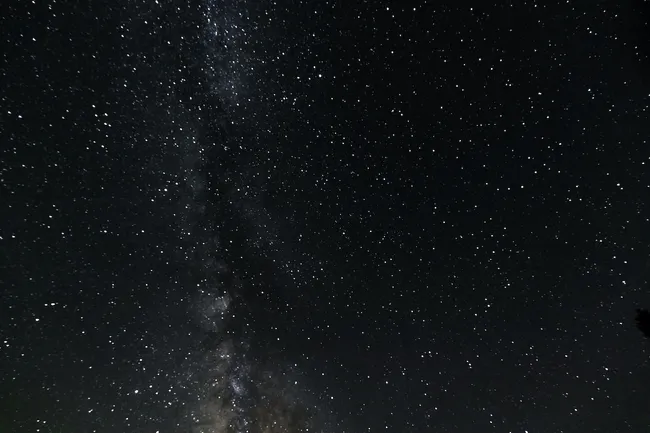
The universe is vast and filled with an unimaginable number of stars. Astronomers estimate that the universe could contain up to one septillion stars—that’s a “1” followed by 24 zeros (1,000,000,000,000,000,000,000,000 stars). This staggering figure comes from estimating the number of stars in a typical galaxy and then multiplying that by the estimated number of galaxies in the observable universe.
The Milky Way alone, our home galaxy, contains over 100 billion stars. However, recent deep-field images from the Hubble Space Telescope suggest that the observable universe contains around 2 trillion galaxies, which is ten times more than previously thought. Given that the average galaxy is believed to contain around 100 million stars, this leads to the estimate of one septillion stars in the universe.
However, this estimate could still be an underestimation. The universe is not only expanding, but also more galaxies and stars are likely to be discovered as our observational technology improves. Even within the Milky Way, estimates vary, with some suggesting there could be up to 200 billion stars or more.
Telescopes like Hubble and missions like the European Space Agency’s Gaia mission, which aims to map about 1 billion stars in the Milky Way, are gradually improving our understanding of just how many stars exist. The Gaia mission, for instance, builds on previous missions by precisely mapping star positions, distances, and movements, contributing to a more accurate count of the stars in our galaxy.
While estimating the exact number of stars in the universe is challenging, given the universe’s vastness, the figure of one septillion stars provides a sense of the immense scale of the cosmos. As astronomical tools and methods continue to advance, our understanding of the universe and its countless stars will only deepen.