Capacity: 8,000
Country: Indonesia
City: Banyuwangi
Clubs: Persewangi Banyuwangi
Inauguration: [Date not mentioned]
Renovations: 2005, 2008, 2014-2015
Cost: IDR 5 billion (2014-2015)
Design: Budi Pradono (2014-2015)
Address: JL. Letjen Suprapto, Gebang, Patrang, 68117, Kec. Banyuwangi, 68117, Indonesia
Introduction
Stadion Diponegoro stands as a symbol of the growth and development of Banyuwangi, a city in East Java, Indonesia. This multi-purpose stadium, primarily used for football matches, is home to Persewangi Banyuwangi, a local football club. With a seating capacity of 8,000, the stadium has undergone multiple upgrades, transforming it into a more modern and accessible venue. It serves as both a sports and cultural hub for the community.
Early Development and Growth
Initially constructed in the early 21st century, Stadion Diponegoro began as a modest venue with only a small grandstand along the western side, which provided basic facilities for players. In 2005, the stadium saw its first expansion, with two additional stands added to the western side. However, the stadium’s capacity still remained limited, as the stands did not span the full length of the field.
In the following years, stadium development continued with further additions. The east stand was added in two phases: the central section was completed in 2008, and the southern extension was completed in 2012. However, due to the high density of local housing, the north end of the stadium remains unoccupied.
Major Renovations (2014-2015)
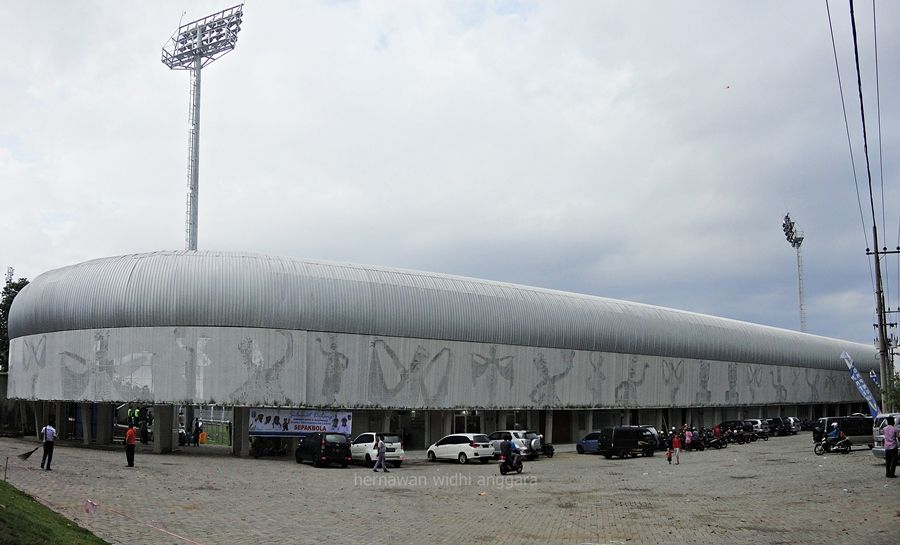
The most significant transformation for Stadion Diponegoro took place between 2014 and 2015. The stadium received a major upgrade, which included the construction of a new south end. The new seating area, placed on top of a ground-floor building, is now fully enclosed and covered. The south end became the only fully covered stand at the venue, offering modern infrastructure for the fans.
The upgrade also featured artificial lighting, allowing the stadium to host evening matches. A unique design feature was the cut-out patterns in the outer cladding of the south stand, representing dancers in traditional Gandrung dance poses, an homage to the region’s rich cultural heritage.
Facilities and Infrastructure
With a capacity of 8,000, Stadion Diponegoro is a relatively small stadium but one that holds significant importance to the local community. The football pitch is complemented by basic infrastructure that accommodates players, officials, and support staff. The covered south end offers fans a more comfortable and modern viewing experience, with the added benefit of artificial lighting to ensure visibility during night matches.
The stadium’s location in the heart of Banyuwangi makes it an ideal venue for local events, and its multiple renovations over the years have allowed it to host professional football matches and community events.
Cultural Significance
Beyond its use as a sports venue, Stadion Diponegoro also plays a role in local culture, with its design elements reflecting the traditional Gandrung dance. This dance is an important part of Banyuwangi’s cultural identity, and the design honors this tradition, adding cultural value to the stadium’s modern infrastructure.
Conclusion
Stadion Diponegoro is a historically significant and evolving stadium in Banyuwangi, serving as a vital sports and cultural landmark for the region. Through multiple phases of renovation and expansion, it has transformed from a modest venue into a more modern facility capable of hosting local and regional events. The stadium not only serves as the home of Persewangi Banyuwangi but also stands as a testament to the city’s growth and commitment to preserving its cultural heritage while embracing modern infrastructure.