Saitama Stadium 2002 is one of Japan’s most important football venues and one of the largest stadiums in Asia built exclusively for the sport. Located in Urawa, Saitama Prefecture, the stadium is home to Urawa Red Diamonds, one of Japan’s most popular and best-supported clubs. Since opening in 2001, Saitama Stadium 2002 has become a central stage for major international tournaments, high-profile league matches, and national team fixtures. Its football-specific design and modern facilities helped set new standards for Japanese stadiums at the turn of the century.
Stadium Details
| Feature | Information |
|---|---|
| Name | Saitama Stadium 2002 (Saisuta) |
| Capacity | 63,718 |
| Disabled Seats | 150 |
| Country | Japan |
| City | Urawa |
| Home Club | Urawa Red Diamonds |
| Floodlights | 2,000 lux |
| Inauguration | 6 October 2001 |
| Construction | 1998–2001 |
| Cost | ¥35.6 billion |
| Architect | Azusa Sekkei Co., Ltd. |
| Contractor | Kazimakensetsu |
| Address | Oazamnakanoda-Chinai, Urawa-shi, Saitama-ken |
| Parking | 2,500 spaces |
Origins and Construction of the Stadium
Construction of Saitama Stadium 2002 began in 1998 as Japan prepared to co-host the 2002 FIFA World Cup, the first World Cup ever held in Asia. Unlike many other venues built for the tournament, this stadium was designed without an athletics track, reflecting a strong commitment to football purity. The project followed a clear vision: create a football-only arena capable of delivering outstanding visibility, powerful atmospheres, and smooth crowd movement.
The stadium was completed in 2001, just months before its World Cup responsibilities. It immediately became one of the largest football-specific stadiums in Asia, with a steep seating bowl that brings spectators close to the action and enhances matchday experience.
Architectural Features and Stadium Design
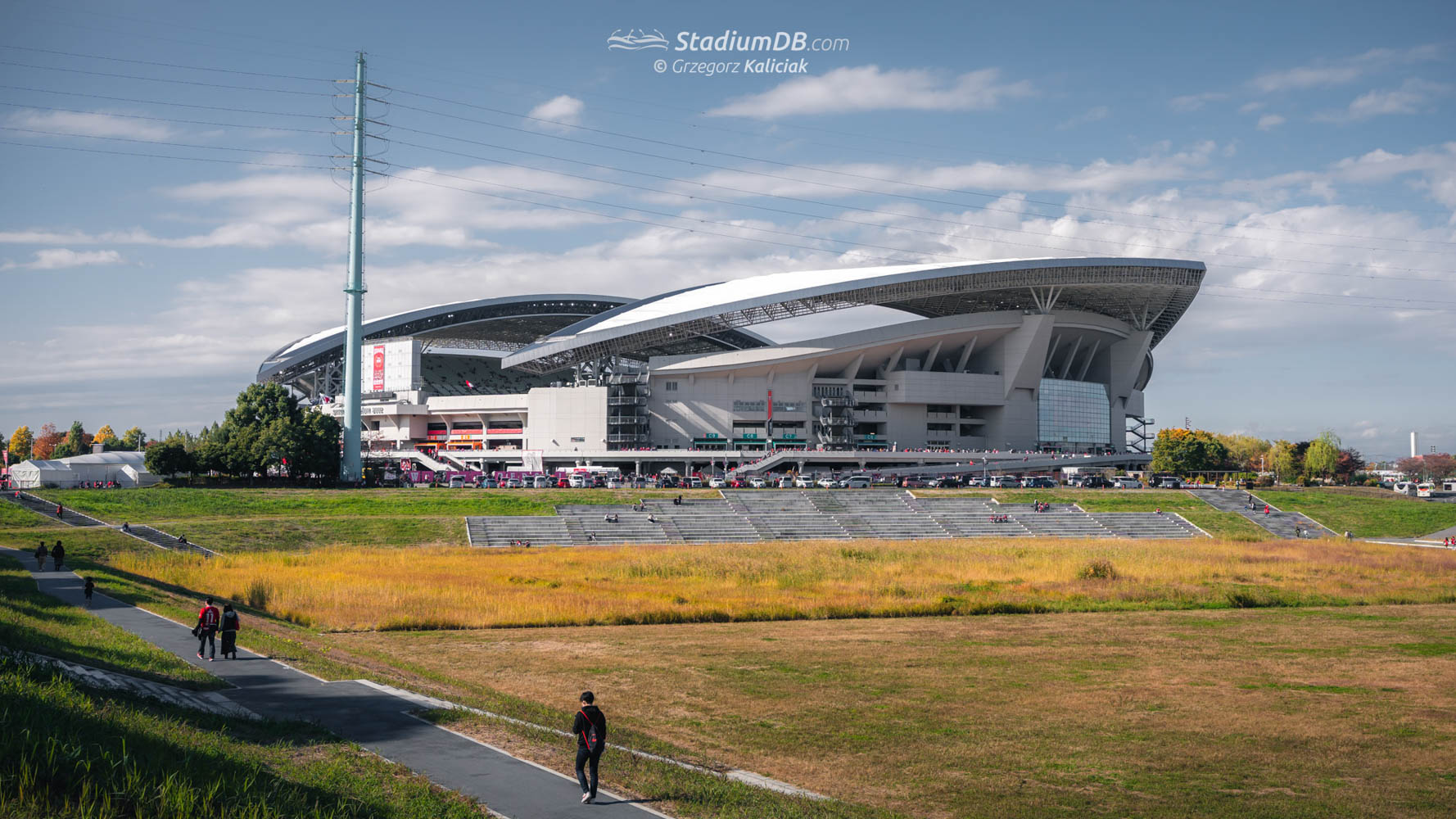
Saitama Stadium 2002 is known for its distinct roof structure. The east and west stands are covered by two massive arched-triangle roofs spanning a combined surface area of 29,000 square meters. These geometric roof forms define the stadium’s silhouette and offer excellent coverage for spectators.
The north and south stands are open and single-tiered, creating natural spaces for home and visiting supporters. This layout allows the Urawa Red Diamonds’ passionate fan base to create one of the loudest and most respected atmospheres in Asian football. The steep rake and close proximity of the seats further contribute to the stadium’s reputation for intensity.
World Cup Legacy and International Reputation
During the 2002 FIFA World Cup, Saitama Stadium 2002 hosted four matches, including the Brazil vs Turkey semifinal. These fixtures helped introduce the venue to global audiences. Its ability to handle large crowds smoothly made it one of the standout stadiums of the tournament.
The stadium has since hosted AFC Champions League matches, Japan national team fixtures, Olympic qualifiers, and international friendlies. Because of its capacity, accessibility, and football-specific design, it remains one of the preferred locations for high-stakes matches in Japan.
Home of Urawa Red Diamonds
Urawa Red Diamonds, one of Japan’s most successful and widely supported clubs, have used Saitama Stadium 2002 as their main home ground since 2001. Their presence has been crucial in turning the venue into one of Asia’s best-attended stadiums. The club’s supporters regularly fill the stands, creating choreographed displays and producing a matchday environment that is respected throughout the global football community.
The stadium is also used alongside Komaba Stadium for certain matches, although major fixtures almost always take place at Saisuta.
Facilities, Comfort, and Spectator Experience
The stadium includes modern seating, wide concourses, efficient entries and exits, and a 2,000-lux floodlighting system designed to support high-quality evening broadcasts. Its design ensures fast movement of spectators during crowded events, while its large parking area and connection to public transport make it convenient for visitors.
Because it lacks a running track, spectators enjoy closer and clearer views of the pitch. This, combined with the stadium’s acoustics, makes Saitama Stadium 2002 a favorite among fans and players alike.
A Modern Symbol of Japanese Football
Saitama Stadium 2002 continues to stand as a symbol of Japan’s football culture. Its combination of scale, design efficiency, and football-focused architecture ensures that it remains a key venue for national and international events. With its rich history, iconic matches, and passionate club support, the stadium is firmly established as one of the most important arenas in Asian football.