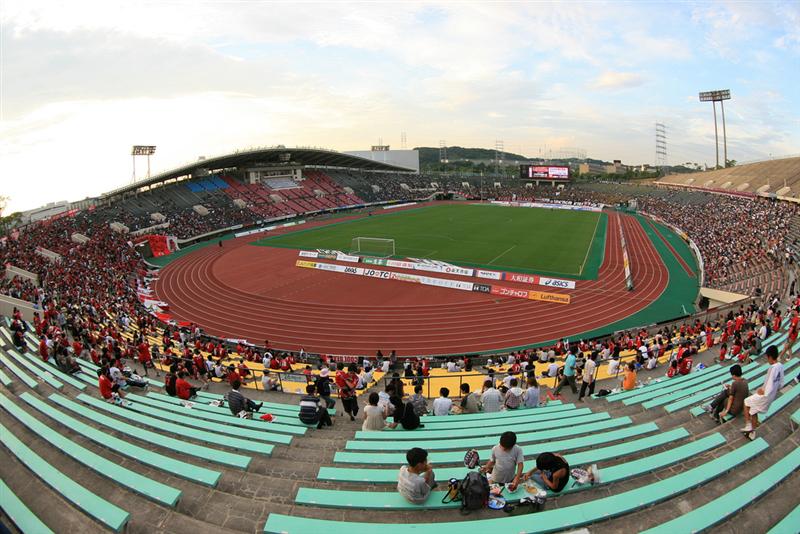
Kobe Universiade Memorial Stadium is one of western Japan’s most important multi-purpose sports venues, located within Kobe Sports Park in Suma-ku. Built for the 1985 Summer Universiade, it remains a key stadium for large football, rugby, and national sports events. Kobe Universiade Memorial Stadium has hosted international fixtures, high-attendance club matches, and major Japanese domestic competitions, making it an essential part of the region’s sporting infrastructure.
Stadium Details
| Feature | Information |
|---|---|
| Name | Kobe Universiade Memorial Stadium |
| Capacity | 60,000 (official), 45,000 commonly used |
| Country | Japan |
| City | Kobe |
| Home Club | Vissel Kobe (selected high-attendance matches) |
| Inauguration | 1985 |
| Location | Kobe Sports Park, Suma-ku, Kobe |
| Main Use | Football and Rugby |
| Built For | 1985 Summer Universiade |
Origins and Construction
The stadium was constructed specifically for the 1985 Summer Universiade, an international multi-sport event attracting thousands of participants from around the world. The project transformed the area into a large sports park with multiple venues, with the stadium intended to be the main site for ceremonies and athletics competition.
Its inauguration in 1985 marked the beginning of its long-term role as a central venue for major events in the Kansai region. The athletic track, large seating bowl, and open design helped make it suitable for both football and athletics, reflecting the multi-purpose approach typical of Japanese stadium architecture of that era.
Use in Japanese Football
Although not the primary home ground of Vissel Kobe, the stadium has regularly served as an alternative venue for the club, particularly for high-attendance fixtures. Its large capacity makes it ideal for derby matches, marquee J.League games, and special events requiring more seating than smaller, football-specific stadiums can provide.
The Japan national football team also used Kobe Universiade Memorial Stadium for several matches. One notable fixture was a 3–0 win over Hong Kong during World Cup qualifying in August 1985. During this period, the stadium was considered one of the leading football venues in western Japan.
Rugby and Multi-Sport Events
Beyond football, the stadium has been an important venue for rugby in Japan. On May 9, 2007, the Japan national rugby union team faced the Classic All Blacks in a memorable match, which ended in a 36–25 victory for the visiting side. The stadium continues to host Top League rugby games along with various national tournaments.
Kobe Universiade Memorial Stadium also served as the main venue for the 2006 National Sports Festival of Japan, demonstrating its continued ability to host large multi-sport events more than two decades after its construction.
Stadium Design and Facilities
The stadium features a traditional oval design with a full athletics track surrounding the pitch. This allows versatility but places spectators at a greater distance compared to football-specific venues. The seating capacity varies depending on configuration, with up to 60,000 possible in event-mode and approximately 45,000 used for standard football matches.
Kobe Sports Park adds to the stadium’s appeal by offering surrounding training fields, indoor arenas, and recreation areas, creating a large-scale sporting hub accessible to both athletes and residents.
A Key Venue in Kansai Sporting Culture
Kobe Universiade Memorial Stadium has played a significant role in the evolution of sports in Japan. Its legacy stretches from international university competition to national festivals, from football qualifiers to high-profile rugby matches, and from club games to community events. Its enduring use reflects its importance not only to Kobe but to the wider Japanese sporting landscape.