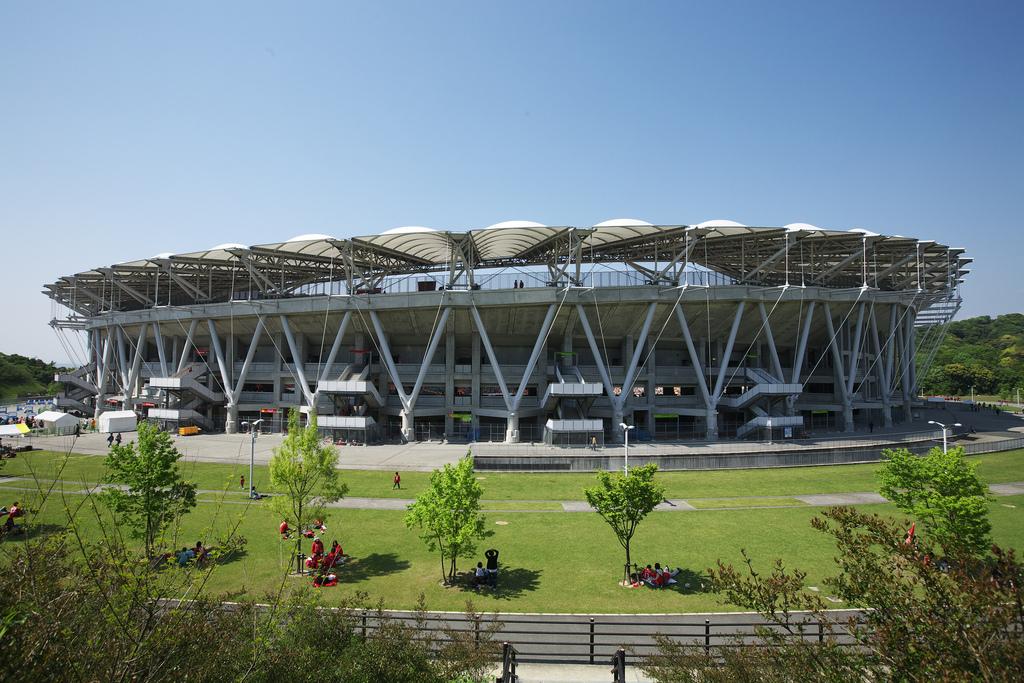
Shizuoka Stadium Ecopa is one of Japan’s leading multi-purpose sports venues, located inside Ogasayama Sports Park in Fukuroi. Built for major international tournaments, Shizuoka Stadium Ecopa has hosted World Cup matches, major derbies, athletics events and large cultural gatherings. Its role as a top-tier venue has made Shizuoka Stadium Ecopa central to the sporting identity of Shizuoka Prefecture.
Stadium Details
| Feature | Information |
|---|---|
| Name | Shizuoka Stadium (Ecopa) |
| Capacity | 50,889 |
| Country | Japan |
| City | Fukuroi |
| Home Clubs | Jubilo Iwata, Shimizu S-Pulse (selected matches) |
| Inauguration | March 2001 |
| Construction | March 1998 – March 2001 |
| Record Attendance | 52,959 (Shimizu S-Pulse vs Jubilo Iwata, Dec 5, 2001) |
| Cost | 250 million USD |
| Design | AXS, Sato, Kimio Saito |
| Contractors | Kajima Corporation, Takenaka Corporation |
| Owner | Shizuoka Prefecture |
| Address | Ogasayama Sports Park, Aino, Fukuroi |
| Special Feature | Retractable front-row stands |
Origins and Development
The stadium was designed and constructed between 1998 and 2001 as part of Japan’s preparation for hosting the 2002 FIFA World Cup. Its strategic location inside Ogasayama Sports Park allowed planners to create a venue integrated with surrounding sports facilities, ensuring long-term usability beyond the tournament.
The concept focused on versatility, combining a full athletics track with football-friendly sightlines. This allowed Shizuoka Stadium Ecopa to serve both elite football events and national athletics competitions, matching Japan’s preference for multi-use stadiums in the early 2000s.
Football Heritage and the Shizuoka Derby
Shizuoka Stadium Ecopa is strongly associated with the region’s football culture. While not a permanent home ground for any single club, it frequently hosts the biggest fixtures for Jubilo Iwata and Shimizu S-Pulse. The Shizuoka Derby, one of Japan’s most passionate regional rivalries, has often been played here.
The December 5, 2001 derby set the stadium’s all-time attendance record of 52,959, demonstrating the venue’s significance within Japanese football.
The stadium also welcomed the world during the 2002 FIFA World Cup. It staged two group stage matches and a memorable quarterfinal between England and Brazil, one of the most widely viewed matches of the tournament.
Multipurpose Use and Athletic Events
Beyond football, Shizuoka Stadium Ecopa hosts a variety of events including major athletics competitions, concerts and community gatherings. Domestic music stars regularly hold large summer concerts at the venue, taking advantage of its open layout and high-capacity seating.
The track-and-field configuration enables national sports festivals, regional athletic championships and school competitions to be held throughout the year. This ensures consistent activity even when professional football is not scheduled.
Architecture and Stadium Design
The stadium’s design emphasizes smooth circulation, strong visibility and modern engineering. The grandstands are arranged in a sweeping oval, with retractable lower seating rows designed to improve flexibility for different sports. This feature allows organizers to adapt the capacity and layout depending on the event.
Large concourses, integrated facilities and high-quality construction materials reflect the stadium’s status as a central hub for Shizuoka’s sports culture. The structure also benefits from its location inside Ogasayama Sports Park, providing visitors with convenient access to surrounding greenery, walking trails and auxiliary sports venues.
Access and Transport Connections
Shizuoka Stadium Ecopa is well connected thanks to Aino Station, built specifically to serve the sports park. The station is approximately a fifteen-minute walk from the stadium and lies just minutes by rail from Kakegawa Station on the Tokaido Shinkansen. During major events, shuttle buses operate from Kakegawa Station, easing transport for large crowds.
The pathway from Aino Station to the stadium features sixteen commissioned art installations created to commemorate the 2002 World Cup, adding cultural significance to the visitor experience.
A Modern Landmark of Shizuoka Prefecture
Since opening in 2001, Shizuoka Stadium Ecopa has become a symbol of regional pride. Its role in hosting World Cup fixtures, combined with its importance to local football and athletics, ensures that it remains one of Japan’s most respected and well-utilized stadiums. With its versatile design and strong transport links, Shizuoka Stadium Ecopa continues to be a major venue for sporting and cultural events in central Japan.